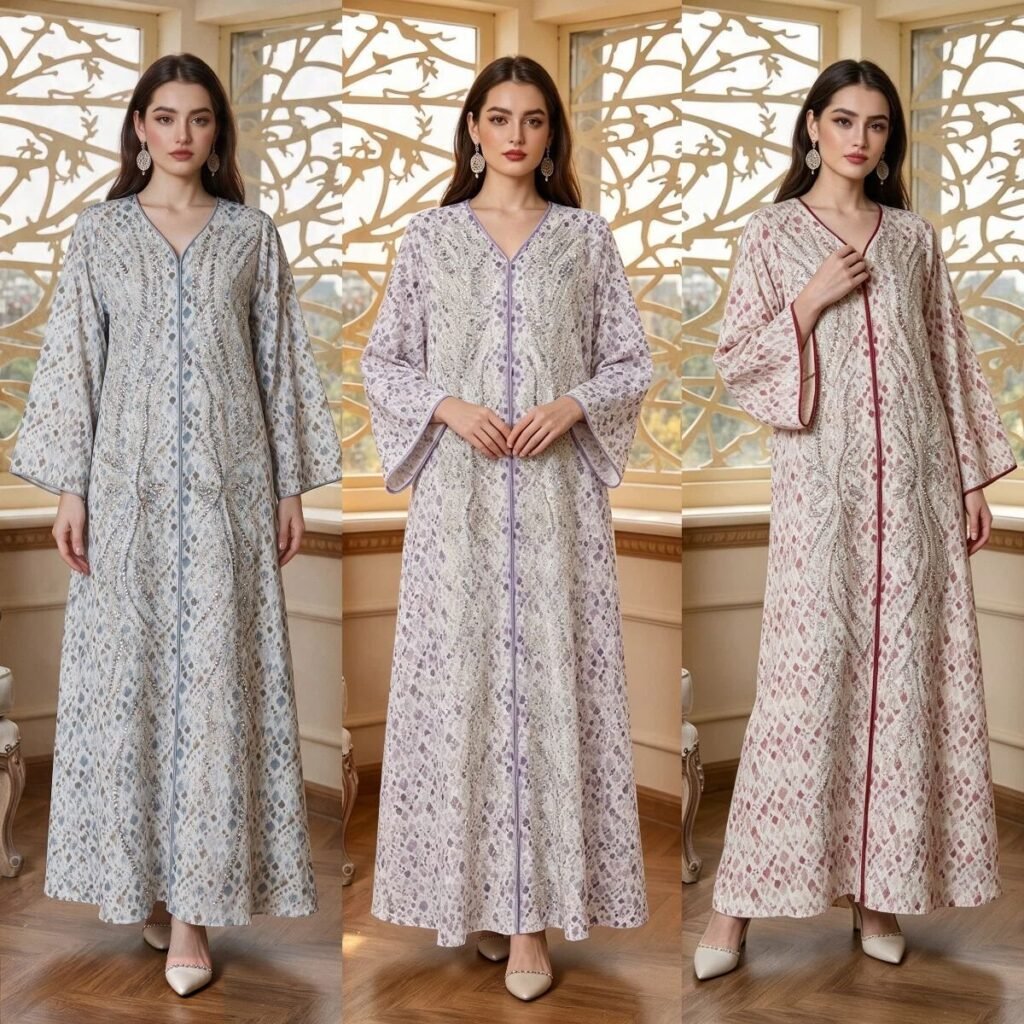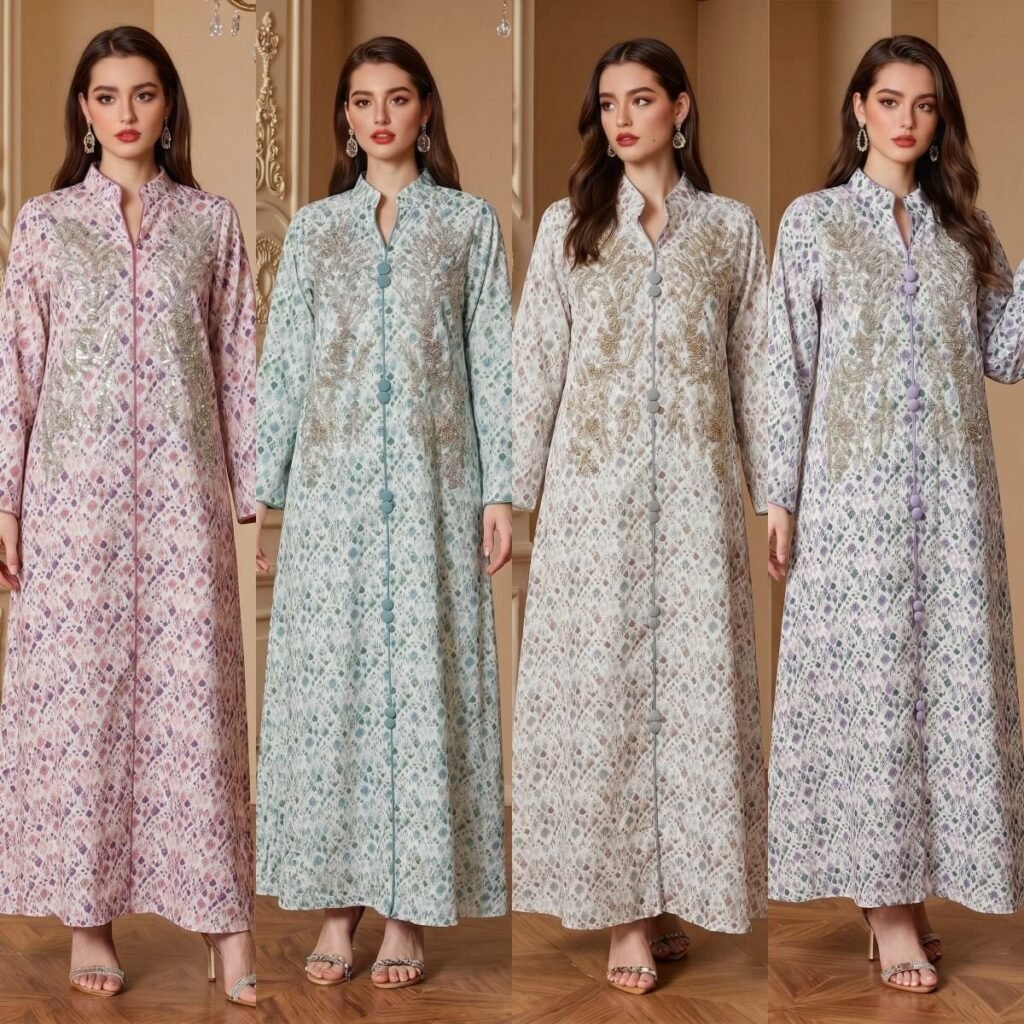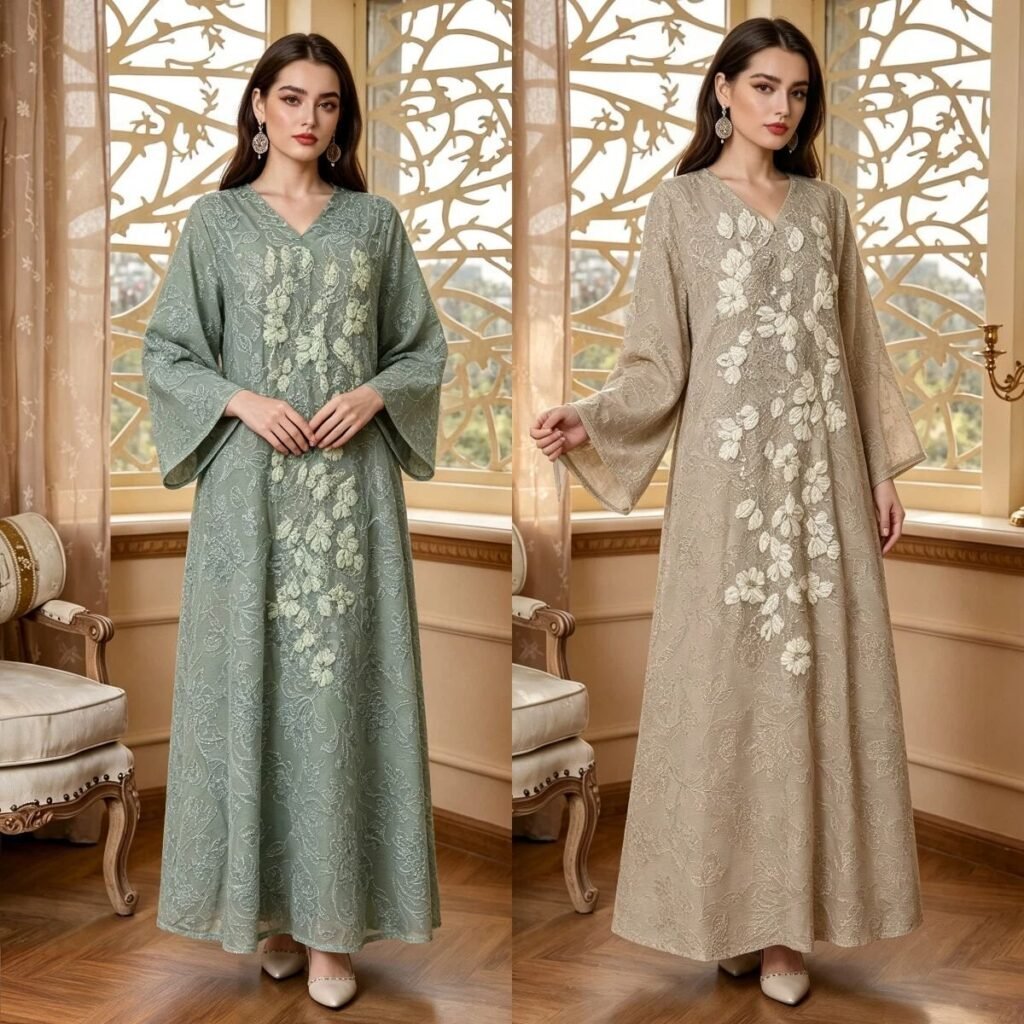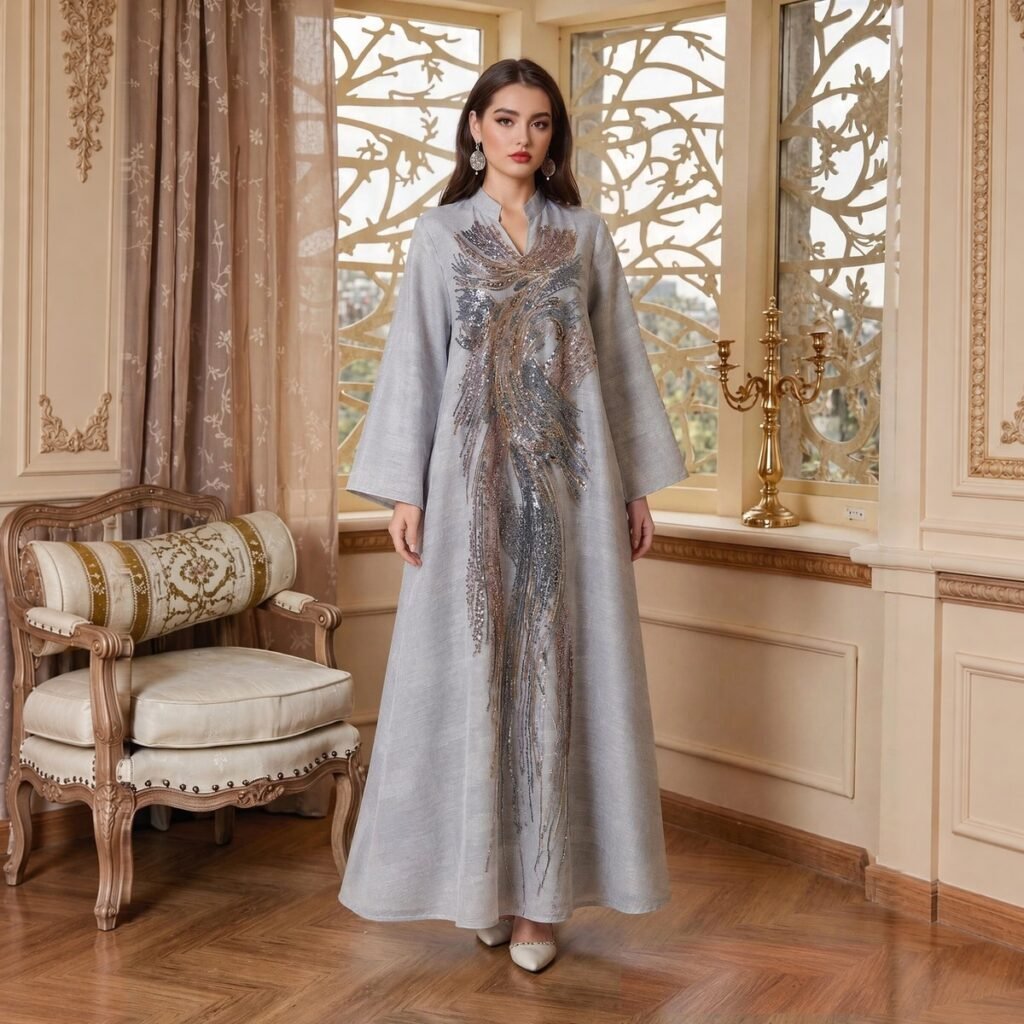



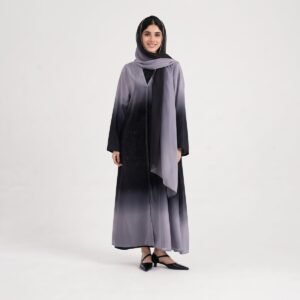


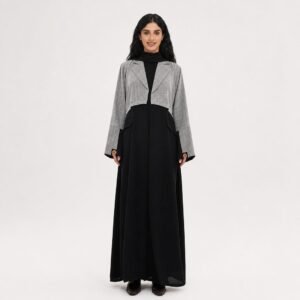
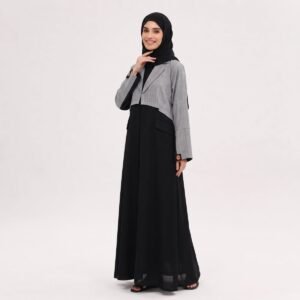
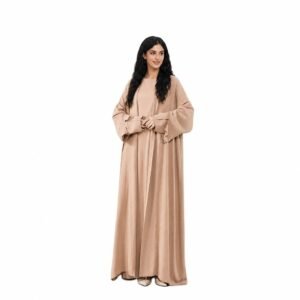


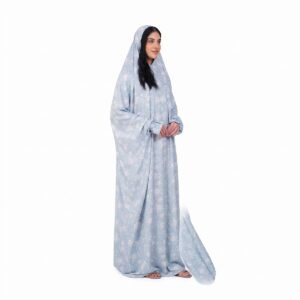
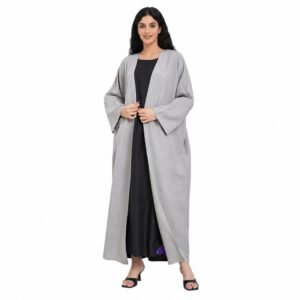

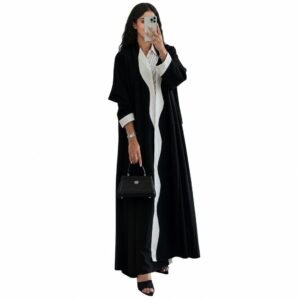

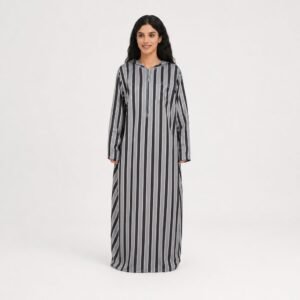
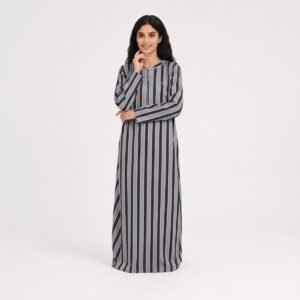


Open Abaya (Kimono / Cardigan Style)
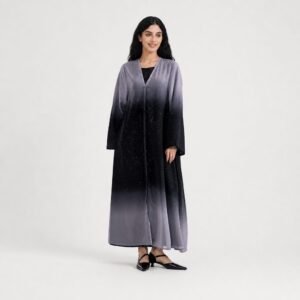
The fastest-selling shape in most Western and Southeast Asian markets. Front-open, worn over an inner dress or co-ord, so the abaya works as a layering piece rather than a full cover. Because the front is open, buyers can push the price point with fabric and trim instead of volume — a Japanese crepe open abaya with contrast trim retails at £70–120 in the UK while costing a fraction of that FOB.
Construction: no closure at the front, or a single hidden snap at the chest. Sleeves can be straight, bell, flared or cuffed, and the standard length is 54–60 inches, graded to your market. With nothing closing the front, the edge is carrying the whole look — a clean folded-and-topstitched edge reads as premium, a bound edge with contrast piping reads as deliberately designed. We do either, and we will recommend one for your price point.
Typical fabric: Korean crepe, Japanese crepe, chiffon, moss crepe, satin.
Closed Abaya (Full Overhead Style)
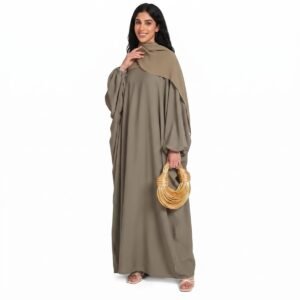
The volume product across the Gulf. Slips over the head with a clean, uninterrupted front panel — no placket, no seam line down the middle, which is exactly why fabric quality matters more here than anywhere else. A visible seam or a fabric that catches light unevenly is immediately obvious on a closed abaya.
The entry is overhead into a faced neckline, usually with a concealed zip at the back neck. Sleeves are straight or very slightly tapered. The front is one panel and we cut it from one ply rather than stitching two pieces together — join them and you get a shade line where the two panels came off different parts of the roll. Once that seam is in, the line is in the garment for good.
Typical fabric: nida, polyester crepe, wool blend, moss crepe.
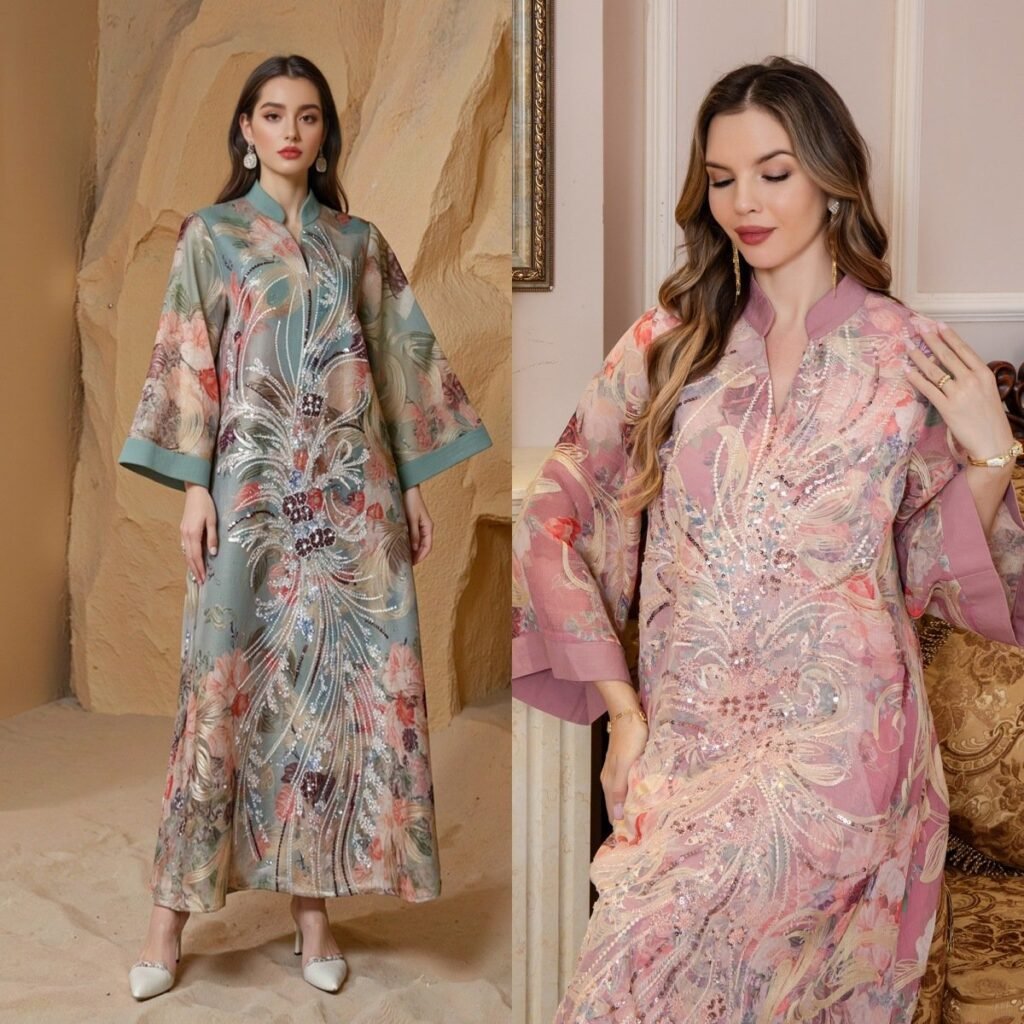
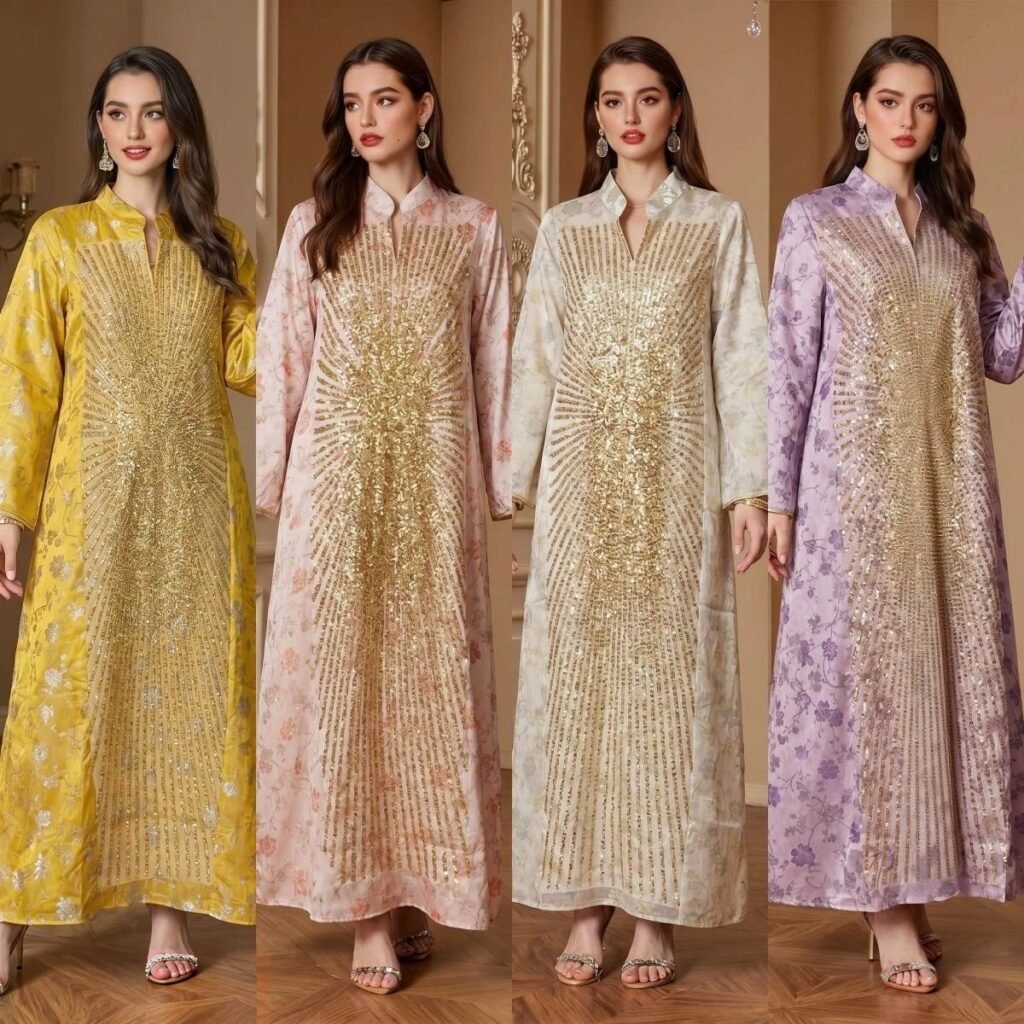
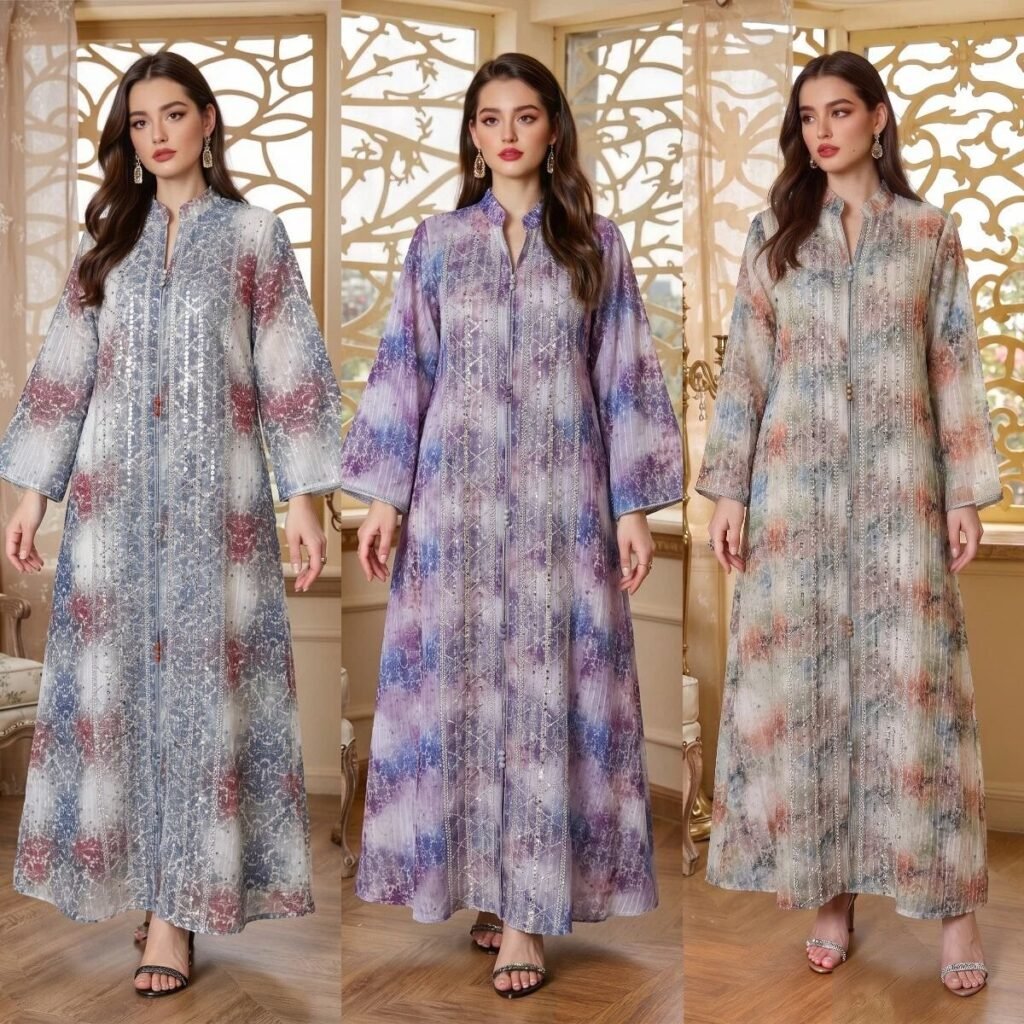
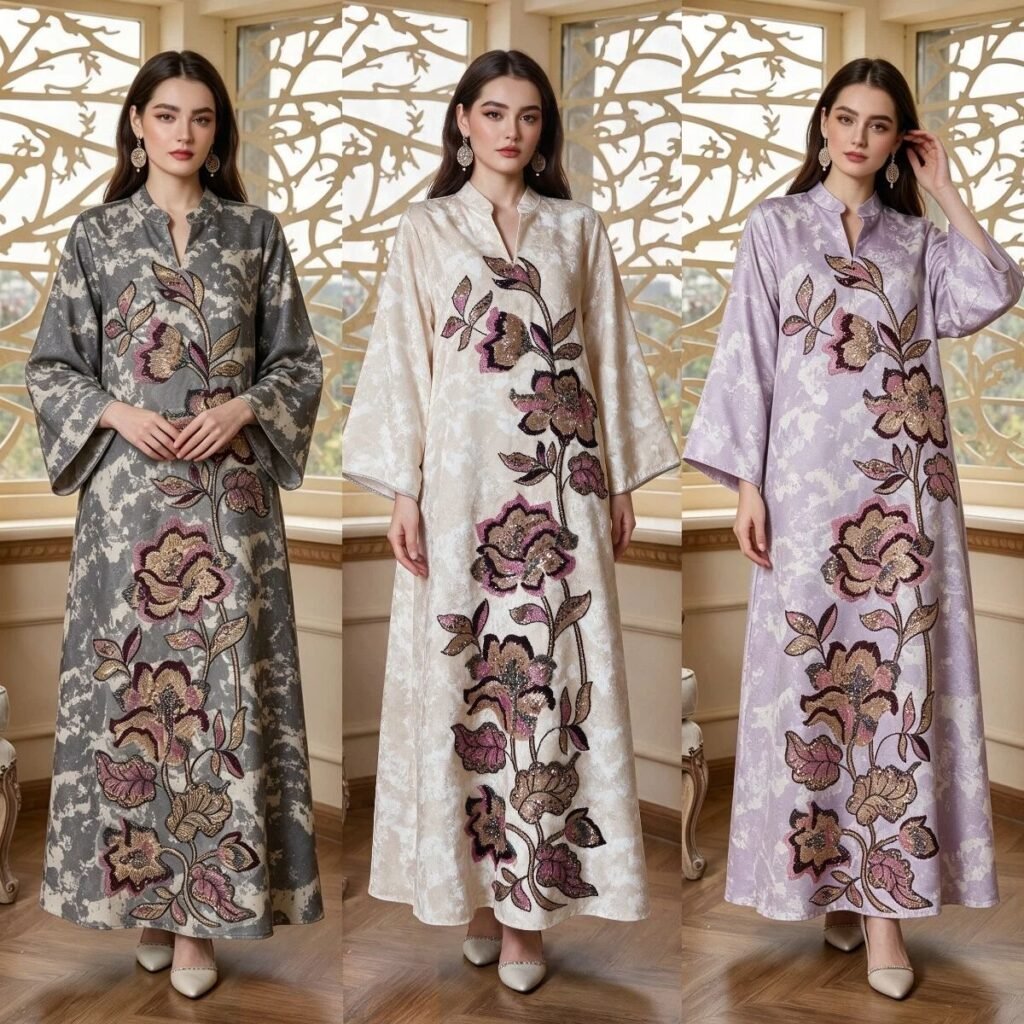
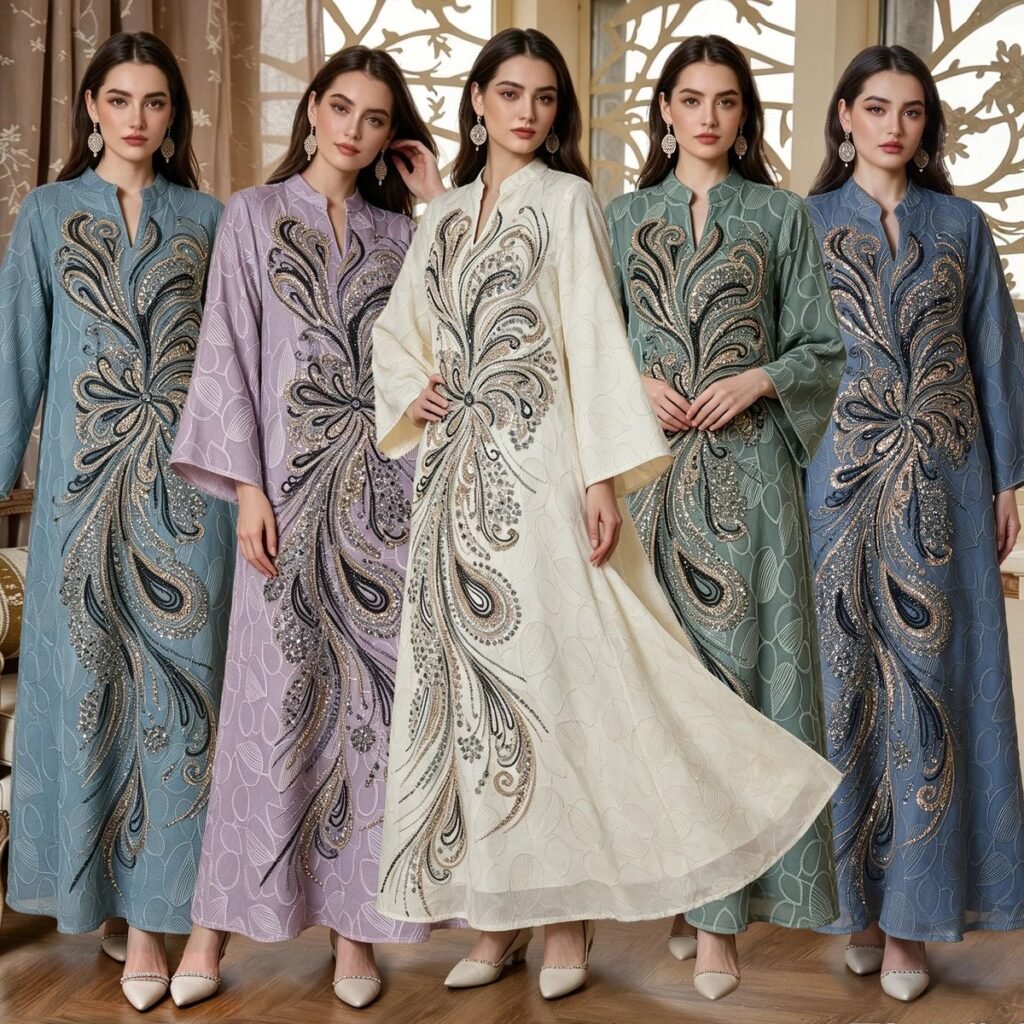
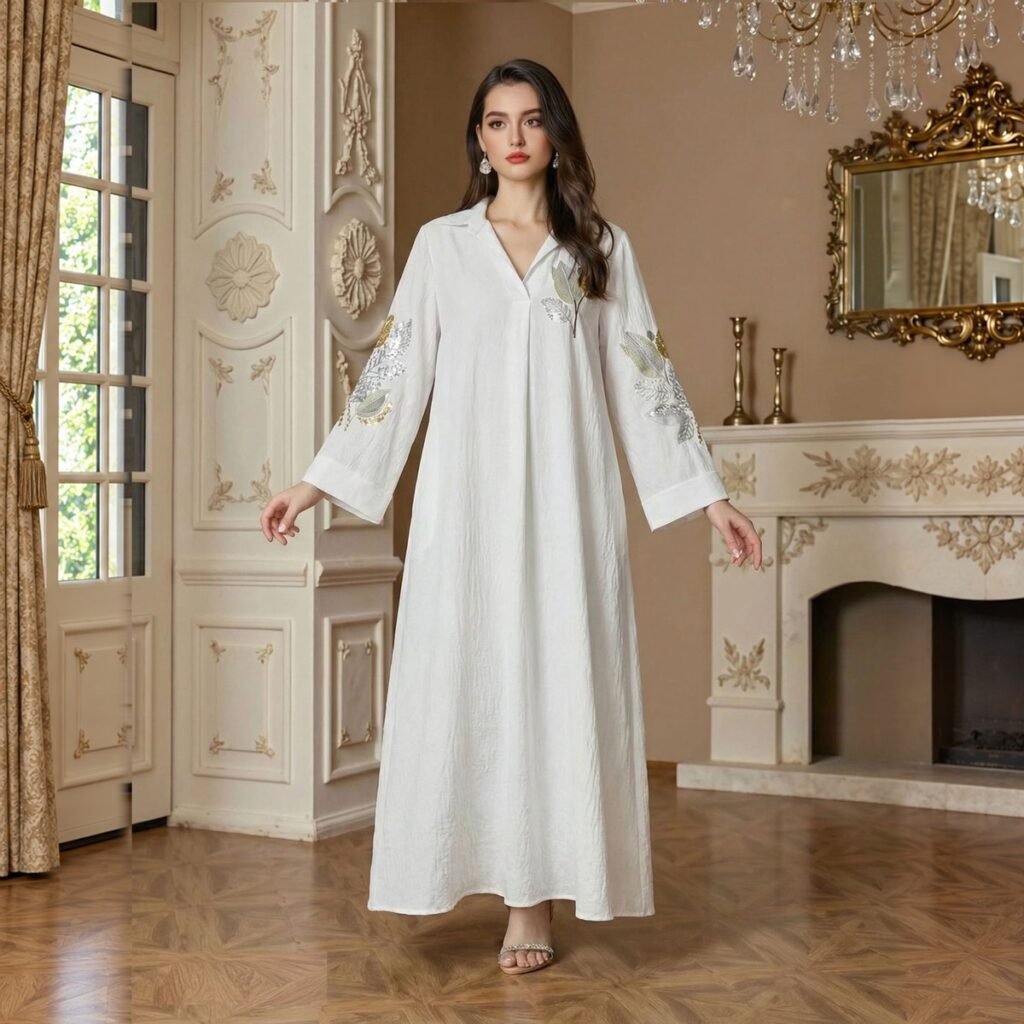
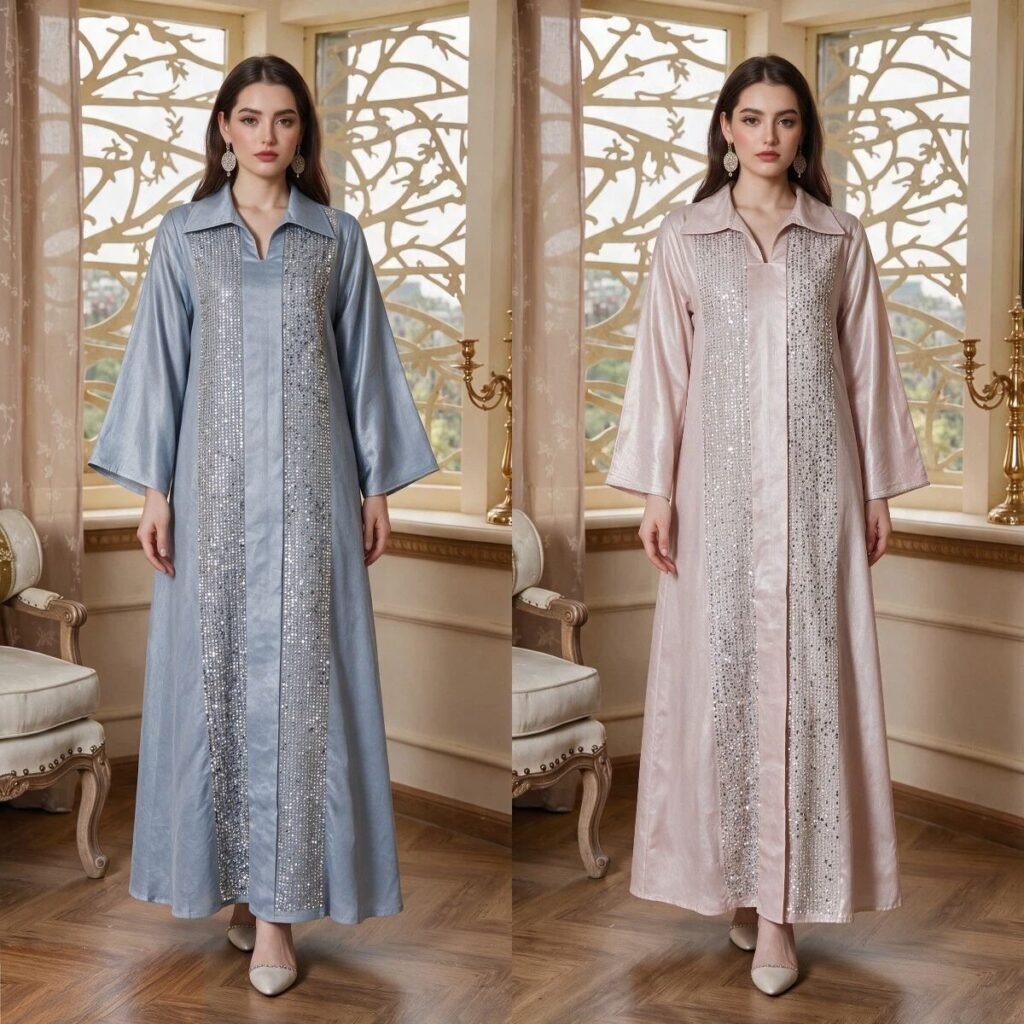
Embroidered & Embellished Abaya
The highest-margin category in the range. Machine or hand embroidery on cuffs, hem, front panel or collar, with optional crystal, bead or lace application for premium and Eid collections. Retail price points run $80–200+ in the Gulf and higher in Western boutiques.
The embroidery goes on before the garment is assembled, stitched onto a stabilised panel that has to be cut oversize and trimmed back afterwards. Skip that and the stitching pulls and puckers the moment the abaya is washed — it is the shortcut factories take to save fabric, and it always shows. Crystal and stone work is applied after assembly, heat-set or hand-sewn depending on the stone. Hand embroidery capacity is limited, so book it early for Ramadan and Eid.
Typical fabric: nida, satin, Japanese crepe, chiffon.
Everyday Casual Abaya
This is the SKU that keeps a wholesaler’s shelves stocked between seasons, and it lives or dies on consistency. Lightweight, relaxed fit, breathable fabric, nothing added for show. The second reorder has to match the first exactly — same shade, same measurements. That is why your approved sample and your shade band stay on file here.
Construction notes: minimal detail, straight sleeves, simple neckline facing, no lining. We hold your approved sample and your fabric shade band on file so reorders are matched against a physical reference rather than a description. From $11.58/piece FOB at volume.
Typical fabric: nida, polyester crepe, zoom, lightweight linen blend.
Luxury Abaya
Built for boutiques and premium online retailers. Premium fabrics — Japanese crepe, Italian chiffon, silk-blend satin — with private label and boutique gift packaging included. The margin here comes from the details: a hand-finished hem, a hand-set lining, tonal embroidery, and packaging the customer photographs before she wears it.
Construction notes: fully lined where the fabric requires it, French seams on lightweight fabrics, hand-finished hems on silk and chiffon. Crystal application hand-set rather than glued. Gift box, tissue and branded ribbon available as a finished pack.
Typical fabric: Japanese crepe, silk-blend satin, Italian chiffon, premium nida.
Butterfly & Cape-Style Abaya
A cut that flares from the shoulder or waist to create movement and volume. Popular in the Gulf and increasingly in Western markets, where it photographs extremely well. The cut is more fabric-hungry than a straight abaya — expect 15–25% more consumption per piece.
Construction notes: the flare is created by panel insertion rather than by gathering, so the panels must be cut on the correct grain or the hem will hang unevenly. This is a pattern-making job, not a cutting job — send us a reference and we will develop the block from it.
Typical fabric: chiffon, satin, Japanese crepe.