9 categories

One factory, full modest wardrobe

8–12hr Reply

We reply to every inquiry within 8–12 hours

50 pcs

Minimum per style and colour

300+ styles

Ready to customise or develop

From $4.20

FOB factory price, entry SKU

7–10 days

Sample lead time after spec lock

25–40 days

Bulk production from approval

DDP Worldwide

Door to door, duty included
OEKO-TEX® Standard 100 GRS 4.0 Recycled BSCI ISO 9001 UPF 50+ tested swim knits

Audit reports, mill certificates and third-party test reports available on request. We confirm the applicable HS code and duty rate on every quotation.

Modest Fashion We Manufacture

Most modest fashion brands do not start with one product. They start with a plan: a hijab line that needs an abaya to sit under, a burkini that needs a matching cover-up, a Ramadan drop that needs prayer dresses and evening wear in the same shipment. Sourcing that plan from four different factories means four sample rounds, four quality systems, four sets of measurements that do not agree with each other, and four freight bills.

Everything we make is on this page. If you already know what you want to build, skip the market section and go straight to the category card — each one opens the dedicated page for that family, with the construction detail, fabric options, sizing and pricing in full. If you are still deciding what your first range should contain, read two blocks properly: the market section, which explains why this is worth entering now, and the category map. The rest — material library, price ladders, size systems, the QC process that runs behind all of it — is reference material to come back to once you have a shape in mind.

We are not a general apparel factory that also takes modest orders. Every pattern we develop, every fabric we hold and every QC checkpoint we run is built around the construction problems that are specific to modest wear: coverage and opacity, sleeve length and arm movement, hem levelness on unlined panels, chlorine resistance in swim knits, and shade consistency across a garment that is mostly one continuous surface. Those problems do not exist in the same way in mainstream apparel, which is why general factories tend to solve them late and expensively.

The Modest Fashion Market — Size, Buyers, And Why The Window Is Open Now

The global modest fashion market was valued at approximately $318 billion in 2024 and is projected to approach $500 billion by 2030 — a compounded growth rate in the region of 7–8% annually, roughly double the growth rate of mainstream womenswear over the same period. The demand base is the world’s 1.8 billion Muslim consumers, but the growth is no longer driven by that number alone. A meaningful and fast-growing share of modest fashion revenue now comes from non-Muslim buyers who have adopted looser, longer, more covered silhouettes for reasons that have nothing to do with religion: sun protection, comfort, corporate dress norms in the Gulf, and the general mainstreaming of oversized and fluid cuts.

Where the buyers are. Roughly five demand clusters matter to a manufacturer, and they order very differently from one another. The GCC — Saudi Arabia, UAE, Kuwait, Qatar, Bahrain, Oman — is the highest-average-order-value region and buys in depth: a single Riyadh or Jeddah wholesaler will take 1,000–5,000 pieces per style on repeat, but expects Gulf length grading, strictly opaque fabrics, and near-zero shade variation between reorders. Southeast Asia — Malaysia, Indonesia, Singapore, Brunei — is the largest unit-volume region, price-sensitive, fast-moving, and heavily influenced by local modest-wear labels that push new silhouettes every few weeks. Europe — the UK first, then France, Germany, the Netherlands and Scandinavia — buys fewer pieces per style but at higher retail prices, with a strong bias toward open abayas, co-ords and modest daywear that reads as contemporary fashion rather than religious dress. North America is the fastest-growing cluster by percentage, dominated by online-first brands running small, frequent drops and leaning hard on private label and photography-ready finishing. Australia and New Zealand is a small but consistent market with a distinct summer-weighted calendar and real demand for burkini and modest swim.

Why now is the entry window. Three things have changed in the last few years, and all three favour a new brand entering today. First, manufacturing access has caught up with demand: modest-specific production used to mean either a Gulf atelier with poor scalability or a general factory with no feel for the construction. That middle layer — factories that understand coverage, opacity, swim knit performance and Gulf sizing — is now mature, and minimums have fallen to levels a first collection can carry. Second, the retail channel has fragmented: modest fashion is no longer a single aisle in a department store. It is thousands of independent online brands, most under ten people, each running 2–4 drops a year. Those brands need a factory that can produce a 50–200 piece style at a fair price and hit a hard calendar date — not a factory that wants a 5,000-piece container order. Third, the calendar has become predictable and permanent: Ramadan and Eid now drive two clear, date-fixed peaks every year with a documented 6–8 week sourcing lead-in, and the modest swim season overlays a third peak in Q2 for Northern Hemisphere markets. A brand that plans around those three peaks can build a real business on a small number of well-executed styles.

The structural gap you can exploit. The modest market’s most persistent weakness is not design — it is product consistency. Because modest garments are mostly a single continuous surface with little detail to distract the eye, defects that would be invisible on a printed mainstream garment are obvious here: a shade difference between two panels, a hem that hangs unevenly, a fabric that turns translucent in sunlight, a reorder that arrives a half-tone darker than the first run. Search any modest wear review channel and the complaints cluster in exactly those places. That is the gap a brand can take with a factory that measures opacity, strikes a physical shade band, checks hems on a mannequin and archives your approved sample. It is also the reason we organise this page around materials, sizing and QC rather than around marketing language.

Buyer region Typical order depth Price positioning What they care about most Peak season
GCC / Gulf1,000–5,000 pcs per style, repeat quarterlyMid to premiumOpacity, shade consistency, Gulf length gradingRamadan & Eid, back to school
Southeast Asia300–1,500 pcs per style, fast repeatEntry to midUnit cost, breathable fabric, quick reorderRamadan, Hari Raya, year-round basics
UK & Europe100–500 pcs per style, 2–4 drops per yearMid to premiumFashion-forward cut, finish quality, retail-ready labelsRamadan, spring drop
North America50–300 pcs per style, frequent small dropsMid to premiumLow MOQ, private label, photo-ready finishingRamadan, holiday gifting
Australia & NZ100–400 pcs per style, summer-weightedMidModest swim, sun protection, UPF ratingNov–Feb, Ramadan

What We Manufacture — The Full Modest Category Map

Nine product families, and each one carries its own pattern block, fabric library, sizing curve and QC emphasis — these are not variations on a single block. Order one on its own or mix several into the same run. Minimums apply per style and colour, not per order, so a 50-piece hijab run and a 50-piece abaya run go through one schedule and leave as one consignment. Every card below opens the dedicated page for that category.

01
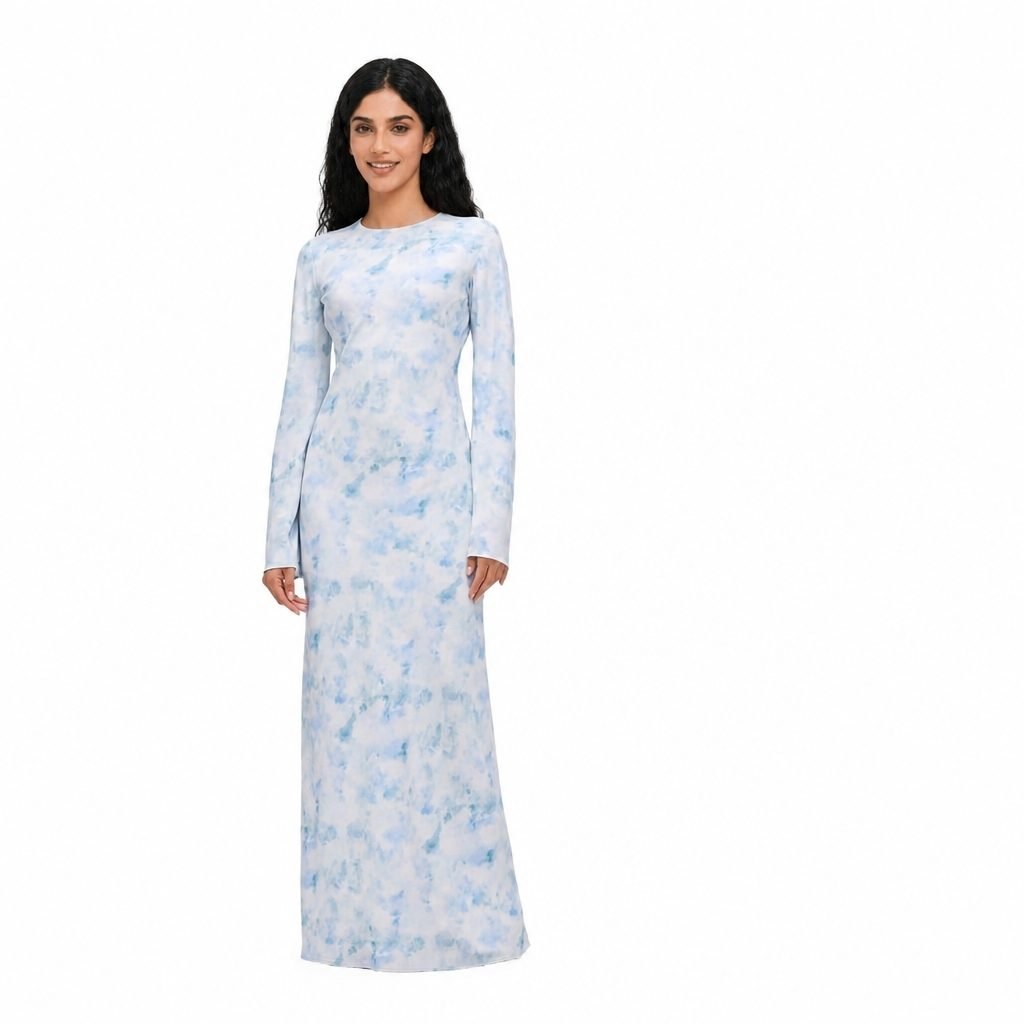
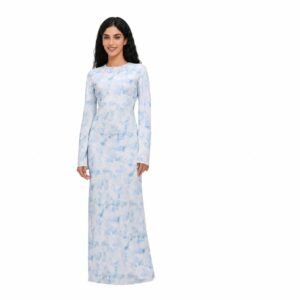
Blue watercolour tie-dye closed abaya

Abaya Manufacturing

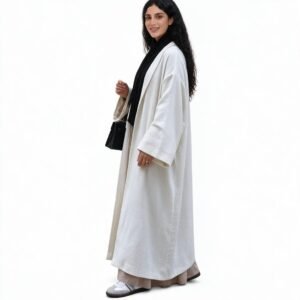
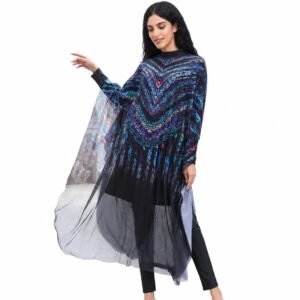
The anchor category and the largest share of our production. Abayas split into two completely different manufacturing problems: the open abaya (kimono, cardigan and butterfly cuts), where the front edge and trim carry the perceived value because there is no closure to hide behind; and the closed abaya, which slides over the head as a single uninterrupted front panel, where fabric quality and shade consistency are everything. Open styles let you push retail price with fabric and trim at a modest cost increase; closed styles live on volume and reorder consistency. Typical construction decisions: placket or open front with one concealed snap, straight / bell / flared / cuffed sleeve, length graded 54–62 inches, faced neckline, unlined nida or fully lined chiffon. From $11.58 per piece FOB at 1,000+ pieces. View Abaya Manufacturing →

02
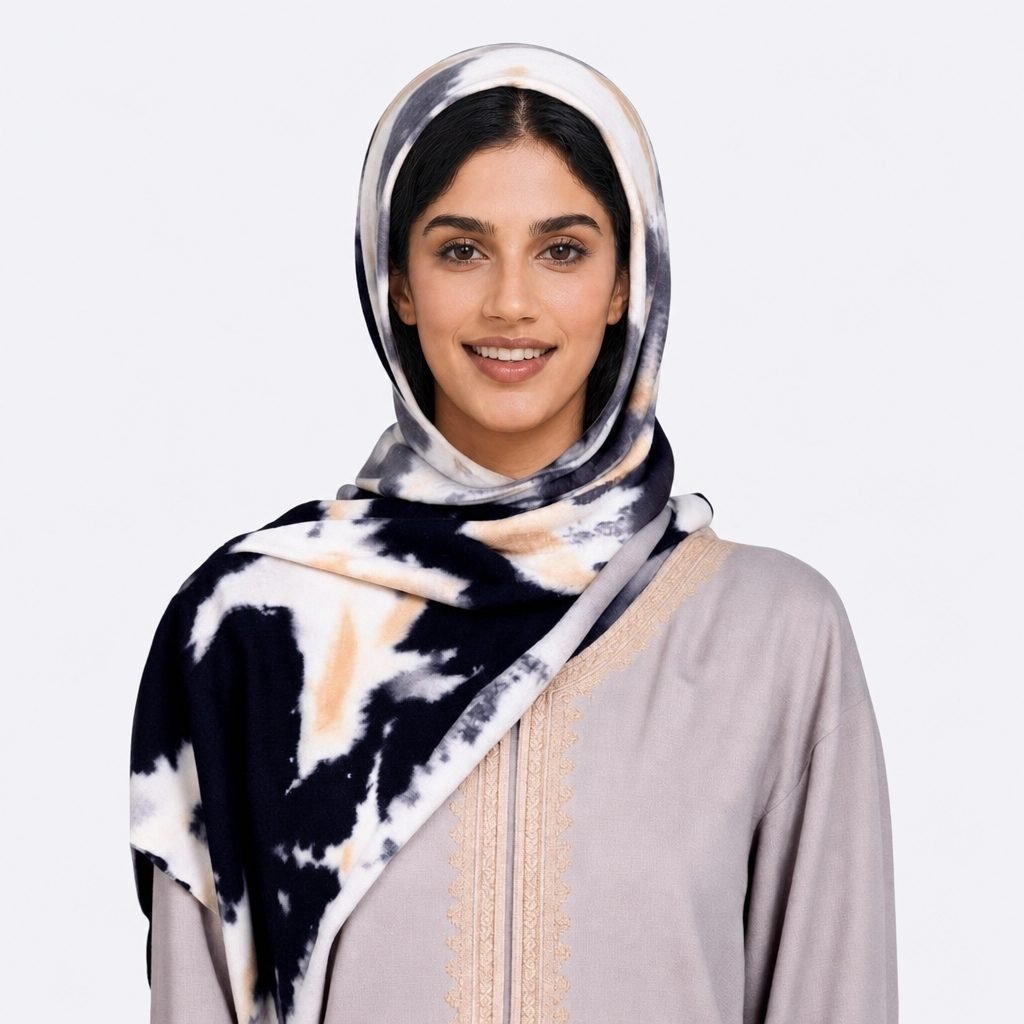
Watercolour print jersey hijab

Hijab & Headscarf Manufacturing

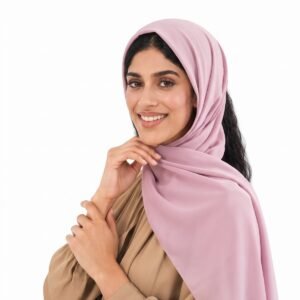
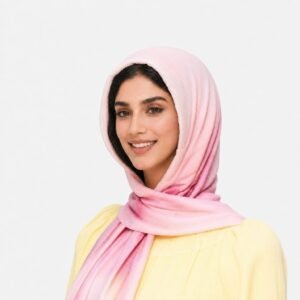
The lowest-barrier category to launch and the one where finishing quality is most visible, because a hijab is small enough that the customer holds the entire edge in her hands. The manufacturing decisions are narrow but unforgiving: edge finish (rolled hem, baby lock, hand-rolled, or overlocked-and-turned), fabric weight and drape (chiffon for occasion, jersey for everyday non-slip, satin for evening, crinkle for volume), and dimensions, which run 175×70 cm, 180×75 cm and 200×85 cm as the three standard blocks with a long-tail of market-specific sizes. Custom print, digital placement print, tonal embroidery and beaded edge are all in scope. Our hijab manufacturing page covers the edge-finish decision in detail — it is the single detail that separates a $6 wholesale hijab from a $40 one, and it costs cents per piece to get right.

03
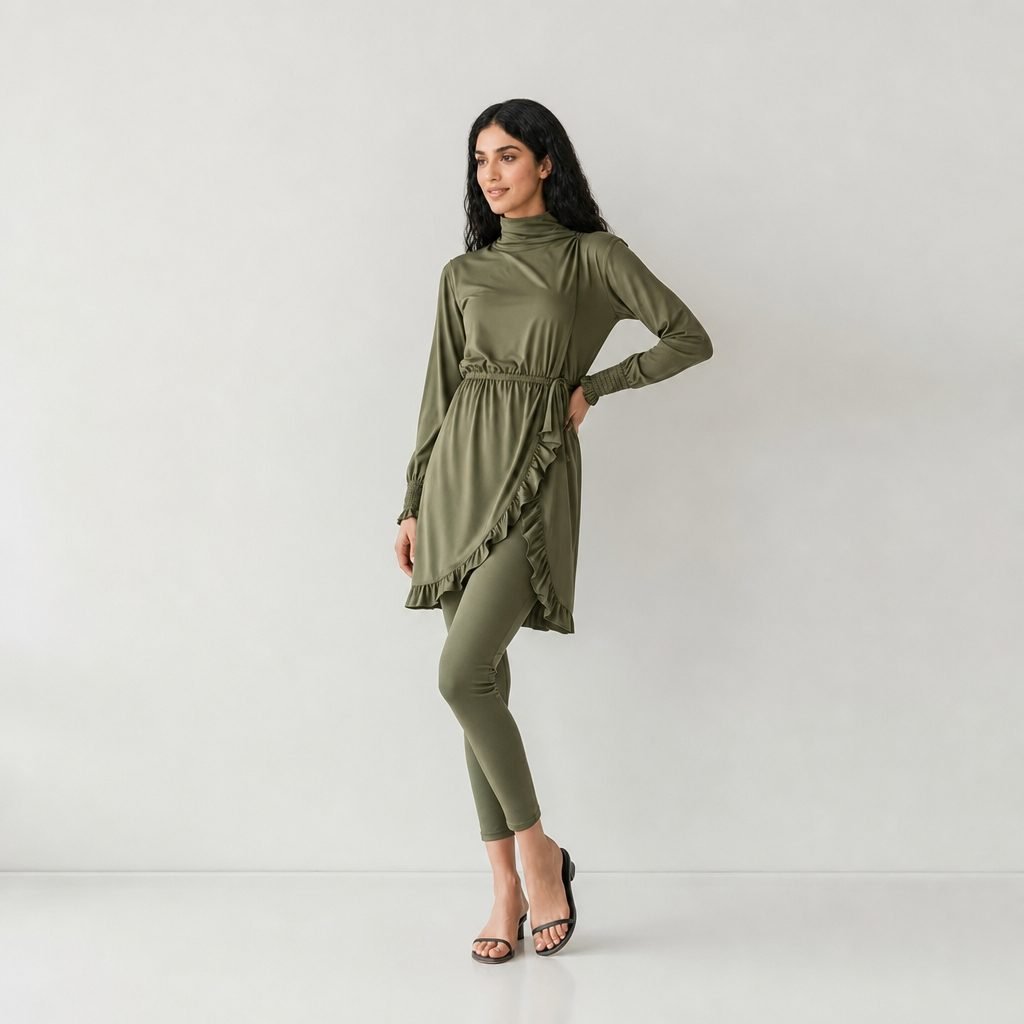
Olive asymmetric ruffle-hem burkini with leggings

Burkini & Modest Swimwear Manufacturing

The most technically demanding category we produce and the one where a cheap factory is most likely to fail quietly. A burkini is a performance garment: it has to hold coverage while wet, resist chlorine and salt, keep its shape after repeated exposure, and stay opaque when soaked — which is a completely different test from dry opacity. Construction decisions that matter: four-way stretch knit (typically polyamide-elastane or recycled polyester-elastane) at a weight that does not go transparent under tension; flatlock or cover-stitched seams because standard overlocked seams chafe when wet; set-in or raglan sleeve with a fitted cuff so the sleeve does not balloon in the water; integrated or separate hood; and UPF 50+ rating confirmed by test report. 3-piece (top, trouser, hood), 2-piece and zip-front designs from 50 pieces. View Burkini Manufacturing →

04
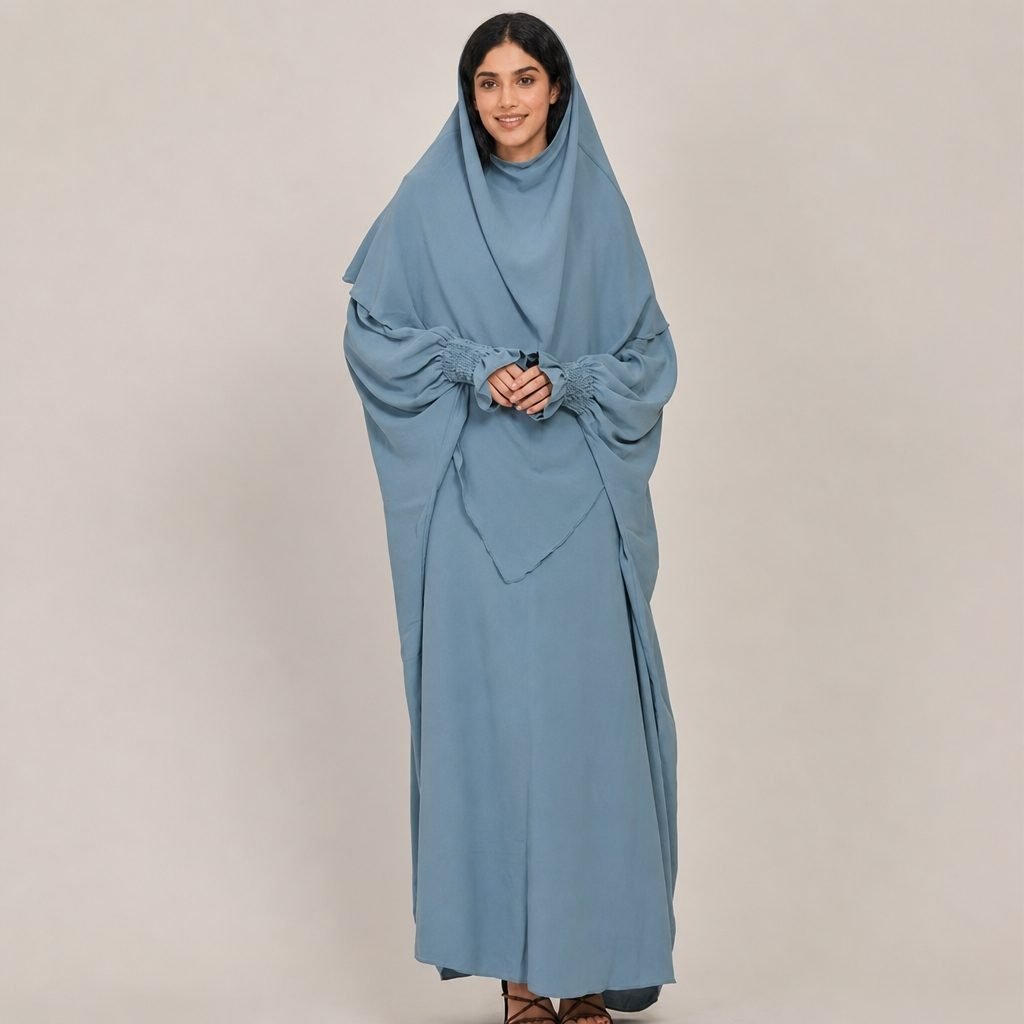
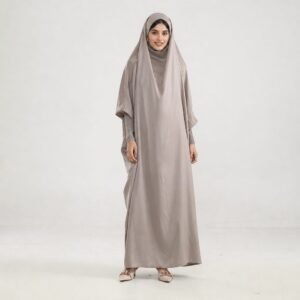
Blue one-piece khimar prayer dress with smocked cuffs

Prayer Dress & Namaz Dress Manufacturing

A category with a hard, date-fixed demand curve and a very specific construction vocabulary. The two main blocks are the one-piece prayer dress (a full-length garment with an integrated head covering and a front or back opening for entry) and the two-piece prayer set (long dress plus separate khimar or head cover). What decides whether the product is good or frustrating: the head covering must stay put during movement (solved with a shaped hood pattern and an internal tie, not a loose rectangle), the front opening must close without gapping when the wearer is kneeling, and the fabric must be light enough to fold small because a prayer dress is a travel item for most buyers. Our prayer dress manufacturing page sets out the hood shaping and the fold-flat requirement in detail. Strong Ramadan and Hajj/Umrah seasonality — book 8–10 weeks ahead.

05
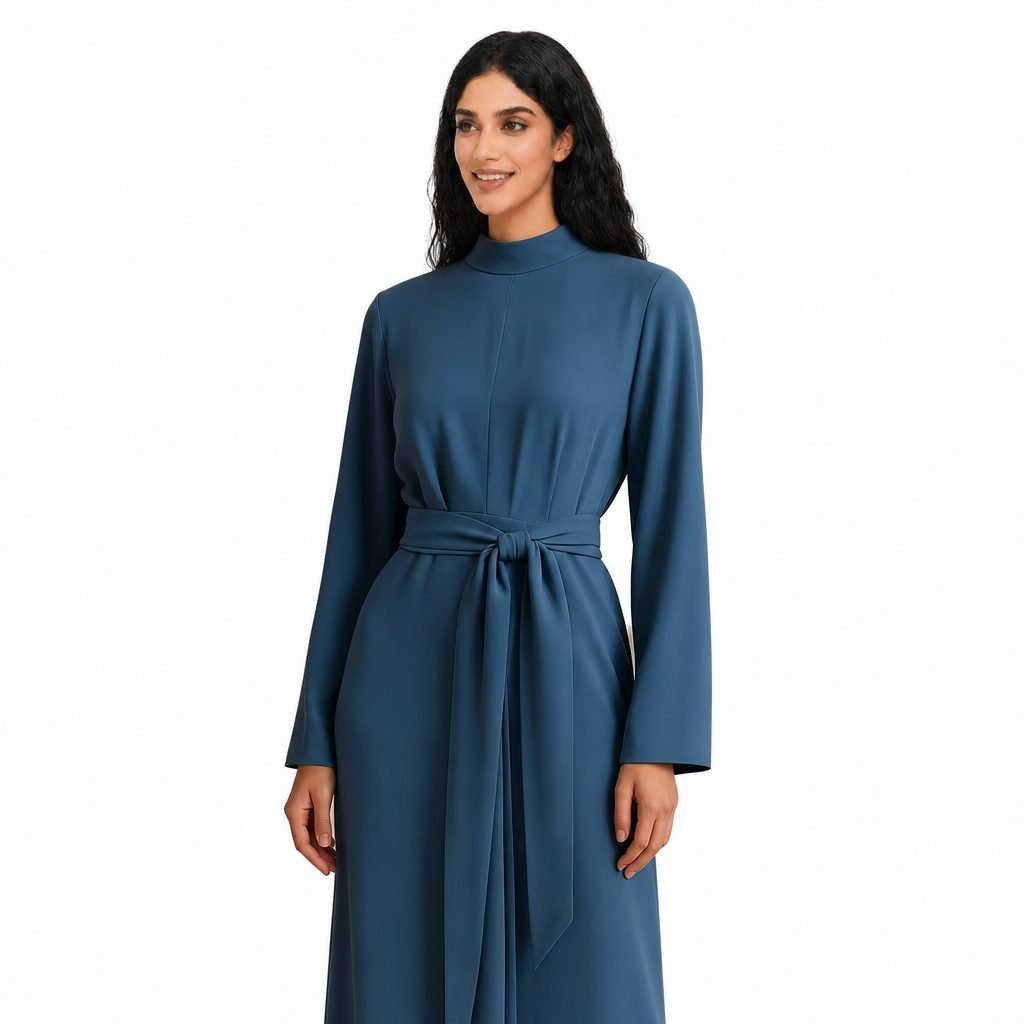
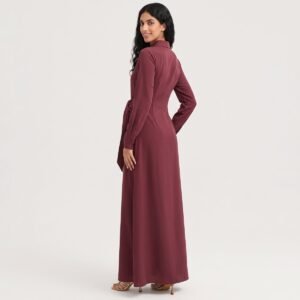
Steel blue mockneck tie-belt maxi dress

Modest Evening Dress & Occasion Wear Manufacturing

The highest-margin category on the page and the one that requires the most production control. Modest evening wear is a fully-lined, often beaded garment where the fabric shows every seam and any construction shortcut is visible in a photograph — and these garments exist to be photographed. Decisions: satin, silk-blend, velvet, lace or crepe main fabric with a matched lining; French seams on lightweight shells so the inside is as clean as the outside; hand-finished hems on silk and chiffon; bead, crystal and sequin application either hand-set or heat-set depending on the stone, applied after assembly and reinforced so the garment survives its first dry clean. Retail in the Gulf runs $150–400+ for this category. View Evening Dress Manufacturing →

06
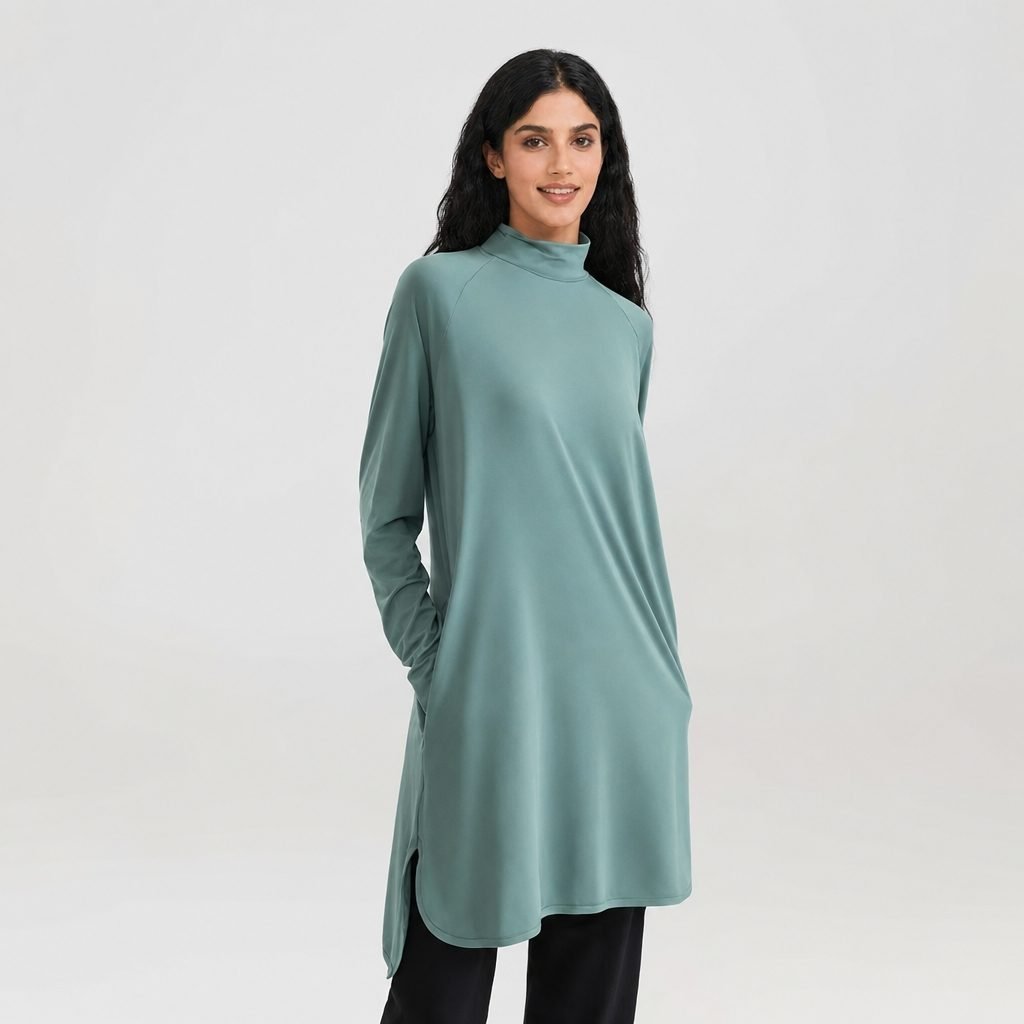
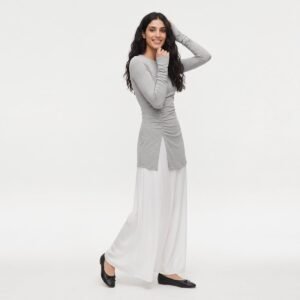
Teal mockneck activewear tunic with side slit

Modest Sportswear & Activewear Manufacturing

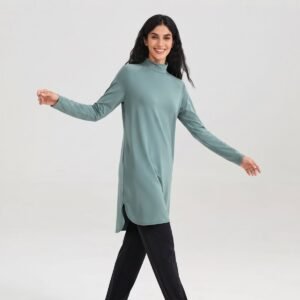
The fastest-growing category in the modest market, and the one where performance specification has to be built in from the fabric up rather than added at the trim stage. The range covers long-sleeve athletic tops, modest running sets, yoga sets, loose-fit training trousers and sports hijabs. What the customer actually judges: moisture management (a wicking knit, not a cotton blend that holds sweat), opacity during movement (checked in a stretch test, not flat), sleeve and hem staying in place at full range of motion, and non-slip sports hijab construction — usually a jersey inner band or a shaped two-layer hood. Compression and non-compression blocks, four-way stretch, and antibacterial finishes are all available. View Modest Sportswear Manufacturing →

07
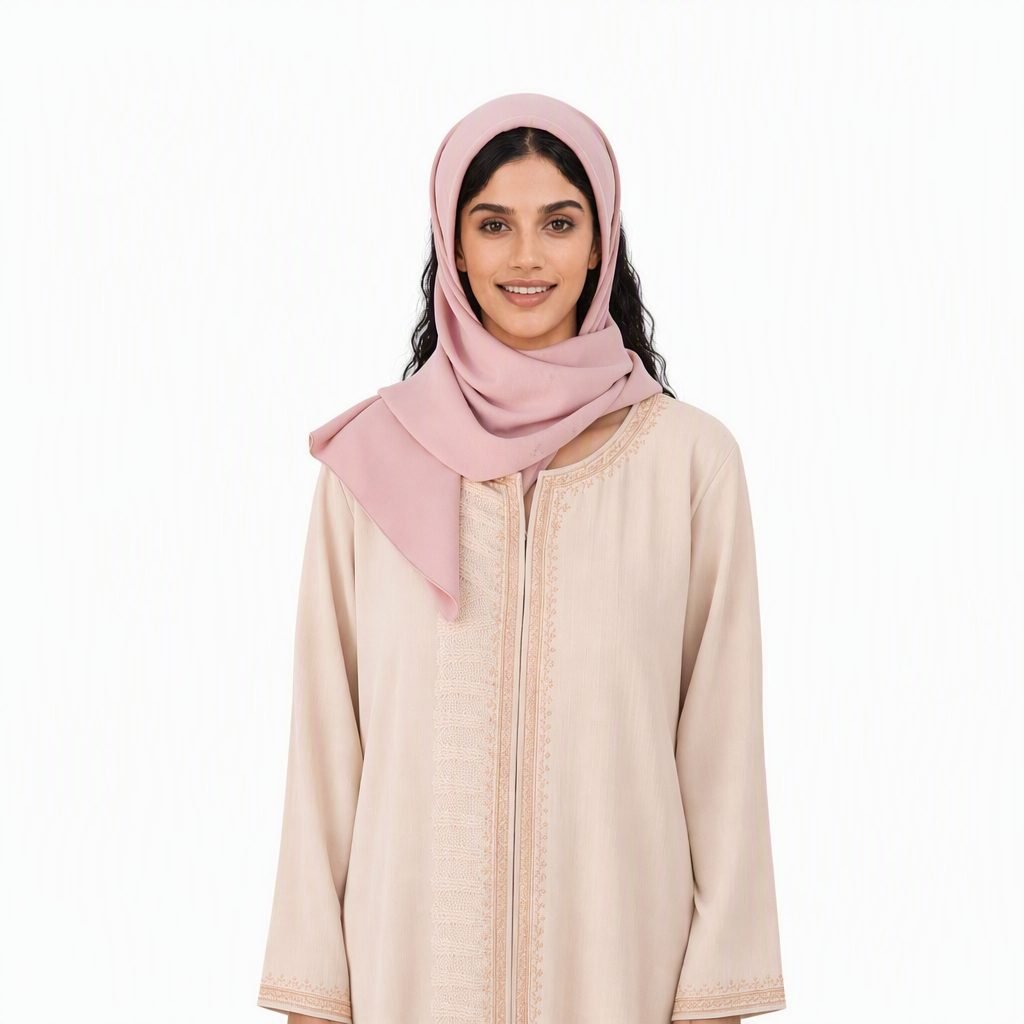
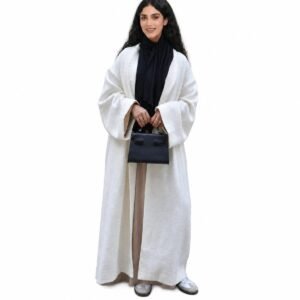
Beige embroidered open abaya with pink hijab set

Modest Women’s Sets & Co-Ord Manufacturing

The commercial bridge between modest wear and mainstream fashion, and increasingly the category that carries a young brand’s revenue. A modest co-ord is usually a tunic or long top paired with a wide-leg trouser, midi skirt or a layered two-piece, sold as one SKU at one price. The manufacturing trap here is cross-garment shade and measurement matching: a set is only sellable if top and bottom are cut from the same dye lot and if the drop between the two pieces is graded consistently across sizes, and most quality complaints about co-ords trace back to exactly that. We cut set components sequentially from a single lot and pack them as a matched pair. Fabric options run from cotton poplin and linen blend for daywear to scuba, ponte and crepe for occasion. View Women’s Sets Manufacturing →

08
Green belted two-tone Eid abaya

Eid & Ramadan Collection Manufacturing

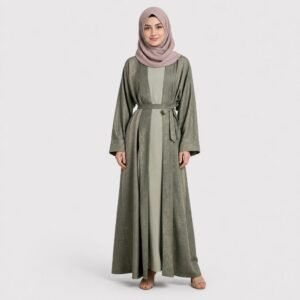
Not a product category so much as a production programme with a fixed deadline. Eid and Ramadan collections are built from the other categories — abayas, evening dresses, prayer dresses, women’s sets, embellished pieces — but they are manufactured under a different set of constraints: a date that cannot move, embellishment capacity that is genuinely finite (hand embroidery and hand-set crystal cannot be scaled up on demand), and gift packaging which is a functional requirement, not a nice-to-have, because a large share of Eid purchases are gifts. The single most common failure in this category is late booking. We hold embellishment slots by reservation and recommend confirming 8–10 weeks before Eid, with fabric and shade approvals locked no later than that. View Eid Collection Manufacturing →

09
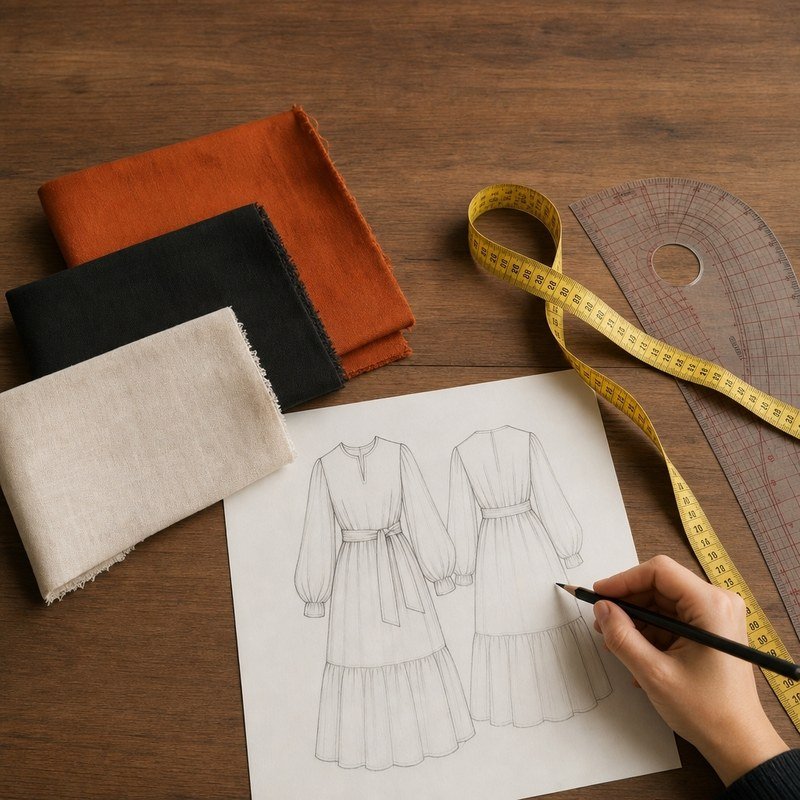
Custom OEM ODM fabric swatches and tech pack flatlay

Custom Modest Clothing & Private Label Programmes

For buyers who want a single partner across several categories rather than a separate supplier per product. A custom programme fixes one size system, one fabric library, one label and packaging specification, and one QC standard across your whole range, then runs every drop through it. That is the practical advantage: your abaya, your hijab and your co-ord all arrive with the same care label format, the same shade reference and the same measurement tolerance, which is what makes a multi-category brand look like one brand on the shelf. We hold your blocks, your approved samples and your shade bands on file permanently so reorders across any category match against a physical reference. View Custom Manufacturing Programmes →

Fabric Library — The Materials That Run Across Every Category

Fabric selection drives 60–70% of a modest garment’s perceived value and most of its cost, and the same core materials recur across categories with different weights and finishes. The table below is the library we hold and produce against regularly. Where your market or your design needs something outside it, we source against your specification — send us a swatch or a mill reference and we will match it.

Fabric Weight Handle & behaviour Best for Price tier
Nida160–200 g/m²Matte, fluid, wrinkle-resistant, travels wellClosed abaya, everyday, volume ordersEntry–Mid
Polyester Crepe150–190 g/m²Slight surface texture, holds colour wellCasual abayas, budget co-ordsEntry
Korean Crepe170–210 g/m²Denser and softer, better recovery than standard crepeOpen abaya, boutique linesMid
Japanese Crepe180–220 g/m²Excellent drape and hand, very low creasingPremium and luxury abayas, eveningPremium
Chiffon (plain / crinkle)60–90 g/m²Sheer, light, requires lining or layeringHijab, layered abaya, butterfly stylesMid
Satin (poly / silk-blend)90–130 g/m²Lustrous, fluid, shows every seam and pin markEvening and Eid collectionsMid–Premium
Jersey (cotton / viscose blend)160–220 g/m²Stretch, opaque, non-slip, easy careEveryday hijab, inner caps, co-ordsEntry–Mid
Swim Knit (polyamide-elastane)190–240 g/m²Four-way stretch, chlorine resistant, UPF 50+Burkini, modest swimwearMid–Premium
Recycled Swim Knit (GRS)195–245 g/m²Same performance, GRS-certified recycled contentSustainable swim and active linesPremium
Performance Knit (wicking)170–230 g/m²Moisture management, four-way stretch, quick dryModest sportswear, sports hijabMid–Premium
Cotton Poplin110–140 g/m²Crisp, structured, opaque, holds a print sharplyDaywear sets, printed co-ordsEntry–Mid
Linen Blend180–220 g/m²Breathable, natural texture, creases by natureSummer and resort collectionsMid
Moss Crepe180–230 g/m²Textured, substantial, fully opaqueStructured and cape-style abayasMid
Scuba / Ponte230–300 g/m²Firm, holds a clean edge, does not clingStructured sets, tailored modest wearMid
Lace (rigid / stretch)90–160 g/m²Openwork, needs a solid underlayerOverlays, sleeves, occasion detailMid–Premium
Velvet (poly / stretch)260–340 g/m²Deep pile, directional, must be cut one wayWinter and Eid occasion wearPremium
Wool Blend240–320 g/m²Warm, structured, heavier drapeWinter collections, UK and Northern EuropePremium

Opaque or not? This is the question that decides a reorder across almost every category on this page, and it cannot be answered from a weight number. A 150 g/m² nida in a dark colour is fully opaque; a 150 g/m² chiffon is not, in any colour. Swim knits behave differently again — a fabric that is opaque dry can turn translucent under tension when wet, so we test modest swim fabrics both dry and soaked. We check opacity on the assembled garment in daylight before bulk cutting, and we tell you the result before production rather than after. If your market requires guaranteed coverage, specify opaque on the tech pack and we will only propose fabrics that meet it.

Certification. OEKO-TEX® Standard 100 and GRS 4.0 recycled certifications are available on request across the knit and woven ranges, with the mill certificate issued under the production lot. UPF 50+ testing is available for swim and sportswear and is recommended as standard practice for those two categories, since sun protection is a primary purchase driver for modest swim buyers and an unverified claim is a liability.

OEM vs ODM vs Private Label — Which Route Fits Your Business

Buyers use these three terms interchangeably, and the mix-up costs them time and money. They are three different commercial arrangements: the minimum differs, the lead time differs, and what you actually own at the end differs. The table below sets out each one.

  OEM — Your Design ODM — Customise Ours Private Label
Who designs itYouWe hold the base block, you modify itEither — branding only
What you supplyTech pack, measurements, fabric specA reference or a style selectionLogo and label artwork
Minimum50 pcs per style and colour50 pcs per style and colour50 pcs per style and colour
Development time2–4 weeks (pattern plus proto)7–10 days (modify an existing block)None — label artwork approval only
Who owns the designYou, exclusively, in perpetuityYou own your version; the base block stays oursBase is shared; the label is yours
ExclusivityAutomatic for 12 months from your first order — written into the sales agreementNegotiable by category or territory, subject to volumeNone by default
Best whenYou have a clear point of difference worth protectingYou want speed to market at low development riskYou are testing demand before investing in design

Private label is worth being blunt about. It is the quickest and cheapest way to launch and the weakest position to hold. If your product is a stock base with your label sewn in, someone else can buy the same base next month and undercut you, and you have no design asset to defend yourself with. Use it to test a market — that is what it is for. It is not a business. Brands still trading in year two have almost always moved from private label to ODM and then to OEM, because that is the point at which the product stops being interchangeable. We will tell you which route your product actually needs, even when the cheaper one would be easier for us to quote.

Size Systems — Gulf Numeric vs UK / US Grading

Modest wear is sold into two sizing systems that do not translate cleanly, and getting this wrong is one of the most common causes of a returned order. Gulf markets size abayas and prayer dresses by length in inches (52, 54, 56, 58, 60, 62) with body measurements graded alongside. Western markets size by standard dress size (UK 8–20 / US 4–16) where the customer expects a familiar number on the label. The two systems use different anchors, different increments and, critically, different sleeve and length relationships, so a straight conversion usually fails at the extremes of the range.

We grade to whichever curve your market uses, and we can run two size curves on the same production run — one labelled Gulf, one labelled UK/US — so a single order serves both channels without a second pattern set or a second sample round. Custom grading to your own size curve is included at no extra cost, and we hold your graded pattern set on file so reorders use the same numbers.

Gulf size Length (in) Bust (cm) Waist (cm) Hip (cm) Sleeve (cm) UK / US equivalent
5254967810256UK 8 / US 4
54551008210657UK 10 / US 6
56561048611058UK 12 / US 8
58571089111559UK 14 / US 10
60581149712160UK 16 / US 12
625912010412861UK 18 / US 14
646012611113562UK 20 / US 16

Tolerance ±1 cm on all body measurements, ±0.5 cm on length. Swim and sportswear are graded on a separate stretch block, where the fabric’s stretch percentage is built into the pattern rather than added as ease — a swim block graded on a woven system will always fit badly. Send us your spec sheet and we will build the pattern set from it.

Pricing — Indicative FOB By Category And Volume

Indicative FOB pricing, China, in USD. Final pricing is confirmed from your specification — fabric, weight, construction and embellishment move the number more than volume does. These figures are a planning tool, not a quotation.

Category 50–199 pcs 200–499 pcs 500–999 pcs 1000+ pcs
Hijab — chiffon / jersey$6.80$5.60$4.80$4.20
Sports hijab — performance knit$11.50$9.80$8.60$7.80
Prayer dress — one piece$18.50$16.20$14.40$12.80
Everyday casual abaya (nida)$16.50$14.20$12.40$11.58
Closed abaya (crepe)$18.90$16.40$14.60$13.20
Open / kimono abaya$19.50$17.10$15.30$13.90
Modest women’s set (2-piece)$22.00$19.20$17.00$15.40
Burkini — 3-piece swim set$27.50$24.00$21.20$19.00
Modest sportswear set (2-piece)$24.00$21.00$18.60$16.80
Hand-embroidered abaya$46.00$41.00$37.00$33.50
Evening dress — beaded / crystal$58.00$52.00$46.50$42.00

The price covers fabric, cutting, sewing, finishing, your woven label, your care and composition label, the hangtag, the individual polybag and the export carton. One thing it does not cover: freight, import duty, or any local testing your market asks for. On DDP terms that gap disappears — one landed number with duty calculated in, and no customs invoice to argue about after the goods arrive.

Lead times. A sample lands 7–10 days after your specification is confirmed. OEM work from scratch — where the pattern has to be built before anything can be cut — adds 2–4 weeks before a proto ships. Bulk runs 25–40 days from sample approval, and the spread is real: swim and sportswear land at the low end once the block is approved, hand embroidery and hand-set crystal sit at the high end and have to be booked 6–8 weeks ahead of Ramadan and Eid. Reorder against an archived specification and it is 10–15 days.

How An Order Runs — Six Steps, Start To Reorder

Enquiry Send your specification, reference garment or tech pack. Tell us your market, target retail price and delivery date. We come back with fabric options and an indicative price, usually within one business day.
Sample & Approval Proto in 7–10 days from a confirmed spec. For OEM work we develop the pattern first — expect 2–4 weeks before a sample ships. We recommend a fit sample plus a pre-production sample for any new block. Sample fees are credited against your production order.
Confirmation Quantities, sizes, colours, fabric and price are fixed in a written agreement with the approved sample referenced. 30% deposit starts production. No price changes mid-order.
Production & QC 25–40 days. Inline checks through cutting and sewing, a documented 3-point inspection at 30% completion, and a final AQL 2.5 inspection before packing. Every check is photographed and the images go to you.
Shipping DDP door to door with duty included, or FOB if you work with your own forwarder. Full export documentation: commercial invoice, packing list, certificate of origin, and test reports where applicable.
Reorder Your pattern, specification, approved sample and shade band stay archived permanently. A reorder on the same spec runs 10–15 days and is matched against the physical sample, not a written description.

Quality Control — What We Check, And At Which Stage

Modest wear has five failure modes that matter more than general workmanship, and each one is checked at a different point in production because each one is expensive or impossible to fix after the goods ship.

Opacity is checked on the assembled garment in daylight before bulk cutting of the balance. A fabric that passes as a swatch can fail on a full-length panel, because light passes differently at scale. For swim, the check is repeated soaked and under stretch, which is a different test with a different result.

Shade consistency is why we cut a single order from a single dye lot wherever the fabric allows, and why we strike a physical shade band that you approve in advance. On multi-piece orders where one lot is not possible, we cut and pack sequentially from each lot rather than mixing panels across lots. Mixed-lot panels are the single most common cause of the complaint that a garment “looks two different colours indoors” — and that complaint is almost always correct.

Hem levelness is checked on a mannequin, not on a table. A hem that measures perfectly level on the table can hang visibly uneven on a body because of grain deviation in a flare or a bias-cut panel. A table check will not catch it. This applies hardest to abayas, prayer dresses and any long A-line or flared silhouette.

Coverage in movement applies to swim, sportswear and prayer dress. The garment is put on a form and put through the movement the end user will actually make — kneeling, arm extension, stretch — and checked for gapping, riding up and any point where coverage is lost. A fit that passes standing still is not evidence of anything in these three categories.

Measurement tolerance is verified against the approved spec sheet on a sample of pieces from every size in every colour, not a single piece from the middle of the range. Extremes of a size curve are where grading errors surface, and they are also the sizes that sit longest on a shelf before anyone notices.

Final inspection runs to AQL 2.5, with the defect thresholds agreed in writing before the first cut. If a lot misses them, the choice is yours — rework at our cost, or a credit — and that sits in the sales agreement rather than in this paragraph. We do not chase the balance on a failed lot. Photographs of the inspection reach you before the balance is due, so you are approving evidence, not a description. If your market or your buyer requires a third-party inspection, we book the nominated agency into the production calendar at confirmation stage; SGS, Bureau Veritas and Intertek have all inspected on our floor.

Who We Produce Modest Fashion For

Modest fashion brands

50–200
pieces per style

Typically 50–200 pieces per style, 2–4 styles per drop, and often two or three categories running at once. What they buy on is exclusive design, fabric they can talk about, and a finish that survives a customer’s camera. Most start with ODM and move to OEM by their second collection.

Wholesalers & distributors

300–2,000
pieces per style

300–2,000 pieces per style on repeat, one or two categories in depth rather than a wide range. What they are buying is a flat unit cost, a reorder that matches the first run, and a delivery date that holds.

Online retailers & boutiques

100–500
pieces

100–500 pieces, usually across several categories and often with private label and gift packaging. They need product that photographs well, packaging that looks finished on a doorstep, and a minimum low enough to test a style without committing to depth.

Eid & seasonal collections

Fixed date
one large single run

One large run against a date that cannot move, mixing embellished pieces with gift packaging. Two things decide whether it works: holding the date, and getting embellishment capacity booked before someone else takes it. Confirm 8–10 weeks before Eid.

Shipping, Duties And Payment

Shipping. DDP door to door, duty already worked into your quotation — one landed number, nothing to reconcile at customs. Prefer to clear your own goods? We coordinate FOB and CIF with your forwarder instead. Air freight lands 7–12 days door to door; sea freight takes 25–40 days depending on destination. Order several categories and we put them on one shipment under one commercial invoice, which is where the freight saving per unit comes from.

Duties. Modest garments classify under different HS headings depending on category and fibre composition: knit versus woven, synthetic versus cotton versus wool, and swimwear versus outerwear all fall in different places. The rate varies by destination as well. We confirm the classification and the applicable rate on your quotation, in writing, before you commit to a price — and where a category falls close to a tariff boundary, we will tell you which fabric or construction choice moves it, because that decision can be worth more than a price negotiation.

Payment. 30% deposit starts production, 70% before shipment, and the balance only becomes due once the goods are finished, inspected and photographed. Bank transfer is standard; PayPal and card cover sample fees. Documents go out in whatever name you nominate, and we are used to working through a buyer’s own sourcing agent or buying office in China.

Frequently Asked Questions

What is your minimum order quantity across categories?

50 pieces, and that is per style and colour, not per design idea — a style in three colours is three minimums. Size is not a multiplier: 50 pieces means 50 finished garments, mixed across the size curve however you want. The colour split is a dyeing constraint, because each colour needs its own lot. What that buys you is freedom elsewhere: minimums are not per order, so a 50-piece hijab run, a 50-piece abaya run and a 50-piece set run go through one schedule and ship together.

Can I combine different categories in one order and one shipment?

Yes, and it is what most of our multi-category brands do. One order means one round of size grading instead of four, one consignment, one commercial invoice, and a lower freight cost per unit. The catch is the ship date. If one category carries hand embroidery and another does not, the plain one finishes first, and we will give you the honest consolidated date at confirmation rather than the one that sounds best.

Can you produce from my own design and tech pack?

Yes — that is OEM production and it is what most of our brand clients order. Send the tech pack, measurements and fabric specification, and we develop the pattern and cut a proto. The design remains exclusively yours for 12 months from your first order — written into the sales agreement: we do not produce it, or any development of it, for another buyer in your country during that period, list it in a catalogue, or resell it. Allow 2–4 weeks for pattern development before a sample ships, which is longer than an ODM modification but is the route that gives you a defensible product.

I don’t have a tech pack. Can you still help?

Yes. Send a garment you already own and like, or photographs with the measurements you want, and our pattern department builds the specification with you. If you would rather not start from zero at all, take one of our 300+ existing styles and change the fabric, colour, length, sleeve and trim. For a first collection that second route is almost always the right one — fastest to market, and the least likely to go wrong.

How do I know the fabric will not be see-through?

Ask us, and ask before bulk cutting — not after. Opacity depends on fabric, colour and garment length together and cannot be judged from a weight number alone. A 150 g/m² nida in a dark colour is fully opaque; a 150 g/m² chiffon is not, in any colour. For swimwear the test is different again, because a fabric that is opaque dry can turn translucent under tension when soaked. We check the assembled garment in daylight before bulk production and confirm coverage in writing. If your market requires guaranteed opacity, state it on your specification and we will only propose fabrics that meet it.

What is the difference between nida, crepe, jersey and swim knit?

Four different answers to four different problems, and your price point usually decides for you. Nida is the matte, fluid, wrinkle-resistant woven behind most closed abayas and volume orders — it drapes cleanly and travels without creasing. Crepe comes in grades: standard polyester crepe at entry, Korean crepe if you want better recovery, Japanese crepe at the top for hand and drape. Jersey is the stretch knit that dominates everyday hijab and inner caps, because it is opaque and does not slide. Swim knit is four-way stretch polyamide-elastane built for chlorine resistance and UPF 50+. Still unsure which suits your price point? We send swatches rather than descriptions.

Which categories can be hand-embroidered or embellished?

Embellishment is available across abayas, evening dresses, prayer dresses, women’s sets and Eid pieces — machine embroidery, hand embroidery, crystal and stone setting, beadwork, sequin, lace appliqué and contrast piping. Hand embroidery is stitched on a stabilised panel before assembly, which is what prevents the embroidery puckering after the first wash; that step requires cutting the panel oversized and trimming after, and it is the step cheaper factories skip. Crystal and stone are either hand-set or heat-set depending on the stone type. Both take longer than standard production and capacity is genuinely finite, so book 8–10 weeks ahead of Ramadan and Eid.

How does burkini sizing differ from abaya sizing?

Completely. They run on different pattern systems and cannot share a size curve. Abayas are graded on a woven block anchored to length. A burkini is graded on a stretch block, with the knit’s stretch percentage engineered into the pattern, which is why the same nominal size fits differently when you switch from one swim knit to another. Burkini fit also has to hold in movement rather than standing still, so we fit-test on a form through the range of motion instead of measuring it flat. Launch both categories and we build two pattern sets and label them independently.

Do you put my label and packaging on the product?

Yes — woven neck label, care and composition label, hangtag, printed polybag, tissue wrap and gift box, all under your brand, with nothing of ours anywhere on the finished garment or its packaging. Label and packaging artwork is checked and approved before production. On Eid collections treat gift packaging as a requirement rather than an upgrade: a large share of Eid purchases are gifts, and the unboxing is part of the product.

What are your sample and production lead times?

Sample: 7–10 days once the specification is signed off. OEM from scratch, add 2–4 weeks for pattern development before a sample ships. Bulk runs 25–40 days from sample approval. That range is not padding — swim and sportswear come in at the quick end once the block is approved, hand embroidery and crystal work at the slow end. Reorders against an archived specification run 10–15 days. If your drop is tied to Ramadan or Eid, confirm 8–10 weeks out.

Do you ship DDP and who pays the import duty?

We quote DDP door to door with duty worked in from the start, so the number you agree is the number you pay and nothing arrives at customs to surprise you. Import VAT is treated differently by destination, and we confirm that on your quotation. If you would rather clear your own goods, FOB and CIF work too — we load with your nominated forwarder and hand over the full export documentation set either way.

Do you offer exclusivity, and what payment terms do you use?

OEM designs are exclusive automatically, written into the sales agreement: for 12 months from your first order we will not produce your design, or any development of it, for another buyer in your country. ODM is a conversation — category or territory exclusivity is available subject to volume, and it has to be raised at quotation stage rather than after your first order, because it is a commercial term that changes the pricing. On payment, 30% starts production and 70% falls due before shipment, once the goods are finished, inspected and photographed. Sample fees can go on a card or PayPal; production balances go by bank transfer.

Proven Across the Full Category Range

Three completed buyer relationships that each used a different part of this page — multi-category consolidation, technical swimwear, and high-margin occasion wear.

Beirut, Lebanon

Multi-Category B2B Trader

Result
4,500+ pcs/year
4,500+ pcs/year, single consolidated container per order
“One factory handling every category cuts out the cost and hassle of coordinating multiple suppliers.”
Route
Consolidated container across abaya, burkini, prayer dress and hijab, one QC pass, one shipment
Dubai, UAE

Beach Resort Retail

Result
350 pcs
350 pcs first order, repeat stocking every peak season
“The fabric holds up to pool and seawater chlorine without losing shape, and guests notice the difference.”
Route
Custom Burkini, chlorine-resistant swim knit, resort-branded, multi-size run
Jeddah, Saudi Arabia

Luxury Bridal Boutique

Result
Stable orders
Stable orders every bridal season, high per-unit margin, repeat custom driven by word of mouth
“The finish is precise, fitting satisfaction is high, and after-sales issues are rare.”
Route
OEM bridal occasion wear, multi-layer lining, hand-set beading reinforced after assembly, individually boxed

Get a Modest Fashion Wholesale Quote or Sample

Contact Form Demo

Why Request a Quote From Us

  • ✓Low MOQ — from 50 pcs per style/colour
  • ✓OEKO-TEX® Standard 100 & GRS 4.0 certified fabrics available on request
  • ✓Full OEM / ODM & Private Label — your design, labels & packaging
  • ✓DDP worldwide shipping — door to door, duty included
  • ✓We reply with pricing usually within one business day

What to Include in Your Inquiry

  • Categories you want to source (abaya, hijab, burkini, prayer dress, activewear — list all)
  • Approximate quantity per style and total order volume
  • OEM (your design), ODM (modify ours), or private label?
  • Branding needs — label, hangtag, packaging, or unbranded?
  • Target price range and destination market

A photo or a rough sketch gets you a faster answer than a written description.

Prefer to talk directly?

WhatsApp: +86 13372169755

Email: abby@modestrise.com