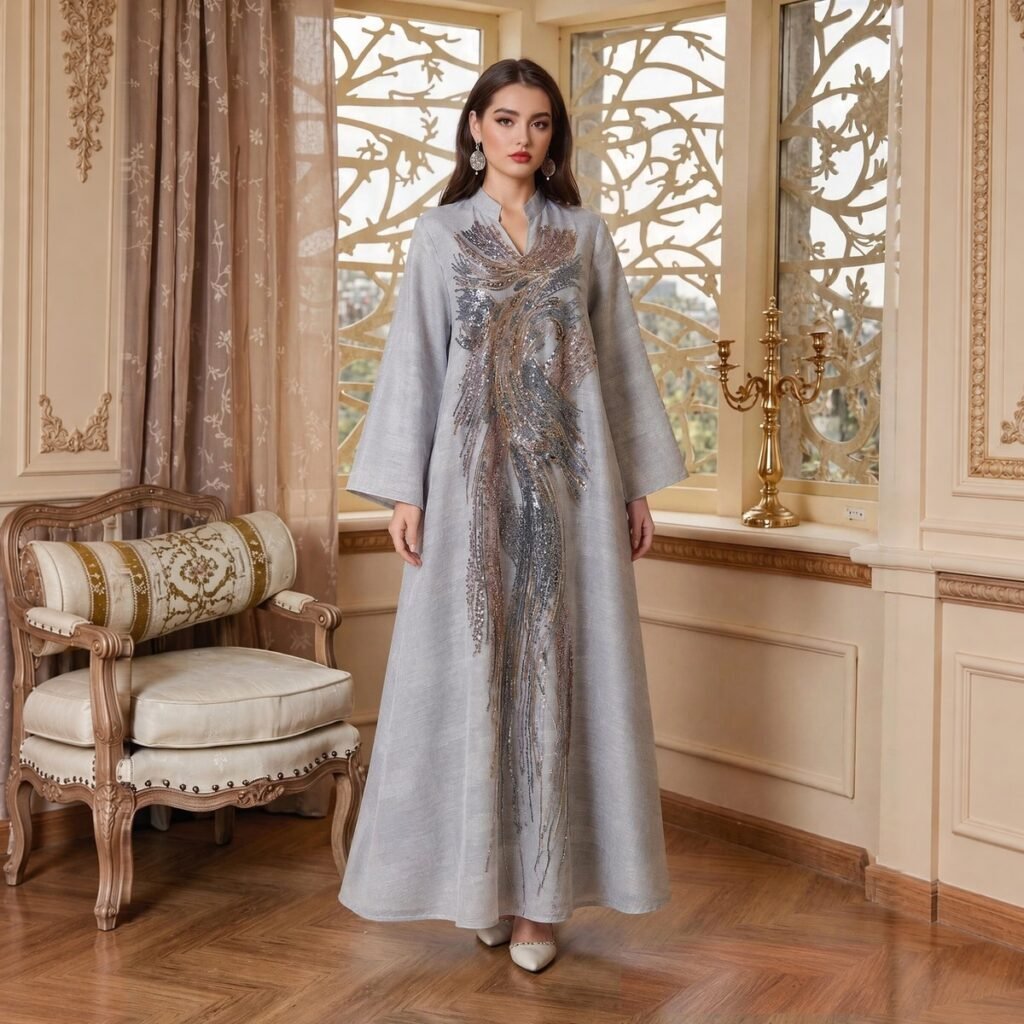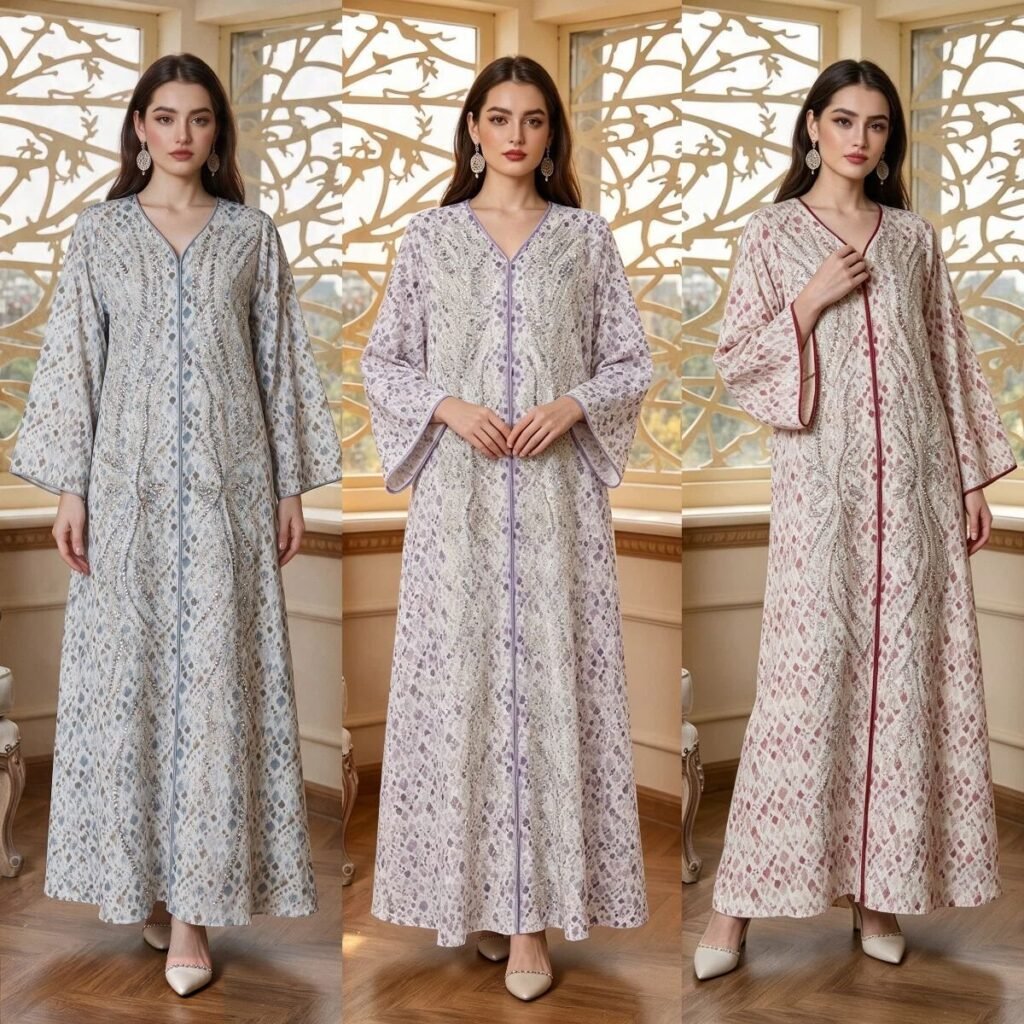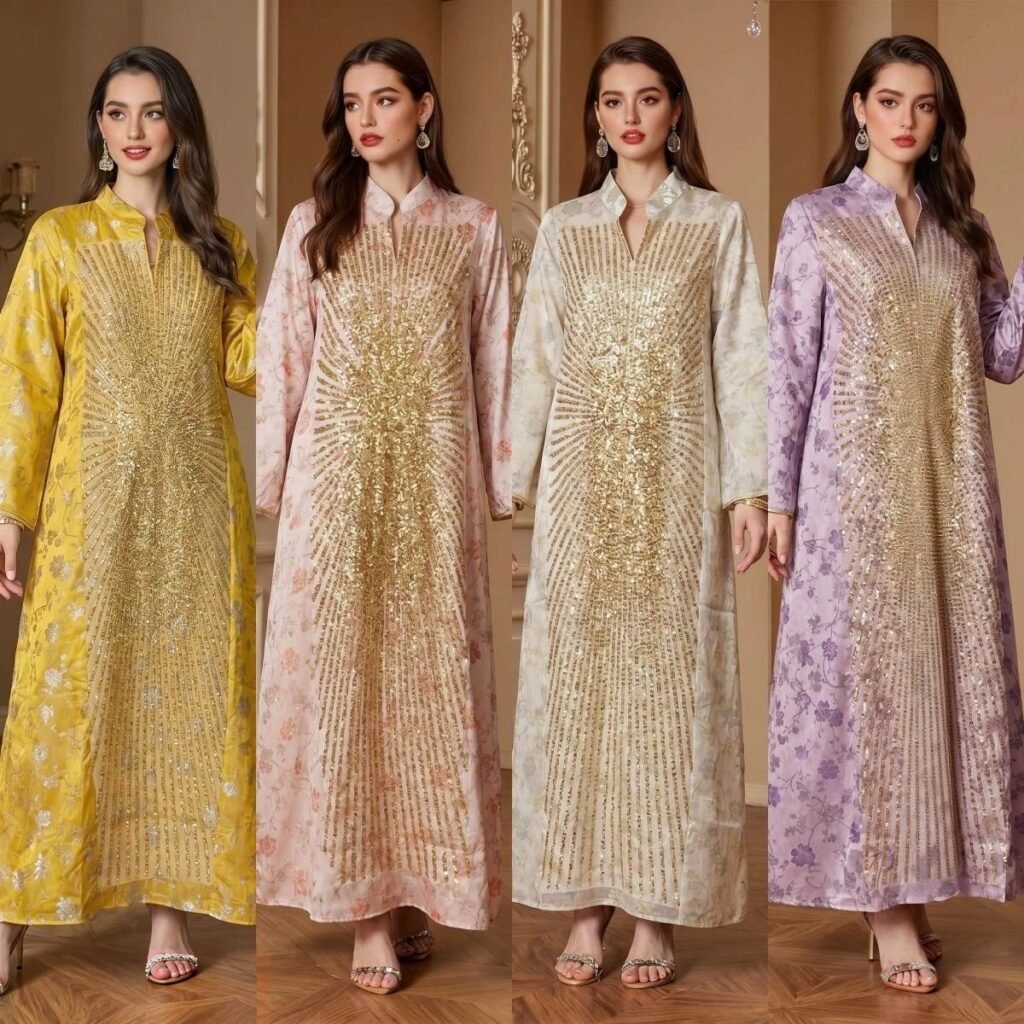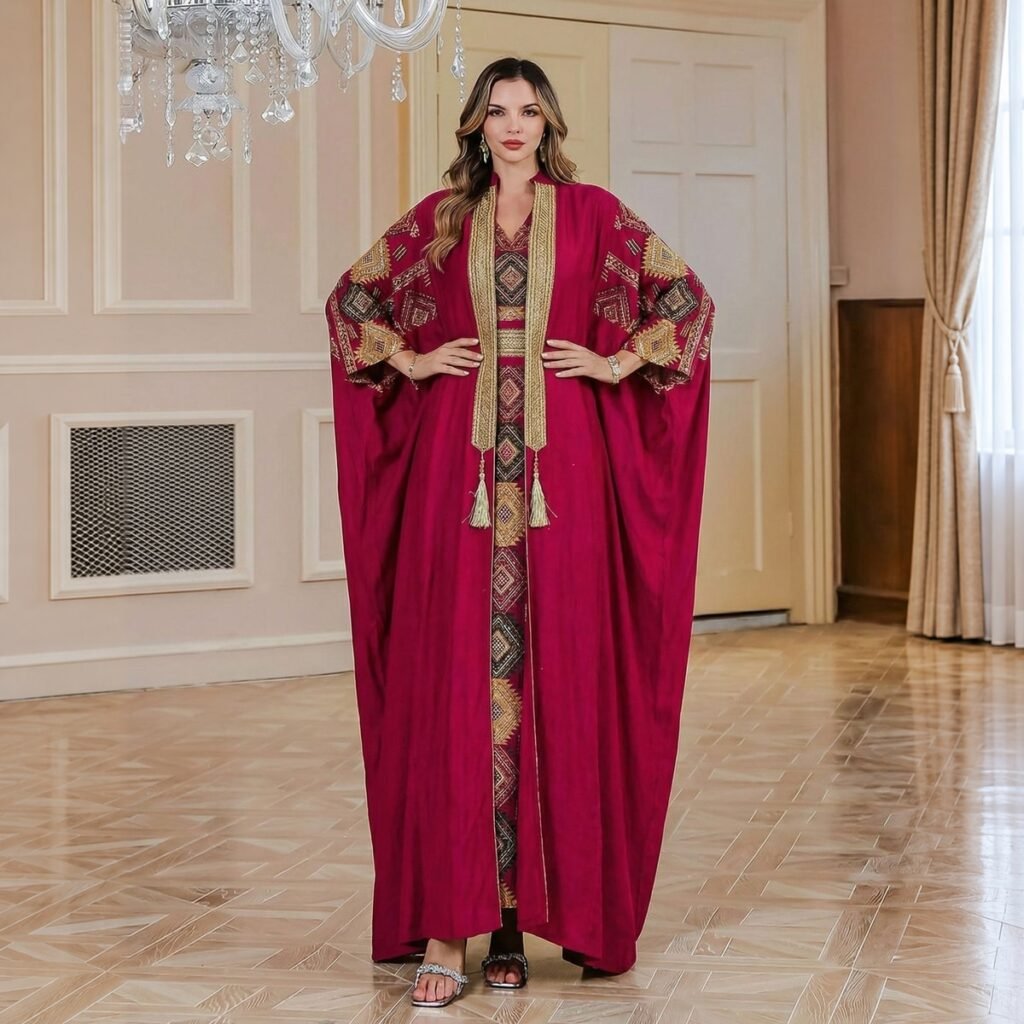








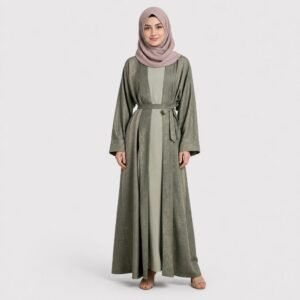

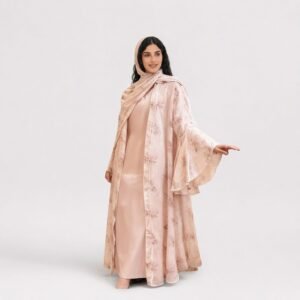


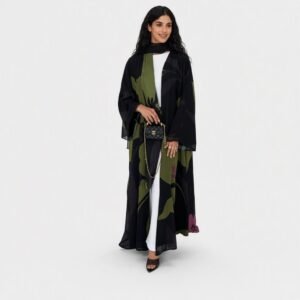

Inside the Factory — Our Production Capability
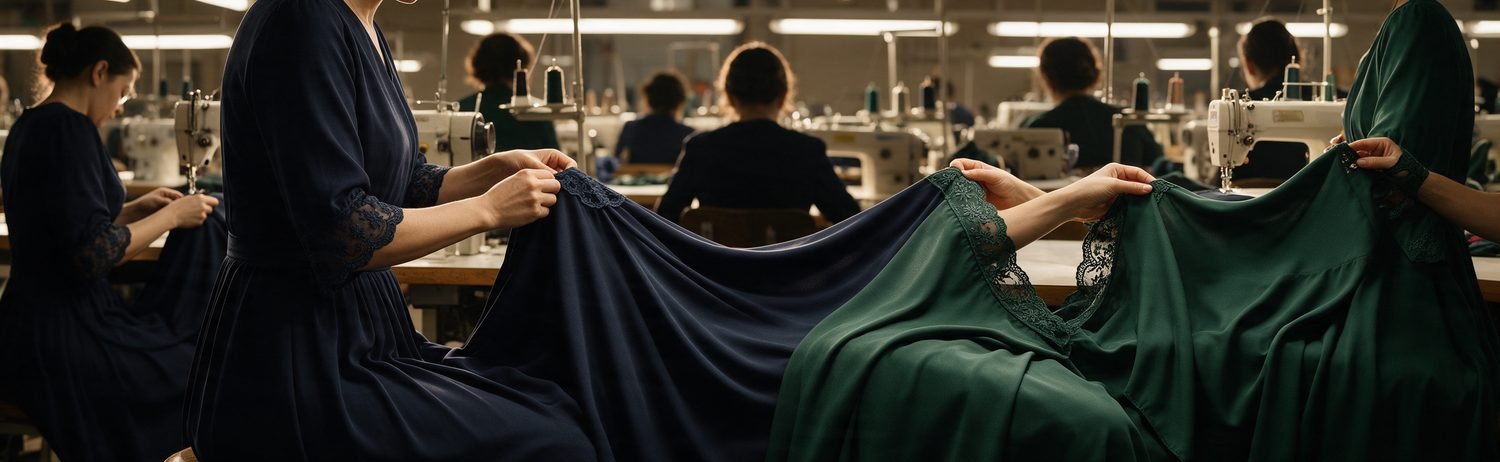
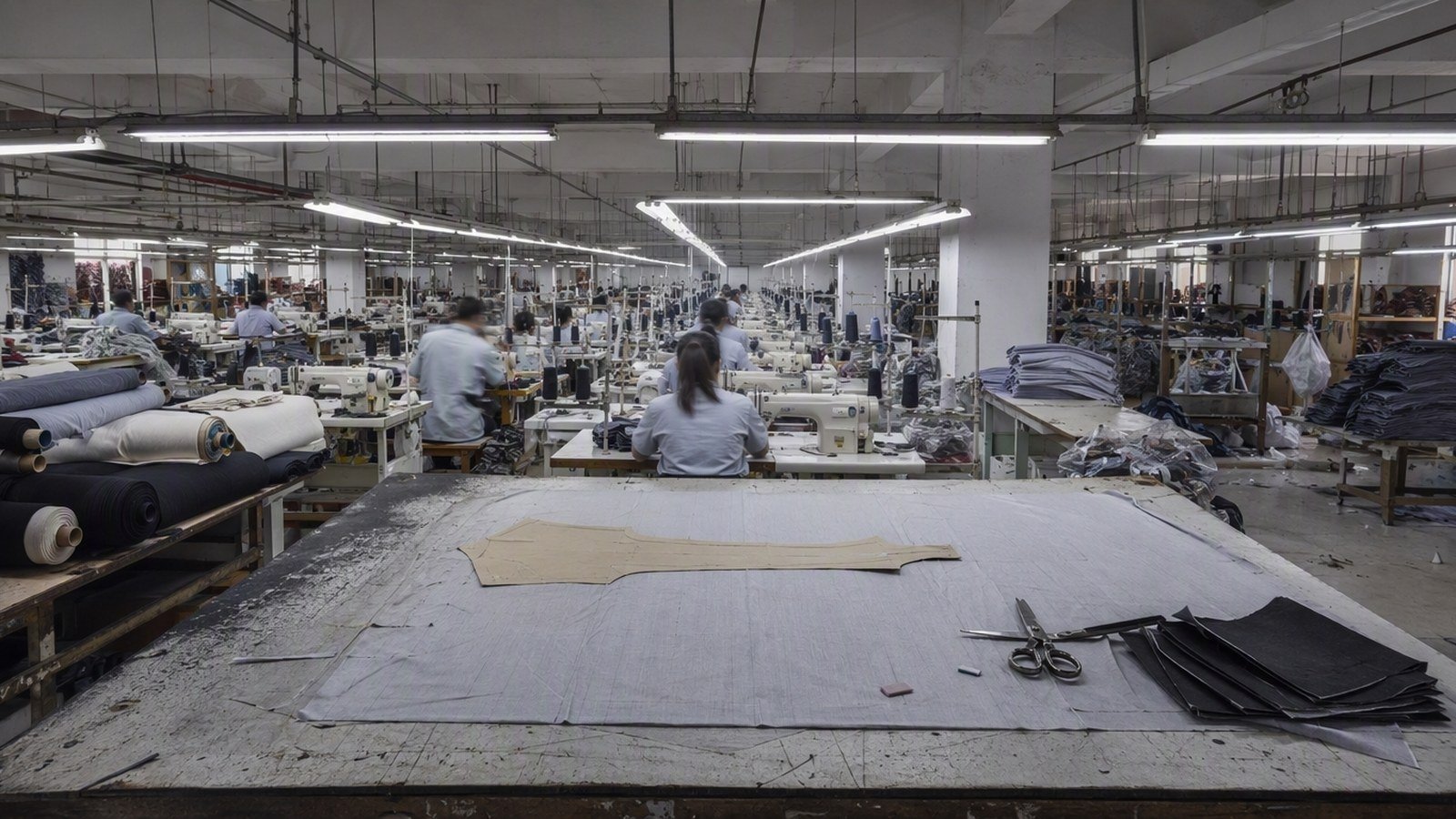
Our muslim dress factory operates six sewing lines with a combined capacity of roughly 28,000–34,000 garments per month across the modest dress range, depending on style complexity. That number is not a marketing figure — it moves up and down with the product mix, and understanding why it moves is the difference between a buyer who plans well and a buyer who is surprised in week six.
An everyday jersey maxi dress with four seams and a faced neckline runs through a line at roughly 180–220 pieces per operator-day at full flow. A hand-embroidered occasion dress with a lined bodice, invisible zip, beaded cuff and French-seamed chiffon overlay runs at 12–20 pieces per operator-day — an order of magnitude slower, and it occupies more stations per garment because the work cannot be split across operators without losing accuracy. Same factory, same month, radically different output. This is why we quote capacity in pieces per style rather than a single headline number, and why we will tell you honestly when a request does not fit the calendar.
Around the sewing lines sit the departments that decide whether the finished garment is actually right: pattern and grading, CAD marking and cutting, embroidery, and quality control. Each is staffed by our own team, and each has authority to stop production. A cutting supervisor who finds a shade deviation in a roll can halt the lay. A QC inspector who finds a hem running 8 mm out can hold the lot. That authority is not delegated to a third party, because a third party has no incentive to use it.
Process Capability — What Each Station Does
Below is the chain a modest dress actually passes through in our factory, station by station. Buyers who know these steps write tighter tech packs, catch problems at the right stage and get fewer surprises at final inspection.
CAD pattern development from your tech pack, a reference garment or our own block library. Grading to your size curve, including extended sizes to 6XL. Marker making for fabric efficiency — a well-nested marker saves 6–11% of fabric consumption against a hand-laid marker, which comes straight off your unit cost.
Automatic marker plotting and manual spreading on 10-metre tables. Lay height runs 30–80 plies depending on fabric weight and slip. Chiffon and satin are spread short and cut with a lubricated blade; stable wovens like nida and crepe run deep. Shade-banded rolls are laid in sequence so no single lay mixes dye lots.
Straight-knife cutting machines for long runs, die cutting for high-volume repeat components such as cuffs and pocket bags. Every bundle is numbered and ticketed against the marker so a missing panel is traceable to the lay. Cutting accuracy is held to ±2 mm on the panel.
Edge finishing and seam neatening on jersey, crepe and chiffon. A 4-thread overlock both sews and trims a stretch seam in one pass — essential on jersey dresses and prayer garments where the seam must stretch with the fabric and not crack after ten washes.
The workhorse for woven dresses: side seams, shoulder seams, sleeve insertion, neckline facing, hem topstitching. We hold 0.6–1.2 mm stitch-length tolerances and set thread tension per fabric. On chiffon and satin, seams run with tissue or a roller foot to prevent puckering.
Used where a seam has to stretch and stay flat: modest sportswear, active dresses, jersey maxis, underscarf and sport hijab edges. A coverstitch hem folds and reinforces in one pass and does not pop under tension — a lockstitch hem on stretch knit will.
Multi-head computerised embroidery machines with 12 and 20 heads, plus sequin devices and a chenille attachment. Digitising is done in-house from your artwork, with a sew-out sample approved by you before the production run. Embroidery is stitched on a stabilised panel before assembly, so the panel is cut oversized and trimmed after.
Blind-hem machines for lined and lightweight hems, bartack machines for stress points, buttonhole and snap-setting machines, pleating and smocking rollers for kaftan and prayer dress detailing. These are the stations that decide whether a garment reads as factory-made or as properly made.
Vacuum tables and steam presses with per-fabric heat and moisture settings. A crepe dress pressed at satin temperature will glaze permanently — pressing parameters are set per fabric and posted at the station. Final thread trimming and a full-surface lint check before the garment leaves the floor.
Inline checks through cutting and sewing, a documented 3-point inspection at 30% completion, and a final AQL 2.5 inspection before packing. Every inspection is photographed and the images are sent to you before the balance payment is due. If a third-party inspection is required by your market or your buyer, we cooperate with the nominated agency and schedule it into the production calendar before the run starts — SGS, Bureau Veritas and Intertek have all inspected on our floor.
A needle control log is kept for every line, with broken needle parts retained and signed off. Finished garments pass a metal detector before packing on request, which is a standard requirement for several European and North American retail buyers.
Your woven label, care and composition label, hangtag, size sticker, individual polybag and export carton. Polybag sizing is checked so the garment does not crease inside it, and carton packing is planned so a mixed-size, mixed-colour order unpacks in a straight line rather than a sorting exercise.