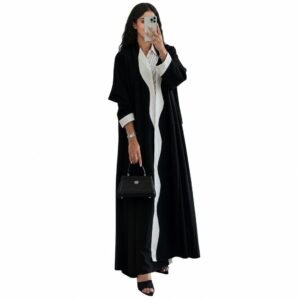
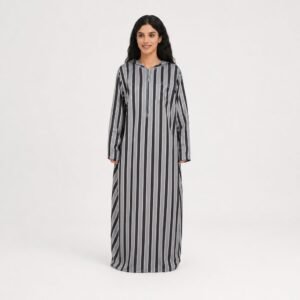
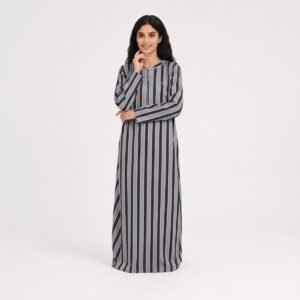
50 pcs

Wholesale minimum per style and colour

From $12.98

FOB factory price per piece

8–12hr Reply

We reply to every inquiry within 8–12 hours

XS–3XL

Sizes mix freely, no size minimum

–10%

Volume discount from 1,000 pieces

35–45 days

Production to shipment, bulk orders

15–20 days

Reorder turnaround on stock-fabric core styles

T/T & LC

30/70 terms; letter of credit from $10,000

OEKO-TEX® Standard 100 GRS 4.0 Recycled BSCI ISO 9001

Mill certificates, audit reports and test reports available with your quotation on request.

Buying Abayas Wholesale — What Actually Changes at Volume

The Difference Between a Wholesale Supplier and a Factory That Sells Wholesale

Most pages selling wholesale abayas are written by trading companies. They hold no fabric, own no cutting table, and buy your order from a factory the same way you could — with a markup on top. That is why their lead times move, why their reorders come back a different shade, and why the person answering your email cannot tell you what the hem allowance is. The commercial difference is not the price on the page. It is what happens when something goes wrong at piece 400 of a 2,000-piece order.

We manufacture. Our abaya factory handles cutting, sewing, finishing, QC and export packing inside our own facility, and the account manager handling your order sits in the same building as the production line. That matters for wholesale specifically, because wholesale buyers are judged by their own customers on three things: did the goods arrive on the date promised, does the second shipment match the first, and does the unit cost hold. Everything on this page is organised around those three. If you need a custom design developed rather than a catalogue style bought in bulk, that is a different route — the abaya manufacturer page covers OEM and ODM in detail.

Wholesale Tier Pricing — What Each Volume Band Actually Costs

Below is our published abaya wholesale price ladder. Prices are FOB Shanghai / Ningbo per piece, in USD, and they fall as volume rises because fabric is bought by the roll, cutting is laid by the marker, and sewing is balanced across a line — all three get cheaper per unit as the order gets bigger. The tiers are real bands, not a negotiating position: if your quantity lands in a band, that is the price.

Wholesale style 50–99 pcs 100–299 pcs 300–499 pcs 500–999 pcs 1,000–2,999 pcs 3,000+ pcs
Everyday open abaya
Polyester crepe, unlined
$16.40$14.90$14.60$14.15$13.40$12.98
Closed abaya
Nida, overhead entry
$19.70$17.90$17.55$17.00$16.10$14.30
Kimono / open abaya
Korean crepe, contrast trim
$21.45$19.50$19.10$18.50$17.55$15.60
Butterfly abaya
Chiffon, fully lined
$24.65$22.40$21.95$21.30$20.15$17.90
Sports & active abaya
Knit blend, stretch panels
$24.00$21.80$21.35$20.70$19.60$17.40
Machine-embroidered abaya
Nida or satin, contrast thread
$27.40$24.90$24.40$23.65$22.40$19.90
Luxury & occasion
Satin, organza overlay, hand-set stone
$38.40$34.90$34.20$33.15$31.40$27.90

How the discount ladder works. The band pricing above is already the discount — you do not apply a percentage on top. As a rule of thumb the ladder runs: 500 pcs –5%, 1,000 pcs –10%, and 3,000+ pcs negotiable against the 100–299 pcs price, which is exactly what the factory-gate numbers above show. Every tier is a hard volume band, so the cheapest route to the 1,000-piece price is usually to consolidate two 500-piece styles into one order rather than to negotiate — see the mixed-batch rules further down. Our core catalogue spans $12.98–$24.90/piece FOB; luxury and occasion lines sit above that because the fabric and hand work cost what they cost. On 3,000+ pieces we will also quote against a signed 12-month supply agreement with a locked unit cost and quarterly call-off, which is how most of our distributor accounts buy.

Inside the FOB price: fabric, cutting, sewing, finishing, your woven neck label and care label, hangtag, individual polybag, export carton. Outside it: freight, insurance, import duty, and whatever testing your destination market demands. If you would rather see one landed number, ask for a DDP quotation and we calculate duty into it from the start.

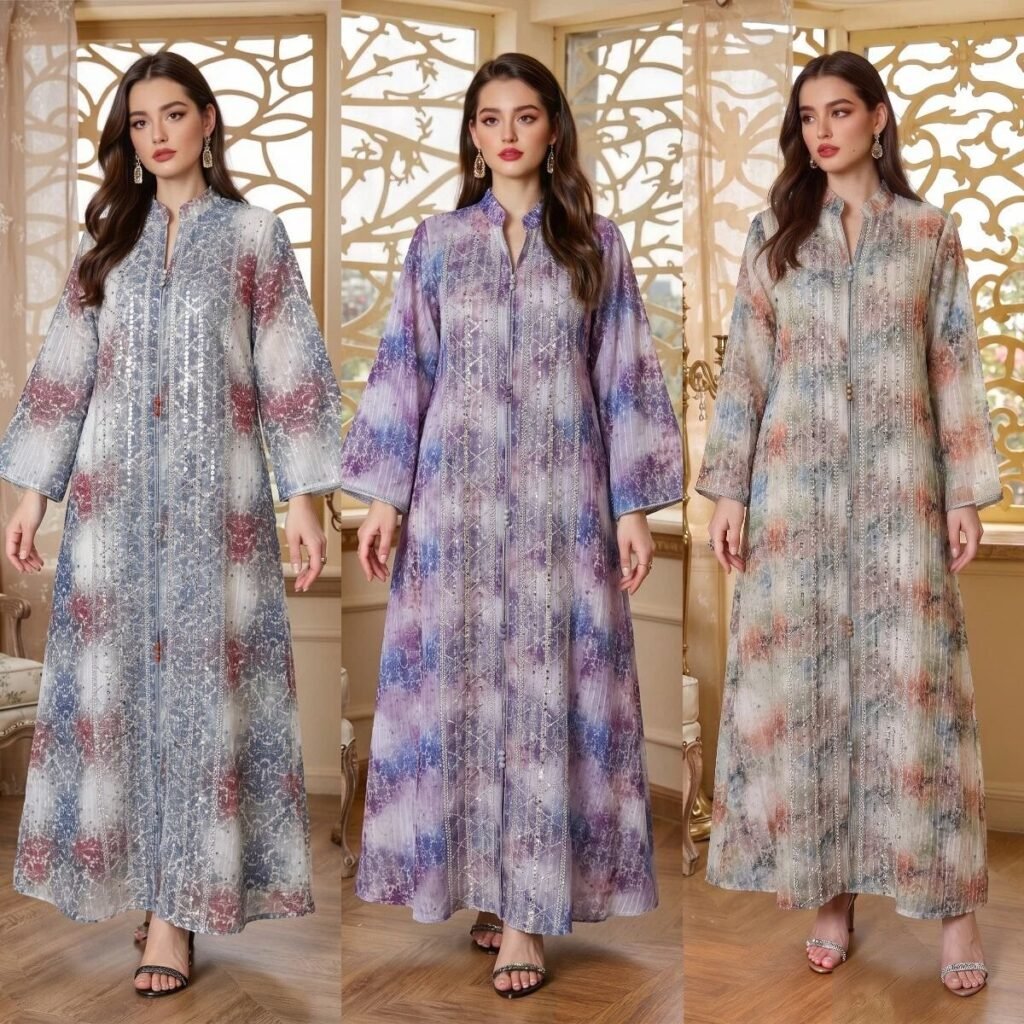
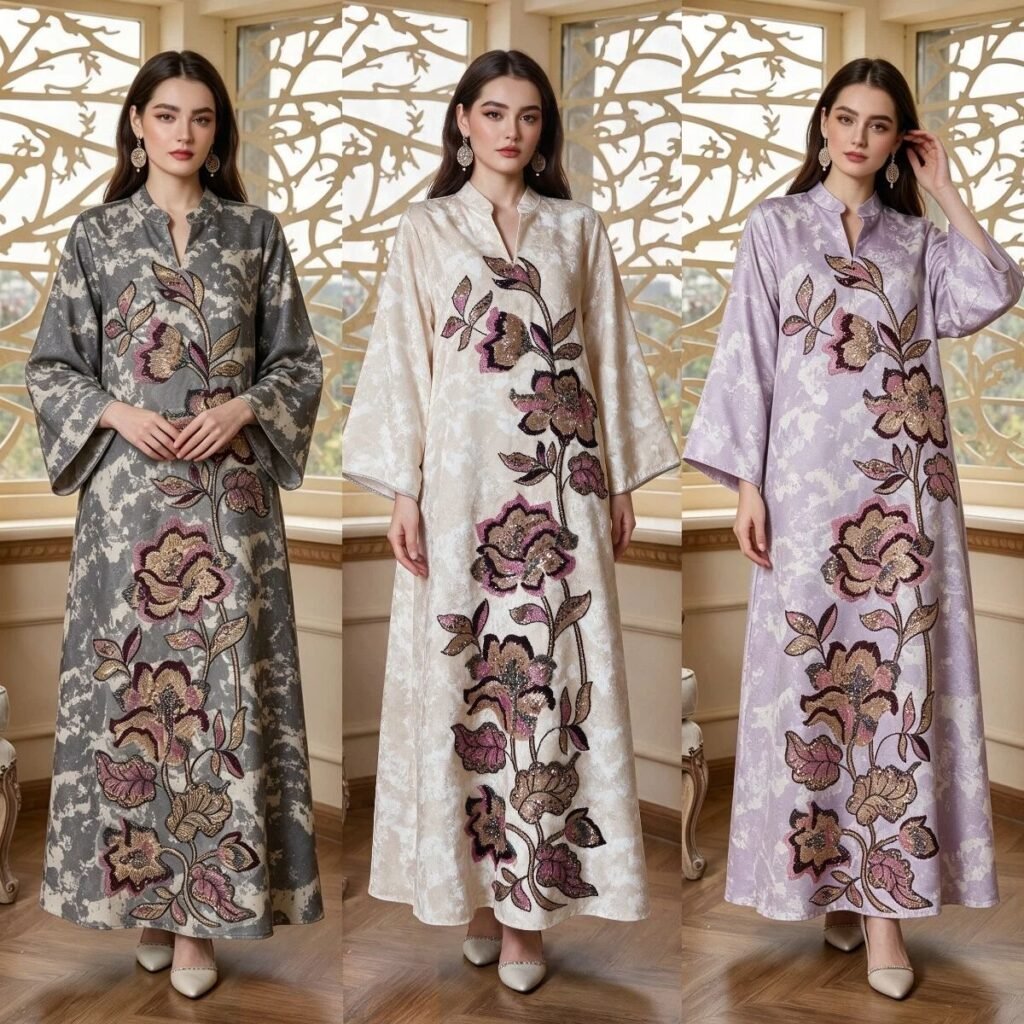
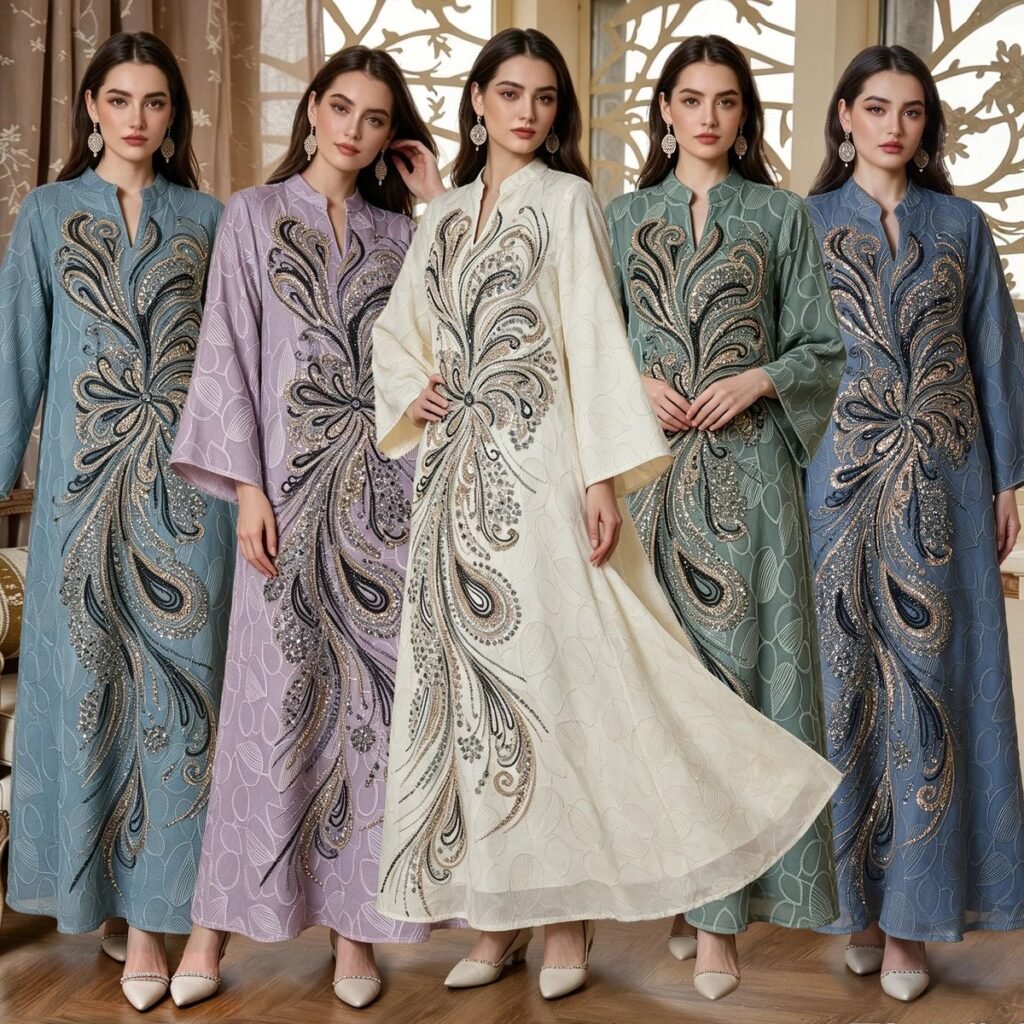
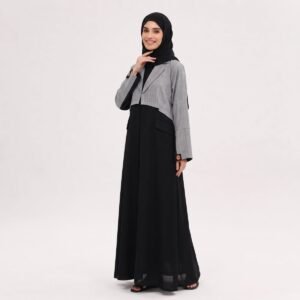
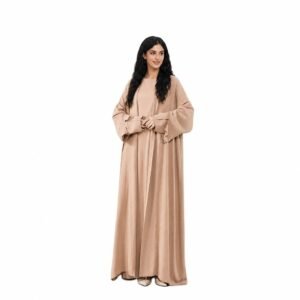
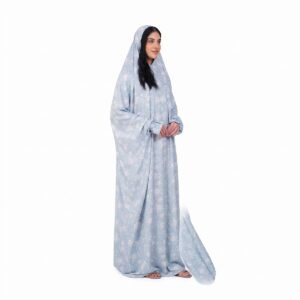
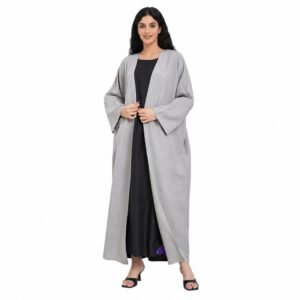
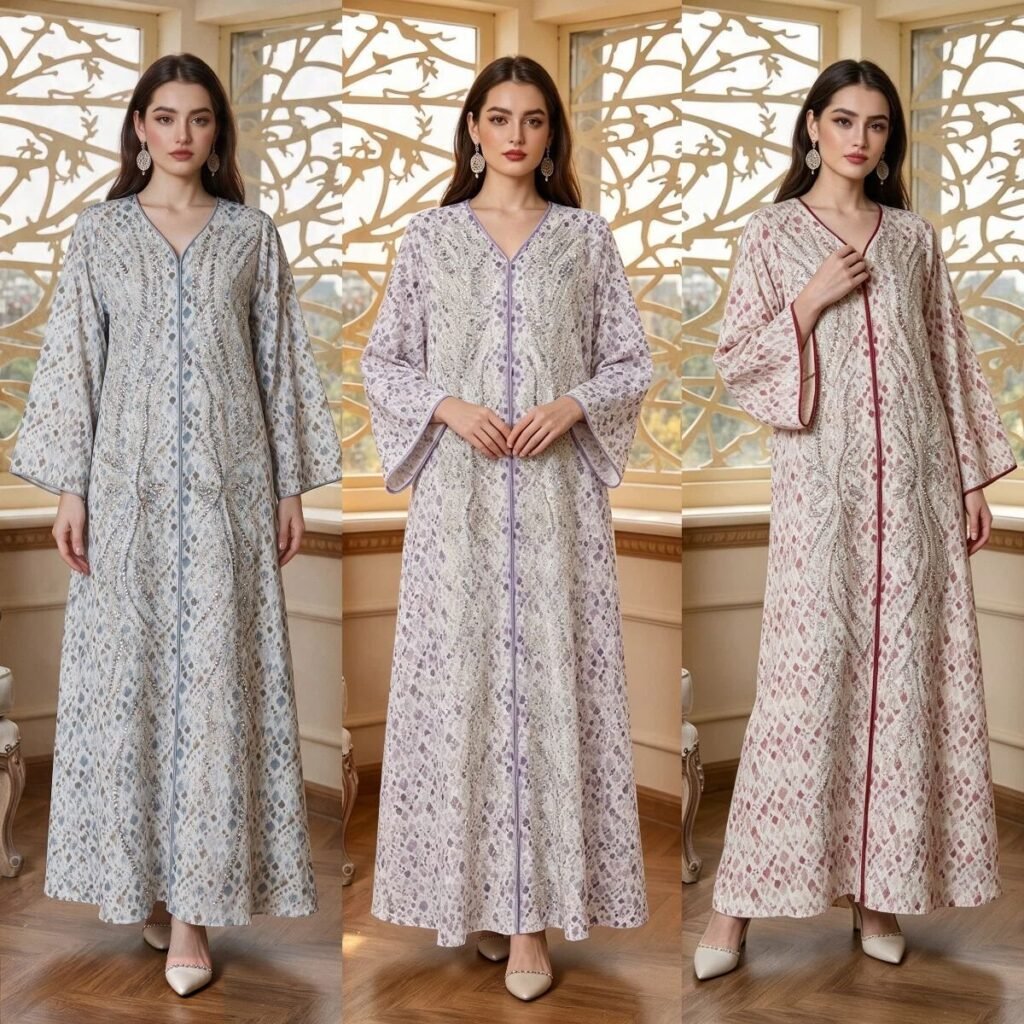
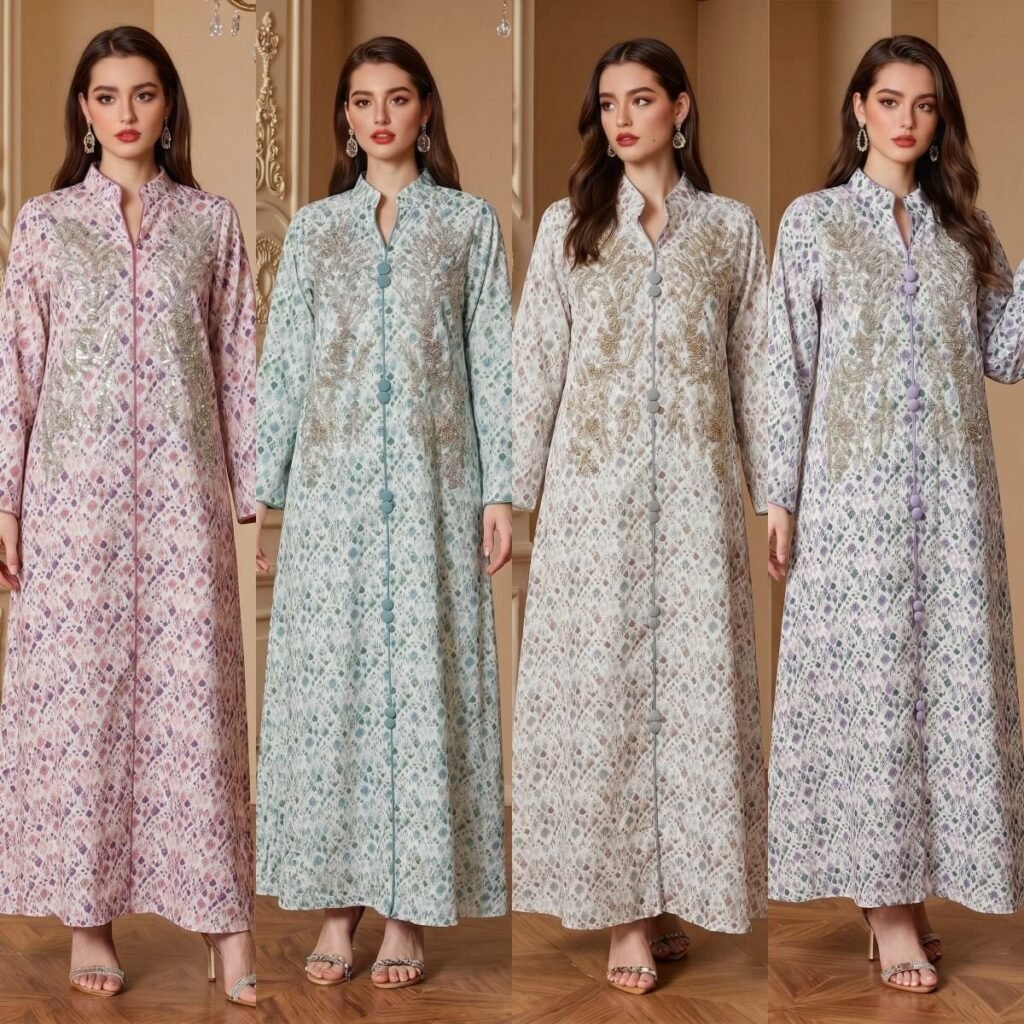
Wholesale Abaya Collection

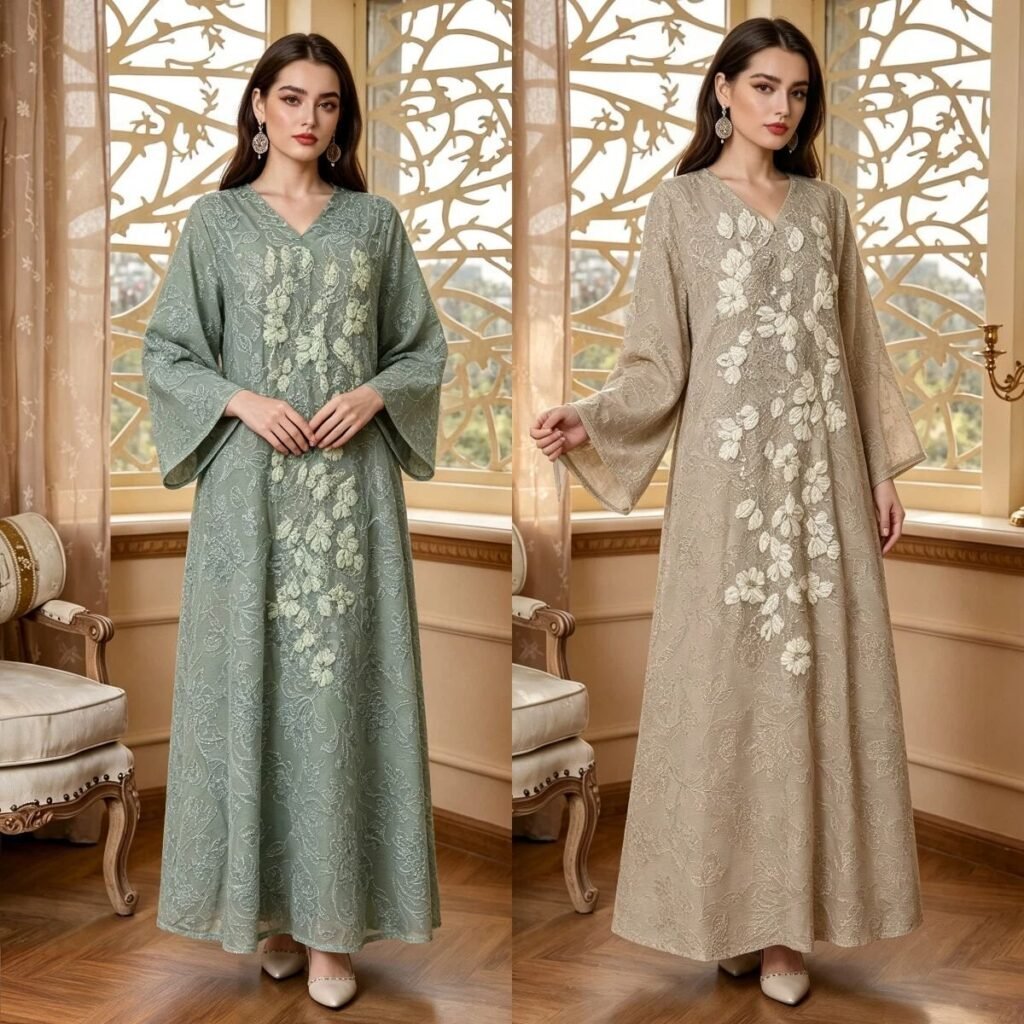
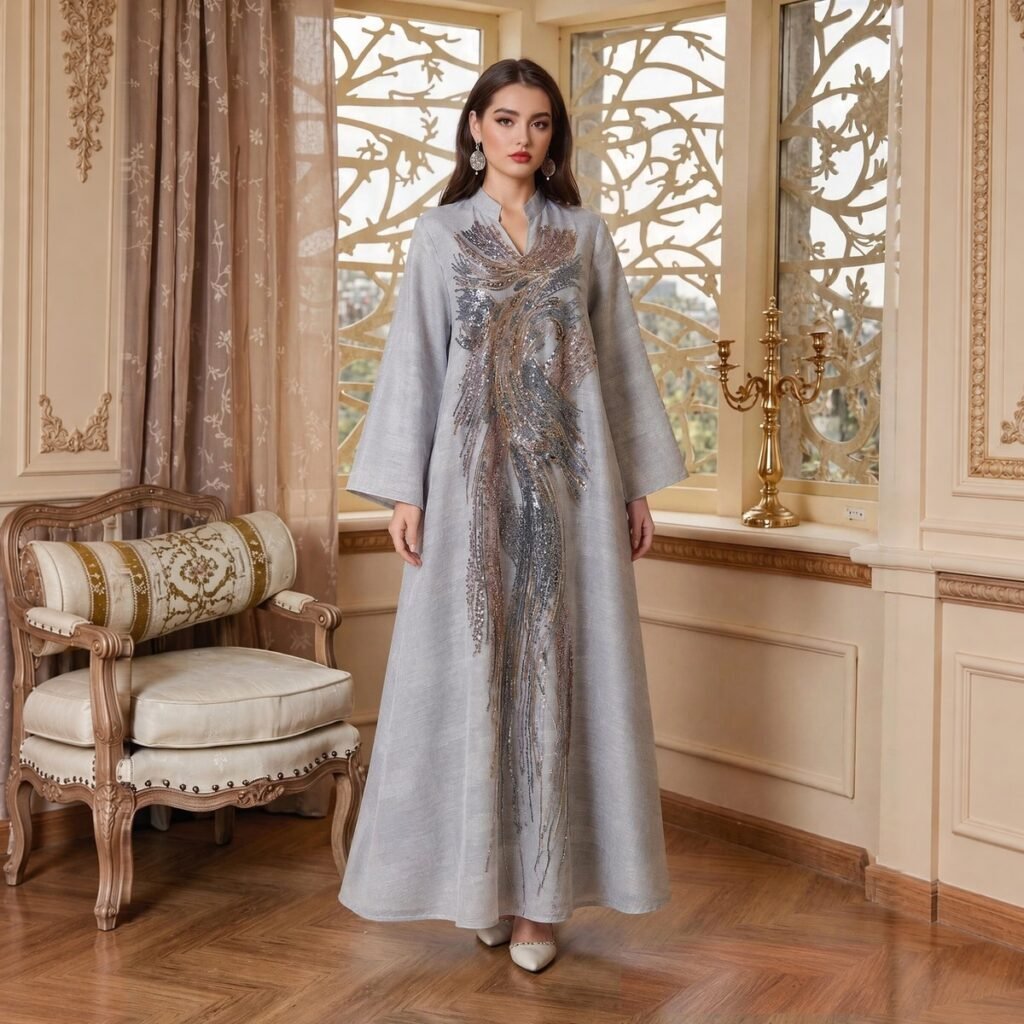
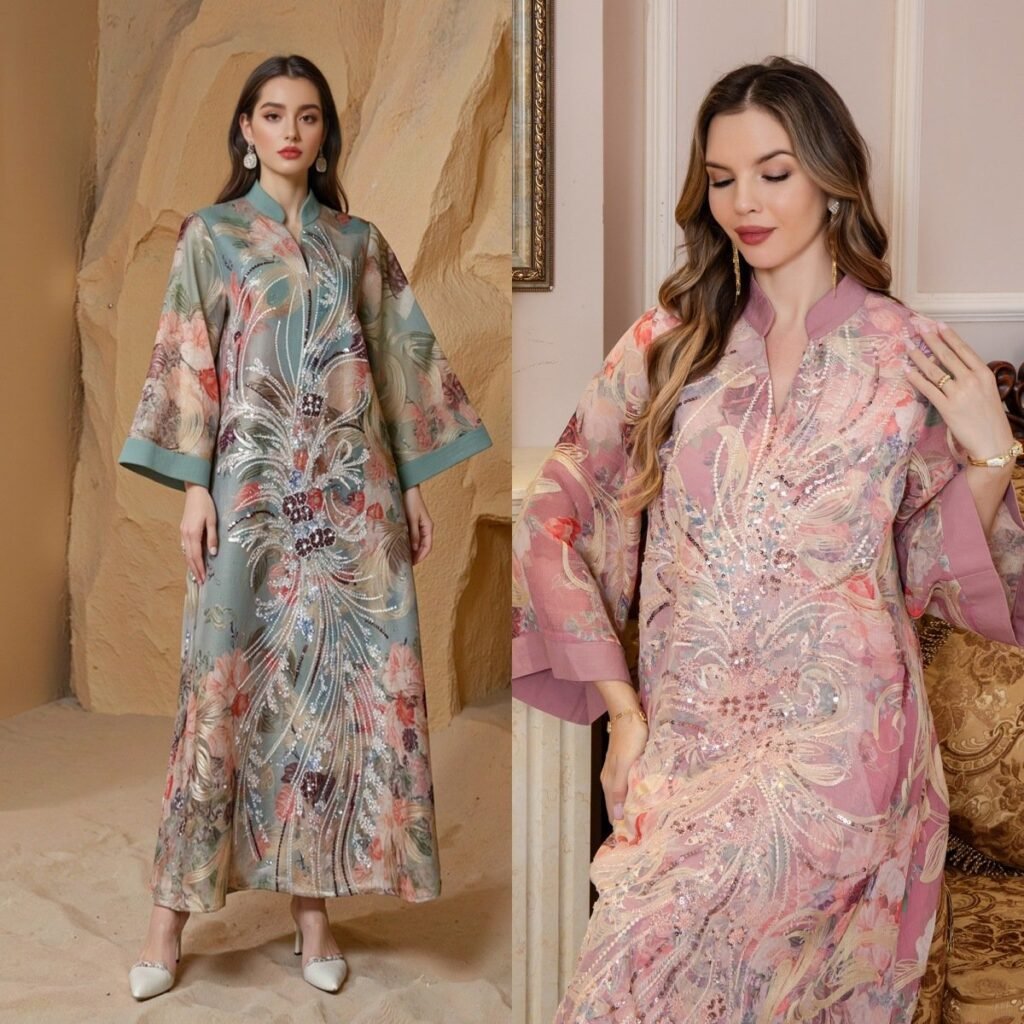
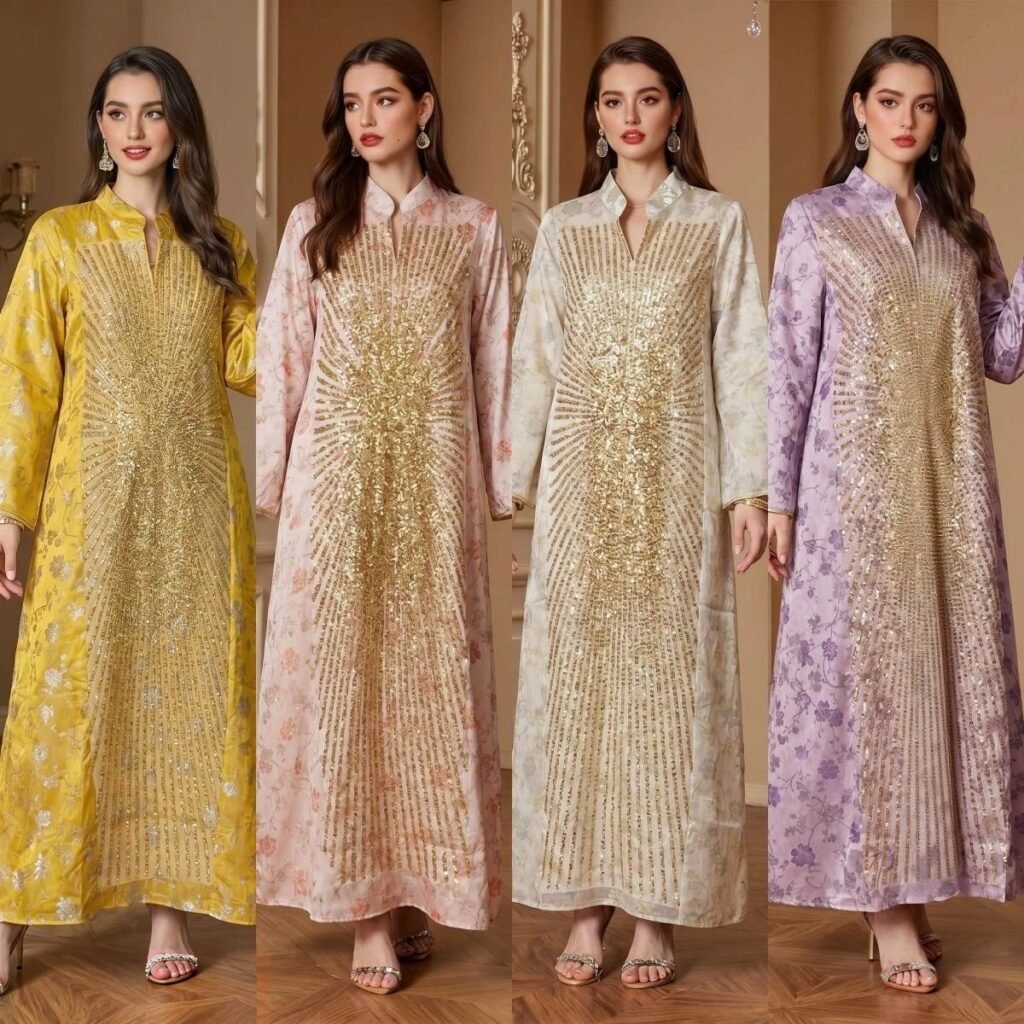
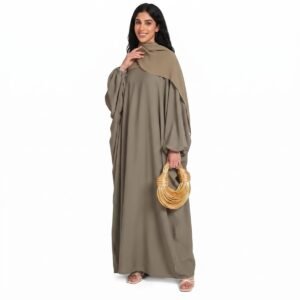
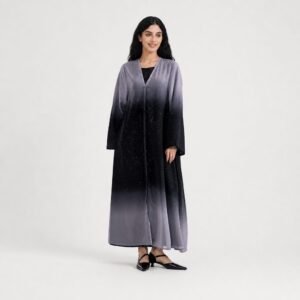
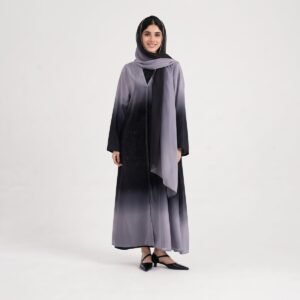
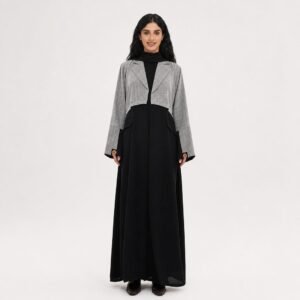
Wholesale abaya reference styles — all available for bulk OEM and private label orders from 50 pieces per style.
Ready-Stock Core Styles vs Made-to-Order Bulk

This is the question wholesale buyers ask first, and it is the one most suppliers answer dishonestly. “Ready stock” at a trading company usually means dead inventory — colours and sizes that did not sell, being pushed at a discount. Anyone claiming to hold 5,000 finished abayas across every size, colour and style is either sitting on a warehouse of unsold goods or is about to make you wait while they place your order at a factory.

What we actually operate is a stock-fabric core programme. We hold nida, polyester crepe and Korean crepe in depth year-round in the shades that turn over fastest — black, navy, charcoal, beige, taupe and off-white — and we run the six core styles on a rolling production schedule. That means a core-style order in a stock shade moves onto the line immediately instead of waiting for a fabric delivery, which is where the 15–20 day turnaround comes from. What we do not do is finish abayas speculatively in every size and colour, because finished goods in the wrong size run are the most expensive inventory in this trade.

  Stock-Fabric Core Styles Made-to-Order Bulk
What it meansCore style, stock fabric shade, standard size runYour colour, your size curve, your spec, your trim
MOQ50 pcs per style per colour50 pcs per style per colour
Production15–20 days35–45 days
Colour range6 stock shades, held in depthAny Pantone, lab dip in 5–7 days
Fabric riskNone — fabric already on the floorMill lead time applies if it is a new quality
PriceSame tier ladder, no sampling costSame tier ladder, sample fee credited
Best forFilling shelves fast, testing a new market, reordersBuilding a differentiated range you can defend on price

The honest trade-off. Stock-fabric core styles are the fastest and lowest-risk way to get abayas on a shelf, and they are also the most exposed — if your neighbour buys the same black nida closed abaya from us, you are competing on Instagram photography and price alone. Made-to-order costs you a 35–45 day wait and a sample round, and buys you a product nobody else on your street is selling. Most successful wholesale accounts run both: core styles for cash flow, a made-to-order line at a higher margin to build the brand. If your market needs something outside our stock shades, we source against your specification rather than talking you into what we already have on the floor.

Wholesale Abaya Styles — The Six That Carry the Volume

Everything below is available for immediate bulk ordering, with or without your label. Where a style has a construction quirk that affects your landed cost or your reorder, it is written out rather than hidden.

The bestselling wholesale abaya style globally, and the one that ships the most units off our floor. Front-open, worn over an inner dress or co-ord, so the end customer treats it as a layering piece rather than a full cover. For a wholesaler this is the ideal volume SKU: it sells year-round, it is not size-critical because the fit is loose and open, and a single size run covers most of the customer base. Lightweight open-front construction in polyester crepe, Korean crepe, chiffon and nida, available in black and a full colour range.

Construction notes: placket or open front with no closure, or a single hidden snap at the chest. Sleeve options are straight, bell, flared or cuffed. Length runs 54–60 inches as standard and we grade to your market. Because there is no front closure to hide behind, the front edge finish decides whether the garment reads as premium — we do a clean folded-and-topstitched edge or a bound edge with contrast piping, and that distinction is worth about $0.80 of cost per piece and roughly $15 of retail price. Wholesale note: this style packs 30–36 pieces per export carton and is the most container-efficient item in the range, so if you are consolidating toward a full container, weight the mix toward it.

Closed Abaya (Pull-Over)

The traditional full-coverage closed abaya in crepe and nida, and a core inventory staple for UK, North American, Southeast Asian, West African and Gulf retailers. Conservative silhouette, wide global appeal, no closure to date it. If you are stocking a modest wear category for the first time, this is the safest opening order you can place — it is the style least likely to sit on a shelf, and it reorders at the most predictable rate of anything we produce.

Construction notes: overhead entry with a faced neckline, often with a concealed zip at the back neck for ease. Straight sleeves or slightly tapered. Because the front is a single uninterrupted panel, we cut it from a single ply rather than joining two pieces — this avoids the shade line that appears when two panels are cut from different parts of the roll, and it is the single most common defect we see in abayas returned to buyers from other suppliers. Wholesale note: nida is 160–200 g/m², so a closed abaya packs 24–30 pieces per carton; darker shades are fully opaque and the safest reorder.

Embroidered Abaya

Machine-embroidered cuffs, collar and hem detailing in black, navy and charcoal with gold, silver or tonal contrast thread. Our highest-margin wholesale category, and the one that justifies a premium shelf position — premium embroidered lines retail at roughly 2–3× the price of a plain style from a similar wholesale cost. The bulk of the volume is machine embroidery, which is repeatable, colour-consistent across a large order, and priced to a published tier.

Construction notes: embroidery is stitched on a stabilised panel before assembly, so the panel must be cut oversized and trimmed after — this is the step most factories skip to save fabric, and it is precisely why embroidery pulls and puckers on cheaper abayas after the first wash. Contrast thread must be matched to the approved shade card on every dye lot, not just the first. Wholesale note: hand embroidery and hand-set stone capacity is limited and books out 8–10 weeks ahead of Ramadan and Eid. If you are planning a seasonal embroidered line, confirm early or you will be buying someone else's leftover capacity at a premium.

Butterfly Abaya

A flared, flowing cut with wide sleeves and volume that starts at the shoulder or waist. Lightweight chiffon construction, usually fully lined. Popular in Middle Eastern, UK, Australian and African markets, and the single strongest seasonal performer we produce — Ramadan and Eid demand for butterfly and cape silhouettes is concentrated and predictable, which makes it a good style to plan against a fixed calendar.

Construction notes: the flare is created by panel insertion rather than by gathering, so panels must be cut on the correct grain or the hem will hang unevenly. This is a pattern-making job, not a cutting job. The cut is also fabric-hungry — expect 15–25% more fabric consumption per piece than a straight abaya, which is why the tier pricing starts higher. Wholesale note: the flare packs loosely, 18–24 pieces per carton, and a chiffon butterfly abaya needs lining for opacity in the lighter shades. Book embroidered or stone-set butterfly styles 8 weeks before your selling season opens.

Sports & Active Abaya

Breathable, moisture-wicking construction on a knit or stretch-woven base, with a relaxed fit and stretch panels at the side or underarm. A growing category in Western markets driven by Muslim women's participation in outdoor and gym activity, and one of the few modest categories where demand is genuinely still expanding rather than trading between suppliers. Buyers in this segment are usually online-first, so photography and fit consistency matter more than shelf presence.

Construction notes: the base is a knit blend rather than a woven, so the whole cutting and sewing line is set differently — different needle, different feed, different seam allowance, which is why active styles cannot be run on the same line as nida abayas. Stretch panels are joined with a four-thread overlock and flatlock, not a plain seam, so the join moves with the body instead of popping under load. Wholesale note: pack sizes are smaller because the fabric is bulkier at 24–28 pieces per carton, and colour consistency in the grey and heather blends is the reorder risk to watch — approve a physical shade band, not a screen image.

Luxury & Occasion Abaya

Satin, organza overlay and hand-embellished styles for events, weddings and formal wear. Higher unit price, higher retail ticket, suitable for premium boutiques and online retailers running a considered brand rather than a volume operation. In black and rich jewel tones, with garment-dyed options on satin subject to your colour standard.

Construction notes: fully lined where the fabric requires it, French seams on lightweight fabrics, hand-finished hems on satin and chiffon. Satin shows every seam and every needle mark, so assembly is slower and the reject rate is naturally higher than on nida — that is a real cost and it is why the tier pricing starts at $34.90. Stone and crystal application is hand-set rather than glued, which survives dry cleaning and does not yellow. Wholesale note: small lots, 12–18 pieces per carton with tissue interleaving, individual polybag with a branded hanger loop if you want it shelf-ready on arrival.

Wholesale Fabric Guide — What Your Buyers Are Actually Judging

Fabric is the decision that drives your reorder rate. It carries 60–70% of what a customer perceives as value, and most of the cost, and at wholesale volume it is also the one variable you cannot correct after the container ships. The table below is what we hold and produce regularly. Anything outside it, send us the specification and we will source to it.

Fabric Weight Handle Best for Price tier
Nida crepe160–200 g/m²Matte, fluid, wrinkle-resistantClosed abaya, everyday, volume ordersEntry–Mid
Polyester crepe150–190 g/m²Slight texture, good drape, holds colourCasual and mid-market open abayasEntry
Korean crepe170–210 g/m²Denser, softer, better recovery than standard crepeOpen and kimono abayas, boutique linesMid
Medina silk crepe140–170 g/m²Light, high drape, soft handLayered and summer stylesMid
Japanese crepe180–220 g/m²Excellent drape and hand, low creasingPremium and luxury abayasPremium
Chiffon60–90 g/m²Sheer, light, needs lining or layeringButterfly, cape and layered stylesMid
Satin90–130 g/m²Lustrous, fluid, shows every seamEvening, Eid and occasion collectionsMid–Premium
Organza40–70 g/m²Crisp, sheer, holds sculpted shapeOverlay and occasion statement piecesPremium
Moss crepe180–230 g/m²Textured, substantial, opaqueStructured and cape stylesMid
Zoom / Zoomah110–150 g/m²Crisp, slightly stiff, holds shapeFormal and structured abayasEntry–Mid
Linen blend180–220 g/m²Breathable, natural texture, creasesSummer and resort collectionsMid
Wool blend240–320 g/m²Warm, structured, heavier drapeWinter collections, UK and EuropePremium

Opaque or not? This is the question that decides whether a wholesale account reorders, and it cannot be answered from a weight number alone. A 150 g/m² nida in a dark colour is fully opaque; a 150 g/m² chiffon is not, in any colour. We test opacity against the assembled garment in daylight before bulk cutting and tell you before production, not after the container lands. If your market requires guaranteed coverage, specify opaque on your order and we will propose fabrics that meet it. All our main wholesale qualities are tested for colourfastness and pilling resistance, with mill certificates available on request.

Mixed-Batch Policy — How Mixing Styles, Colours and Sizes Actually Works

Wholesale buyers live or die on being able to build a balanced inventory rather than a lopsided one. That means mixing, and it means knowing exactly what the minimum is before you commit. Here are our rules, stated plainly, with no “contact us for details”.

Mix styles freely
Within one order you can combine any number of styles. The 50-piece minimum applies per style per colour, not per order. A 250-piece order can be five styles at 50 pieces each, or two styles at 125.
No separate floor for mixed orders
There is no extra minimum for mixing styles. Each style simply starts at 50 pieces per colour, so a first order of three styles can be as small as 150 pieces. The price band is set by the total quantity across all styles.
Mix colours within a style
Yes, with one condition: each colour needs its own dye lot, so each colour carries its own 50-piece minimum at the standard tier. Splitting one 50-piece style across several colours is possible on stock shades only.
Mix sizes freely
Sizes mix freely with no surcharge and no size-based minimum. A 50-piece order can be 50 pieces of one size or a full XS–3XL run. We do not multiply the minimum by size — 50 pieces means 50 garments.
How the tier is calculated
Your discount tier is set by the total order quantity, not by the largest single style. Two styles at 500 pieces each land in the 1,000-piece band and price at that tier, which is the cheapest way to reach a better band.
One shipment, one set of documents
Mixed orders are consolidated, packed together and shipped as one consignment with a single set of export documents. That is where the real saving sits — freight per unit falls sharply when you are not paying for four separate part-loads.
What cannot be mixed
Orders running on different fabrics from different mills, and orders where one style carries embroidery and another does not, may split across two production windows. We will tell you at quotation if your mix cannot run as a single batch.
Mixed colour in one size run
Standard practice for most of our retail-chain accounts: a size run (XS–3XL) across three to four colours, totalling 200–400 pieces per style. Tell us your size curve and we will build the ratio for you.

Sizing for mixed orders. Most buyers order a size run across several colours rather than deep in one combination, and we will build the ratio from your own sales history if you send it. If you are opening a new market and do not have history yet, we recommend a 1:2:2:2:1 ratio across XS–XL as a starting point for Gulf sizing, and a 1:2:3:2:1 ratio for UK/US markets where the mid-sizes carry the volume. Getting the ratio right on the first order is worth more than any discount tier — the wrong size spread is the only inventory a wholesaler cannot move at any price.

Wholesale, OEM, ODM or Private Label — Which Route Fits You

Sourcing uses these four terms interchangeably. They are four different commercial arrangements, with different minimums, different lead times and different amounts of control over the product. Only one means buying goods that already exist — wholesale. The other three are commission work, and they are priced and scheduled accordingly.

  Wholesale (Stock Range) Private Label ODM — Customise Ours OEM — Your Design
Who designs itUs, from the standing catalogueUs — label only changesWe hold the base, you modifyYou
What you supplyStyle number, colour, quantitiesLogo artworkReference or selectionTech pack, measurements, fabric spec
Minimum50 pcs / style / colour50 pcs / style50 pcs / style50 pcs / style
Lead time15–20 days (stock fabric)+7 days over wholesale7–10 days to modify2–4 weeks pattern + proto
LabelingGeneric, or your label as an add-on from 50 pcsFull — woven, care, hangtag, packagingFullFull
Who owns the designOurs; shared across buyersBase is shared; label is yoursYou own your version; base stays oursYou, exclusively
Best whenYou need stock fast at the lowest unit costYou are testing demand before investing in designYou want speed to market at low riskYou have a point of difference worth protecting

Where the money actually is. Wholesale and private label are the fastest and cheapest way to start, and the easiest position to lose — if your product is a stock base with your label sewn in, the shop down the road buys the same base and undercuts you. That is a fine test. It is not a business. The accounts still trading in year three almost always run a hybrid: volume core styles from the stock range keeping cash moving, plus one or two ODM or OEM lines at a higher ticket that nobody can copy. If you want to move that way, the custom abaya manufacturing page sets out the OEM and ODM route in full.

Wholesale Size Chart — Gulf Grading

Abayas are sized by length in inches in most Gulf markets and by standard dress sizing in Western markets. Both are the same garment with a different label convention, and getting the convention wrong is a common and expensive first-order mistake — a Gulf buyer who orders “size 56” expects a 56-inch length, not a UK 12. We grade to whichever curve your market uses, and we can hold two curves on the same production run. The full chart in inches and cm is in our abaya size chart guide. If you came here looking for Dubai abaya wholesale, this is the grading those abayas use — we cut Dubai-style abayas to it in our China factory, so abaya wholesale from China arrives graded the way Gulf customers expect.

Gulf size Length (in) Bust (cm) Sleeve (cm) UK / US equivalent
52549656UK 8 / US 4
545510057UK 10 / US 6
565610458UK 12 / US 8
585710859UK 14 / US 10
605811460UK 16 / US 12
625912061UK 18 / US 14
646012662UK 20 / US 16

Every measurement carries a tolerance of ±1 cm. Grading to your own size curve costs you nothing — send the spec sheet and we build the pattern set from it. One word of advice for wholesale: pick a curve, then hold it across every reorder. A size run that drifts between shipments is the quickest way to lose a retail customer.

How a Wholesale Order Runs — Six Steps

Enquiry
Send your style numbers, colours, quantities and size ratio — or just the market you are selling into and a target retail price. We come back with an indicative FOB price, the applicable tier, and fabric options, usually within one business day.
Written Quotation
You get a formal quotation sheet: unit price at your tier, total value, packing specification, carton count, estimated CBM, lead time and Incoterm. Nothing is agreed verbally and nothing changes after signature — no price revision mid-order.
Deposit & Confirmation
30% T/T deposit (or an LC at sight on orders of $10,000 and above) starts production. Your approved sample, shade band and size curve are pulled and pinned to the order file, so the line works against a physical reference, not a description.
Production
35–45 days for made-to-order bulk, or 15–20 days for stock-fabric core styles. Cutting, sewing and finishing run with inline checks throughout. You get a progress update at cutting and again at 30% completion.
Inspection
Final AQL 2.5 inspection before packing, with defect thresholds agreed in writing beforehand. Every check is photographed and the images reach you before the balance falls due — so you are approving against evidence, not a promise.
Shipment & Reorder
Balance payment, then FOB Shanghai/Ningbo, CIF, or DDP door to door with duty included. Your pattern, specification and shade band stay archived, and a reorder runs 15–20 days on a stock-fabric style, matched against the physical sample.

Quality Control — What We Check, and Why Wholesale Needs It

Abaya QC has three failure modes that matter more at abaya wholesale volume than general workmanship, because each one is invisible on a single piece and obvious across a 2,000-piece shipment: opacity, shade consistency, and hem levelness. Each is checked at a different point in production, and each is expensive to fix after goods have shipped.

At wholesale volume one opacity miss is not a single garment to replace — it is a lot. We check it on the assembled garment, in daylight, before cutting the balance, and we confirm coverage in writing before production rather than after. A swatch can pass and a full-length panel still fail; light does not behave the same across a garment as it does across a square.

Shade drift is the one defect a wholesale buyer cannot explain away to their own customer. So we cut an order from a single dye lot wherever the fabric allows, and we strike a physical shade band for you to approve before cutting starts. Where one lot will not cover the order, we cut and pack lot by lot rather than mixing panels. At 3,000 pieces a mismatch is not a remake — it is an account.

Hem levelness is checked on a mannequin, not on a table. An abaya hem that measures level on the table can hang visibly uneven because of grain deviation in the flare or the butterfly panel — a table check will not catch it, and it is the defect that shows up most in customer photographs.

Final inspection runs to AQL 2.5 as standard, with defect thresholds agreed in writing before production. If a lot falls outside the agreed threshold, you choose rework at our cost or a credit — written into our sales agreement, not just stated here — and we never ask for the balance on a failed lot. Inspection is photographed and the images go to you before the balance payment is due. Fabric is sourced from certified mills and every batch is tested for colourfastness and pilling resistance; OEKO-TEX® Standard 100 and GRS 4.0 certificates are available for the qualities that carry them. If a third-party inspection is required by your market or your buyer, we cooperate with the nominated agency and schedule it into the production calendar before the run starts — SGS, Bureau Veritas and Intertek have all inspected on our floor.

Who Buys Wholesale Abayas From ModestRise

Wholesalers & importers

500–5,000
pieces per shipment

500–5,000 pieces per shipment, usually several styles consolidated. They are buying on unit cost, but what they are really protecting is their own distribution schedule — so reorders have to come back identical and dates have to hold. Your specification and shade band stay on file with us indefinitely.

Distributors & re-exporters

Single runs
large orders

Large single-run orders, often re-exported onward within the region. The paperwork is where these accounts get hurt, so export documents have to be right the first time and carton marking has to be identical on every shipment. They also want a repeat order scaled without going back through quotation. LC terms available from $10,000.

Multi-store retailers

200–800
pieces per style

200–800 pieces per style, across a size run and three to four colours. Their margin lives in the size curve, so they want retail-ready packing and a supplier who can add a style to a live order rather than opening a new one.

Online sellers & marketplace brands

100–500
pieces

100–500 pieces, usually mixed styles. What they need is to restock a winner in weeks rather than months — product with clean lines that sells from a photograph, and a supplier who can take one style from 100 pieces to 1,000 once it starts moving.

We export wholesale abayas to retailers, distributors and importers in 15+ countries — the United Kingdom, the United States and Canada, Australia, Malaysia and Indonesia, the UAE and Saudi Arabia, and across West Africa including Nigeria and Ghana. Commercial support is available in English and Arabic, and account managers are contactable directly rather than through a shared inbox.

Wholesale Shipping, Container Loading and Payment Terms

Packing and container loading. Abaya wholesale orders ship in export cartons of 24–36 pieces depending on style bulk — open and closed styles pack tightest at 30–36 pieces, butterfly and cape styles pack 18–24 because the flare does not compress, and luxury pieces pack 12–18 with tissue interleaving. As a planning figure, a 20GP holds roughly 1,800–2,400 pieces (60–75 cartons) and a 40HQ holds roughly 4,000–5,500 pieces (145–170 cartons). Your quotation states the actual carton count and CBM for your mix, so you can plan around a real number rather than an estimate.

FCL or LCL? Under roughly 12–15 CBM — about 1,500 pieces in mixed styles — take LCL. You start smaller, restock sooner, and you are not paying for space you are not filling. Above that the answer flips: FCL wins on cost per unit and on transit time, because LCL cargo sits in a warehouse waiting for other people’s boxes. We quote both against your actual volume instead of defaulting to one. Most first orders from a new account are LCL, and that instinct is usually right.

Incoterms and transit. FOB Shanghai / Ningbo is our standard quote. CIF to your port if you prefer, or DDP door to door with duty inside the number from the start. Sea freight runs roughly 25–30 days to the UK, 20–28 days to the US and 18–25 days to Australia, port to port. Air freight is 7–12 days door to door for restocks, and express air is there for the style selling faster than the sea shipment can arrive.

Duties. The HS code is the one for women’s woven garments, and the applicable rate depends on where the goods are going and what the fabric is. You get the classification and the rate in writing on the quotation, before you commit to a price. Export documents — commercial invoice, packing list, certificate of origin, plus any certificate of inspection your market requires — are all issued in the name you nominate.

Payment. T/T 30% deposit, 70% before shipment, and the balance is not due until the goods are finished, inspected and photographed. From $10,000 we also take a letter of credit at sight, and we work with all the major issuing banks. Sample fees can go on a card or PayPal. Documents are issued in the name you nominate, and we will work through your own sourcing agent or forwarder if you have one.

Replenishment cycle. This is where a wholesale relationship is won or lost. On a stock-fabric core style we run reorders in 15–20 days; on a made-to-order style with your own colour, allow 20–25 days once the fabric is on the floor. We recommend holding your core styles on a quarterly call-off schedule rather than reordering reactively — it lets us reserve line capacity for you and it smooths your own cash flow. Accounts on a 12-month supply agreement with quarterly call-offs get a locked unit cost and priority capacity through Ramadan and Eid, when the whole industry books out.

Wholesale Margin Structure — The Numbers Behind a Bulk Buy

Buyers ask us what a wholesale abaya should retail for. That is set by your channel, not by our price — a boutique and a marketplace seller pay the same unit cost and need two different retail numbers. The multiples below are what our accounts actually get.

Channel Typical wholesale cost Typical retail Gross multiple What eats the margin
Wholesale / distribution$12.98–17.90$22–321.8–2.0×Freight, duty, your own onward margin
Boutique retail$14.90–21.80$45–853.0–3.5×Rent, staff, unsold size spread
Online / DTC$19.50–28.60$55–1102.8–4.0×Ad spend, returns, photography
Premium / occasion$31.40–34.90$120–2503.5–7.0×Slow sell-through, deep markdown risk

The rule that matters. A plain everyday abaya at 1.8× is a volume game with almost no room for error — one bad size ratio and the profit is gone. The same wholesale budget spent on an embroidered or occasion line at 3.5× absorbs a lot more of your own mistakes. That is why we recommend new wholesale accounts start with a balanced mix: core styles for cash flow and shelf presence, one higher-ticket line carrying the actual margin. A 500-piece opening order split 300 everyday / 150 embroidered / 50 occasion is a far more resilient bet than 500 pieces of one plain style, and it costs you nothing extra at tier pricing because the tier is set by the total order quantity.

Frequently Asked Questions — Wholesale Abayas

What is the minimum order quantity for wholesale abayas?

50 pieces per style, per colour, sizes mixed freely inside it. That is 50 finished garments, not 50 of every size — the minimum is not multiplied by size. Colour is the part people underestimate: every colour is a separate dye lot, so every colour carries its own 50-piece minimum. There is no separate minimum for mixing styles — each style simply needs its own 50 pieces. Ordering as an established business and want to trial something small first? Ask at quotation stage rather than assuming.

What is the wholesale price range for abayas?

Our core wholesale range is $12.98–$24.90 per piece FOB Shanghai/Ningbo, depending on style and volume band. Everyday open abayas start at $12.98 at 3,000+ pieces; machine-embroidered styles run to $24.90 at the entry tier; luxury and occasion pieces are quoted above that because of satin and hand work. Volume discounts are built into the published tier ladder: 500 pieces is roughly –5%, 1,000 pieces –10%, and 3,000+ is negotiable against a supply agreement.

Do you hold stock, or is everything made to order?

Both, in different places. We hold nida, polyester crepe and Korean crepe in depth all year in six fast-turning shades and run the core styles on a rolling schedule, so a stock-fabric order leaves in 15–20 days. What we do not hold is finished abayas in every size and colour — dead stock in the wrong size run is the most expensive inventory in this trade. Anything outside the six shades is made to order in 35–45 days.

Can I order abayas in multiple sizes, colours and styles in one order?

Yes — mixed orders are the norm here, not the exception. Sizes carry no surcharge and no size minimum. Styles mix inside one order with no separate floor — each style just needs its own 50 pieces. Colours work the same way: each colour needs its own 50-piece minimum at the standard tier unless it is a stock shade. The tier follows the total order quantity rather than the biggest single style, so two 500-piece styles booked together price in the 1,000-piece band — the cheapest way to move up a tier.

How long does wholesale abaya production and delivery take?

Stock-fabric core styles run 15–20 days from deposit to shipment. Made-to-order bulk runs 35–45 days from order confirmation, and 20–25 days for a reorder once the fabric is on the floor. On top of production, sea freight is roughly 25–30 days to the UK, 20–28 days to the US and 18–25 days to Australia port to port; air freight is 7–12 days door to door. Samples are produced in 7–10 days and the sample cost is fully credited against wholesale orders over 300 pieces.

Can I request a sample before placing a wholesale order?

Yes, and we strongly recommend it before your first bulk order. Samples are produced in 7–10 days. The sample cost is credited in full against wholesale orders over 300 pieces, so on any real opening order the sample is effectively free. If you are ordering from the stock-fabric core range we can also send fabric swatches and an existing shade band free of charge so you can confirm colour before committing.

Can you apply my own brand label to a wholesale order?

Yes. Woven neck label and care label go on from 50 pieces. Full branded packaging — hangtags, tissue wrap, printed polybags, gift boxes — starts at 300 pieces. We approve the artwork before the production run and you will find no reference to our factory anywhere on the garment. If what you are really after is a custom product rather than your label on a catalogue style, that is the private label or ODM route, at 50 pieces per style.

How many abayas fit in a 20GP or 40HQ container?

As a planning figure, a 20GP holds roughly 1,800–2,400 pieces (60–75 cartons) and a 40HQ holds roughly 4,000–5,500 pieces (145–170 cartons). Cartons hold 24–36 pieces depending on style bulk: open and closed styles pack tightest, butterfly and cape styles pack 18–24 because the flare does not compress, and luxury pieces pack 12–18 with tissue interleaving. Your quotation states the actual carton count and CBM for your specific mix, so you can plan on a real number.

Should I ship FCL or LCL for my first wholesale order?

There is a tipping point, and it sits at roughly 12–15 CBM — about 1,500 pieces in mixed styles. Below it, LCL is cheaper and lets you start smaller and refill sooner. Past it, FCL wins on both cost and transit, because consolidated cargo waits in a warehouse until someone else fills the rest of the box. Send us the volume and we quote both, so you can see the crossover on your own numbers.

What payment terms do you offer on wholesale orders?

T/T, 30% deposit to start production and 70% before shipment. You do not owe the balance until the goods are finished, inspected and photographed. On orders of $10,000 and above we take a letter of credit at sight. Sample fees go on a card or PayPal. The paperwork carries whatever name you give us, and we are happy to work through your own agent or forwarder if you have one.

What happens if a wholesale order fails inspection or a reorder comes back a different shade?

Two separate things go wrong, and both have a rule attached. On inspection: AQL 2.5, thresholds agreed in writing before the run, and if the lot falls outside them you choose rework at our cost or a credit — it is in the sales agreement, and we do not ask for the balance on a failed lot. The photographs reach you before the balance is due. On shade: the order is cut from one dye lot wherever the fabric allows, packed against a shade band you signed off, and that band stays archived. A reorder is matched against that physical reference, never against a description — which is the whole reason to buy wholesale from the factory that cut the first order.

Do you offer exclusivity on wholesale styles?

For wholesale catalogue styles and for OEM designs developed for you, exclusivity is negotiable at quotation stage. OEM designs are exclusive automatically for 12 months from your first order, written into the sales agreement — we do not produce your design for any other buyer, list it in a catalogue, or resell it. For ODM styles we can agree category or territory exclusivity subject to volume, typically on a 12-month supply agreement with quarterly call-offs and a locked unit cost. Ask before your first order rather than after, because exclusivity on a style already in production for another buyer cannot be retrofitted.

Proven With Real Wholesale Buyers

Two completed wholesale relationships, both built around repeat, calendar-driven ordering.

Kuwait

Ramadan & Eid Gift Merchant

Result
3 consecutive years
3 consecutive years on-time Eid delivery · up to 850 family gift sets per peak season
“Consistent colour and reliable delivery dates are what our seasonal gifting business depends on most.”
Route
Consolidated dye lot across adult and children's Abaya gift sets, separate child-safe pattern, factory gift-box packaging, DDP door to door
Dubai, UAE

Trade Show Exhibitor

Result
Sold from stock
Sold from stock at 3 consecutive trade shows
“New Eid styles come fast and on-time delivery keeps our trade show stock covered.”
Route
Eid Muslim Clothing series, multi-SKU mixed container, advance production scheduling ahead of the show date

Related Manufacturing Pages

Abaya Manufacturer
Custom and wholesale abaya production from our own factory — OEM, private label and bulk ready stock.

Custom Muslim Clothing
Full OEM/ODM production from your tech pack, a reference garment or a brief — made under your brand only.

Modest Fashion Manufacturer
The full nine-category modest range from one factory: abaya, hijab, swimwear, activewear and more.

Muslim Evening Dress
Occasion and evening wear in satin, silk blends and tulle, with beading and crystal application in-house.

Eid Muslim Clothing
Seasonal Ramadan and Eid programmes built to a fixed calendar date, from gift sets to family collections.

Get a Bulk Abaya Wholesale Quote or Sample

Contact Form Demo

Why Request a Quote From Us

  • ✓Low MOQ — from 50 pcs per style/colour
  • ✓OEKO-TEX® Standard 100 & GRS 4.0 certified fabrics available on request
  • ✓Full OEM / ODM & Private Label — your design, labels & packaging
  • ✓DDP worldwide shipping — door to door, duty included
  • ✓We reply with pricing usually within one business day

What to Include in Your Inquiry

  • Style / product type (abaya, hijab, burkini, activewear, prayer dress, etc.)
  • Order quantity per style/color
  • Preferred fabric or material
  • Branding needs (custom label, hangtag, packaging)
  • Target price range

Send a photo or a sketch — it moves faster than a written description.

Prefer to talk directly?

WhatsApp: +86 13372169755

Email: abby@modestrise.com