50 pcs

Minimum order per style and colour

60+ Brands

Boutique & bridal buyers in Gulf, UK and AU

8–12hr Reply

We reply to every inquiry within 8–12 hours

From $22.40

FOB factory price per piece

7–10 days

Sample lead time on plain styles

35–50 days

Bulk production after sample approval

In-house hand-work

Beading and embroidery on site

DDP Worldwide

Door-to-door with duties included

OEKO-TEX® Standard 100 GRS 4.0 Recycled BSCI ISO 9001

Audit reports and test certificates available on request.

Muslim Evening Dresses We Manufacture

Why Occasion Wear Is the Hardest Modest Category to Source

An evening dress is a different product from a decorated abaya, and it fails in different places. Tolerances are tighter, and the buyer is running a different calculation entirely: she is buying for one night, she will be photographed in it, and she is comparing it against a dress she could have bought from a mainstream designer at the same price. A rippling lining, a bead that drops on the dance floor, a zip that catches at the waist — she returns it, and the review follows her.

That is why occasion wear carries the highest margin in the modest category and also the highest defect exposure. A brand selling $28 everyday abayas can absorb a 2% defect rate. A brand selling a $210 mother-of-the-bride coat dress cannot — one returned piece wipes out the profit on three sold ones. We build this range around that reality: heavier QC touchpoints, embellishment tested rather than assumed, and a lining system that stays flat after two hours of sitting down.

We produce evening dresses for clients in the UK, the US, Canada, the UAE, Saudi Arabia, Kuwait, Malaysia, Indonesia, Nigeria and Australia. Orders arrive under the names Muslim evening dress, modest evening gown, formal abaya, kaftan, Islamic wedding dress and soirée dress, islamic evening dress and muslim evening gown — the market language changes, the construction does not. Commercial support in English and Arabic, and every specification is confirmed in writing before cutting.

What We Commit to on Every Occasion-Wear Order

01

Embellishment executed in-house

The same team that works your approved sample works your bulk order. We do not subcontract beading, embroidery or crystal-setting to a third-party workshop. What you sign off on is what ships.

02

Fabric and lining from one dye lot

Every piece in your order is cut from the same fabric lot and lined with the same lining roll. Colour drift between pieces is eliminated at the source, not caught at final inspection.

03

Lead time fixed at order confirmation

We confirm a ship date in writing when you place the order. If you have a hard event date — a wedding, an Eid, a trade show — tell us at inquiry and we will confirm whether the date is achievable before you commit.

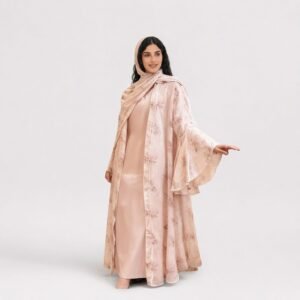
Embroidered Evening Abaya

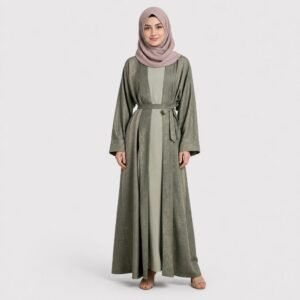
The bridge product between an everyday abaya and a full gown, and the single fastest-moving SKU in most modest evening collections. It keeps the abaya silhouette — front-open or closed, floor length — but adds the surface it needs to read as formal: dense embroidery on the front panel, cuffs and hem, usually with stone or bead application layered over the top. Retail sits $110–260 in the Gulf, £120–280 in the UK, and $140–320 in North America, where a modest evening abaya is often merchandised as an alternative to a cocktail dress rather than as outerwear.

Construction notes: the embroidery is stitched onto a separately cut, stabilised panel before assembly, which means the panel is cut oversized and trimmed back to the pattern line after the hoop comes off. It is the step that costs fabric and the step that cheap factories skip — and it is precisely why embroidery on low-cost evening abayas pulls, puckers and ripples after the first dry clean. On a formal piece we also back the embroidered panel with a soft fusible or a second light layer of organza so the embroidery weight does not drag the front off-grain as the garment hangs. Crystal and stone work is applied after assembly, hand-set for premium pieces, and the entire front placket is lined so no stitch head touches the skin.

Typical fabric: nida, heavy satin, Japanese crepe, jacquard, silk-blend crepe. Fully lined as standard.

Embellished Kaftan & Kaftan-Style Occasion Dress

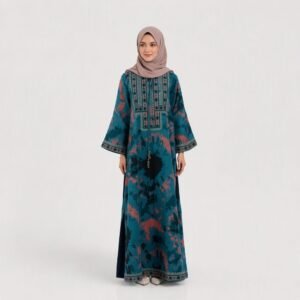
The kaftan is the most forgiving formal silhouette you can sell and the easiest to ship — a relaxed, straight or gently A-line body with a wide sleeve, where all the value sits in the neckline and the cuffs. That is good news commercially: because the garment itself is a simple cut, you can put a genuinely expensive neckline on it and still hit a mid price point. A hand-beaded kaftan at $85–160 FOB retails at $240–480 in Dubai and $300–520 in London, and it photographs better than a structured gown because the fabric moves.

Construction notes: the neckline is the whole product. We cut a faced or bound neckline opening and plan the beadwork as a single continuous composition — a necklace-shaped motif that sits at the collar and down the placket — rather than as a repeated border, because a repeated border reads as budget. Wide sleeves are finished with a deep cuff band (6–10 cm) so the beading has a defined area to sit in and the cuff edge does not flare. On heavier velvet kaftans we underline the front panel to stop the weight of the beadwork pulling the neckline forward and gaping it open.

Typical fabric: silk-blend crepe, chiffon, satin, velvet, jacquard, metallic brocade. Lined in the body, sleeves unlined on velvet.

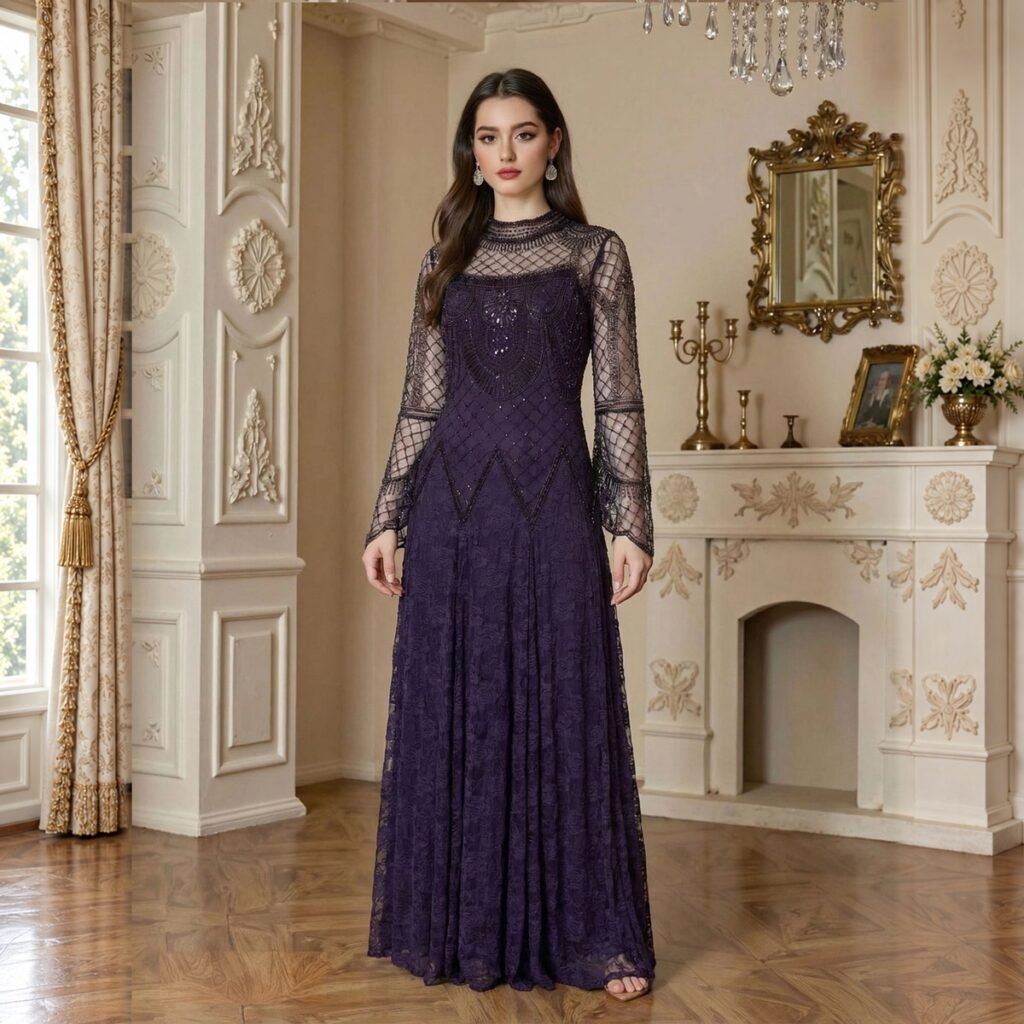
Modest Maxi Gown (Column / A-Line)

The pure evening product — floor-length, long-sleeved, high or jewel neckline, fully lined, with no layering component and no abaya reference at all. This is what a modest customer buys when a mainstream designer floor-length gown would have required alterations she cannot get, or a sheer back she will not wear. Buyers typically order a gown block as a base and run it in three or four colourways, which spreads the pattern cost across the whole drop.

Construction notes: the main risk on a long gown is the vertical line of the dress going off-grain after it hangs, which shows up as a diagonal pull across the hip or a hem that twists to one side. We cut every gown panel on the table with the fabric relaxed for 24 hours first, cut the centre-back and centre-front on a true straight grain rather than folded, and hang the assembled gown for 24–48 hours before the hem is marked and levelled. A gown hem marked on the table and never hung will sit uneven on a real body. Column gowns get a walking vent or a concealed back split at the hem so the wearer can actually walk, and A-line gowns are cut with panel gussets rather than gathered flare so the hem keeps its line.

Typical fabric: satin, satin-back crepe, taffeta, mikado, heavy chiffon over lining, silk blend. Fully lined, always.

Two-Piece Formal Set

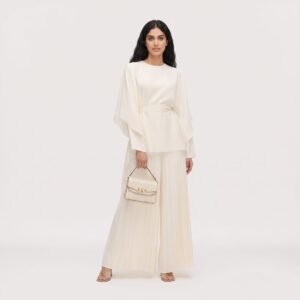
A long skirt or wide-leg trouser with a matching top — tunic, blouse, cape or jacket. It is the highest-value form of modest evening wear per unit of construction because the customer is buying two garments but the factory is doing one colour lot, one lining run and one embellishment plan. It also has the best fit tolerance of anything in this range: a skirt waistband plus a top with an easy body forgives the fit problems that a fitted column gown punishes. Brands that cannot sell a $300 gown can usually sell a $260 two-piece set to the same customer.

Construction notes: the two pieces must match in shade, which means both must be cut from the same dye lot and ideally from the same roll. Skirt waistbands sit on a fixed waistband with a concealed side or back zip and an internal hook-and-bar, not a drawstring. Where the top is embellished we bead the top first and then confirm the fabric allocation for the skirt, because embroidery and beading can consume 15–20% more meterage than a plain panel. Trousers are cut wide-leg with a lined waistband so the pocket bags never print through a light fabric.

Typical fabric: crepe, satin-back crepe, heavy chiffon with lining, jacquard, velvet. Both pieces fully lined.

Eid & Party Dress

The seasonal volume product. Eid runs twice a year on a hard calendar date, and a party dress order is the one line where a brand can justify a louder surface — dense sequin, allover stone, metallic thread embroidery, sheer sleeves over a solid lining. Price points cluster at $60–140 retail for a mid-market Eid dress and $180–420 for a party piece from a designer label. Order volume is high but the window is fixed, which is where most buyers get caught.

Construction notes: sequin and metallic-thread fabrics are unforgiving in two specific ways. First, they are slippery and shift under the needle, so every seam needs a stabilising tape or a fine fusible along the seam line and a size 70/10 needle with a light thread tension — a heavy needle punches holes that never close. Second, the cut edge sheds, so the whole garment must be lined and the seam allowances overlocked or bound, or the interior fills with sequins and the wearer itches. We cut sequin and beaded fabrics with the nap direction marked on every panel, because a piece cut the wrong way reads as a different colour under stage lighting. Any piece with sequin at a sleeve or neck edge gets a soft backing strip so no cut sequin edge contacts the skin.

Typical fabric: sequin mesh, metallic jacquard, embroidered tulle over satin, satin, velvet. Fully lined with a soft-touch lining.

Mother-of-the-Bride / Mother-of-the-Groom Style

An underserved, price-insensitive, high-expectation buyer. She is not shopping for herself on a budget — she is shopping for a photograph that will be framed and looked at for thirty years, and she will pay for it. The silhouette almost always includes a structured third layer: a long coat, a cape, a jacket with a shaped shoulder, or a removable overlay. That layer is why this product carries the highest unit value in the range and also the highest number of fit adjustments.

Construction notes: the third layer is a separate garment and must be patterned as one — cape and coat overlays get their own lining, their own hem level, and their own hanger loop. Coat overlays are the one place in this range where we routinely use a shaped shoulder pad, because a soft shoulder collapses under the weight of a beaded overlay and the whole silhouette goes slack in photographs. Neckline height is the sensitivity on this product: the buyer expects full coverage at the chest and a neckline that stays put when she leans forward, so we build the neckline with a hidden stay tape across the front and, where the fabric is heavy, an internal grosgrain stability strip. The wearer is often between two ready sizes, so we offer made-to-measure grading on this product as standard rather than as an extra.

Typical fabric: mikado, jacquard, taffeta, wool-blend suiting, velvet, silk shantung. Coat and dress fully lined; lining is a matte crepe-polyester with a dry-clean-safe finish.

Modest Bridesmaid Dress (Colour-Matched Sets)

A bridal-party order is not a bulk order — it is a set of graded garments that must look identical in daylight. Every bride has seen a bridesmaid photograph where one dress is a shade off, and that is the single complaint this product is judged on. We treat it as a continuous-lot production job: one dye lot for the whole party, panels cut sequentially, and every garment checked side-by-side against the others before packing rather than individually against a shade card.

Construction notes: bridesmaid sets are normally ordered in four to six sizes across one or two colourways, so the grading has to be built from a single block and then checked on each size. Shawls, capes and covers are cut from the same lot as the dresses — a cover in a slightly different lot is the most common failure on this product. Where the bridal party is split across two delivery dates, we hold the balance fabric on the same lot and confirm the hold in writing, so a later addition can still be matched. Heavier coverage requirements (long sleeve, high neck, opaque) are standard on this block, not modifications.

Typical fabric: heavy chiffon over satin lining, crepe, satin, tulle with a solid underlay, jersey crepe for drape. Fully lined.
Fabric Guide — What Each Evening Fabric Actually Does

At our muslim evening dress factory, fabric choice drives more of the price than the labour does. The gap between a $90 FOB gown and a $190 FOB gown is usually the shell fabric, the lining weight, and whether the embellishment is machine or hand — not extra sewing time. The table below covers the fabrics we hold and run regularly. If your market needs something outside it, we source against your specification.

Fabric Weight Handle Best for Price tier
Satin (poly / triacetate)90–130 g/m²Lustrous, fluid, reveals every seam and every needle markColumn gowns, bias-cut maxi, kaftansMid
Silk blend (silk/viscose)60–110 g/m²Deep colour, soft drape, dry-clean only, needs a liningLuxury gowns, mother-of-bride, bridalPremium
Satin-back crepe140–190 g/m²Matte face, structured drape, hides constructionTwo-piece formal sets, column gowns, tailored overlaysMid–Premium
Chiffon (heavy / bridal)60–90 g/m²Sheer, airy, must be layered over a solid liningBridesmaid sets, kaftans, draped overlaysMid
Velvet (stretch / silk)220–320 g/m²Deep pile, heavy drape, crushes and shades with directionWinter evening wear, decorated kaftans, party dressesPremium
Jacquard / brocade180–260 g/m²Woven motif, holds shape, needs careful motif placementStructured gowns, coat dresses, two-piece setsPremium
Lace (corded / Chantilly)90–160 g/m²Open ground, needs underlay, edges must be appliquéd not foldedSleeves, yokes, overlays, bridalMid–Premium
Tulle (soft / stiff)30–60 g/m²Sheer mesh, used for volume and sleeve shapingSleeve volume, layered skirts, bridal underskirtsEntry–Mid
Taffeta90–140 g/m²Crisp, rustles, creases at the fold and holds the creaseA-line gowns, bridesmaid sets, structured overlaysMid
Mikado200–260 g/m²Firm, sculptural, minimal creasing, premium surfaceMother-of-bride, coat dresses, sculpted gownsPremium
Sequin mesh / embroidered tulle120–220 g/m²Sheds at the cut edge, slippery under the needle, directionalEid and party dresses, statement overlaysMid–Premium

The lining is not a cost line you should cut. On an evening dress, the lining is doing three jobs at once: coverage, comfort against the skin, and structure. A cheap polyester lining on a heavy satin shell will ripple along the side seam within an hour of wear because the two fabrics shrink and recover at different rates. We match lining weight to shell weight — a 90 g/m² satin gets a 60–70 g/m² soft lining, a 220 g/m² mikado gets a 90–110 g/m² crepe lining — and we bag out the hem rather than top-stitching it, so the hem has a clean edge on the inside and the lining is free to move. If your price point truly cannot carry a full lining, tell us at quotation stage and we will propose a partial-lining construction that still protects the coverage — not a cheaper lining that fails.

About shrinkage and dry cleaning. Evening fabrics that will be dry-cleaned must be pre-shrunk or at least tested before cutting. We run a wash-and-dry-clean test on the actual shell and lining lot before bulk cutting on any new fabric and report the result to you in writing. Where a fabric moves more than 2% in either test, we either pre-shrink the roll or reject it — because a gown that shrinks 4% at the hem after the customer's first clean is a return, not a repair.

Embellishment Techniques — Cost, Capacity and Lead Time

Embellishment is where a modest evening dress earns its price and where a production schedule gets destroyed. The four techniques below are all done in-house. They are not interchangeable on cost or on calendar, and the difference between machine and hand is usually the difference between a $95 FOB piece and a $210 FOB piece.

Machine Embroidery
Computerised multi-head embroidery on a stabilised panel, cut oversized and trimmed back after. Motifs, borders, allover patterns and monogram work. Cost: roughly $4–9 per panel in labour depending on stitch count — a dense 40,000-stitch allover front runs to the top of that band. Lead time: adds 3–5 days. Best for: repeatable borders, tonal work, mid price points, and any design that must be identical across 500 pieces.
Hand Embroidery
Zardosi-style cording, thread work, raised gold and silver work, hand-applied sequin filling. Done by our in-house karigars, not sub-contracted. Cost: roughly $18–45 per panel depending on density and motif size, and the gap widens fast — a full front panel in raised zardosi can carry more labour cost than the entire dress. Lead time: adds 10–18 days, and more on a full panel. Best for: bridal, couture lines, mother-of-bride, and pieces where the customer is paying for visible human work.
Beadwork & Stone Setting
Glass bead, pearl, bugle bead, crystal and rhinestone application. Hand-set and sewn for premium pieces; heat-set or glued only on entry price points where the buyer accepts the trade-off, and we will tell you which one your price allows rather than letting you assume. Cost: $12–40 per garment in labour, driven by bead count. Lead time: adds 7–14 days. Best for: necklines, cuffs, bodice panels, and sleeve edges.
Lace Appliqué, Tassel & Fringe
Corded and Chantilly lace appliquéd onto the ground fabric with a fine zig-zag so the lace edge sits on top rather than turning under — this is the technique that separates a real lace overlay from a printed imitation. Tassel and fringe trim on sleeves, belt ends and hems, hand-knotted where the design calls for it. Cost: $6–22 per garment. Lead time: adds 4–8 days. Best for: sleeve and yoke detail, kaftan hems, belt and sash ends.

The honest trade-off. Hand work is not automatically better — it is better where a customer will look closely and worse where the piece must be delivered on a fixed date at a fixed price. Machine embroidery on a well-stabilised panel will outlast hand work that was executed in a hurry, and a heat-set stone applied correctly will not move. What we will not do is quote you hand-set stones and ship heat-set ones; if your budget only reaches machine and heat-set, we say so at quotation stage and build the design around the techniques that will actually hold.

Capacity is finite and it is seasonal. Our hand-work benches are the constraint in the business, not the sewing floor. From six weeks before Eid al-Fitr through Eid al-Adha, and again through the November–December party season, hand embroidery and hand beading capacity fills. If your collection depends on hand work for a fixed date, book it 8–10 weeks ahead — and for a fully hand-beaded bridal piece, 12 weeks.

What You Can Customise on an Evening Dress

Silhouette
Column, A-line, fit-and-flare, kaftan, two-piece set, coat dress, cape overlay. We work from your block or develop one from a reference garment or a set of photographs.
Correspondence
Neckline height and shape — jewel, high round, square, V with a modesty panel, mandarin or band collar. Neckline coverage is built into the pattern, never added as a panel later.
Sleeves
Long fitted, straight, bishop, bell, split, sheer-lace or tulle sleeve over a solid underlayer. Sleeve length graded to your market, typically 58–62 cm with a longer option for Gulf and North American buyers.
Embellishment
Machine embroidery, hand embroidery, zardosi cording, bead, pearl, crystal and stone, sequin filling, lace appliqué, tassel and fringe, contrast piping. Placement drawn and approved as a strike-off before bulk.
Lining & Coverage
Fully lined, partially lined or double-layered. Sheer sleeves get a solid underlayer. Opaque coverage confirmed by a daylight test on the assembled garment and stated in writing before bulk cutting.
Colour
Dye to Pantone, or stock shades from the mill. Lab dip in 5–7 days. Jewel tones, metallics and pastels all run — note that pastels, greys and metallics need more matching rounds, so allow an extra week in your calendar.
Closure & Fit
Concealed back zip, invisible side zip, hook-and-bar, button placket, internal grosgrain stay. Made-to-measure grading available on mother-of-bride and bridal pieces as standard.
Branding & Packaging
Woven neck label, care and composition label, hangtag, satin hanger loop, printed polybag, tissue wrap, garment bag and branded gift box — all under your brand, nothing carrying ours.

OEM vs ODM vs Private Label for Occasion Wear

Sourcing treats OEM, ODM and private label as interchangeable. They are not, and for custom muslim evening dress production the confusion costs you time you cannot get back: the minimums sit at different levels, the development calendars run to different lengths, and how much control you keep over what you are actually selling is a different answer in each case.

  OEM — Your Design ODM — Customise Ours Private Label
Who designs itYouWe hold the block, you modifyEither — label only
What you supplyTech pack, measurements, fabric spec, embellishment artworkReference garment, photograph or a selection from our rangeLogo artwork and label copy
Minimum50 pcs per style50 pcs per style50 pcs per style
Development time2–4 weeks (pattern block + proto)7–10 days (modify an existing block)None — label artwork approval only
EmbellishmentFully custom, strike-off approved before bulkResized or recoloured from a house motifAs supplied on the stock base
Who owns the designYou, exclusivelyYou own your version; the base block stays oursBase is shared; the label is yours
Lead time to first shipment7–10 weeks including development5–8 weeks4–7 weeks
Best whenYou have a point of difference worth protectingYou want speed to market at low development riskYou are testing demand before investing in design

An honest note on private label. It is the fastest and cheapest way to launch an occasion line, and it is also the most fragile position to hold. If your evening dress is a stock base with your label in the neck, a competitor can buy the same base and undercut you on price without changing anything else. That is fine as a three-month test. It is not a business. The brands that survive their second season almost always move from private label to ODM and then to OEM — because that is where the product stops being interchangeable and where the margin finally stops being a race to the bottom.

On exclusivity. For OEM designs, exclusivity is automatic and absolute: we do not produce your design for another buyer, do not list it in a catalogue, and do not resell it. For ODM styles, we can agree category or territory exclusivity on request, subject to volume. Ask at quotation stage — not after your first order has shipped.

Size Chart — Modest Evening Dress Grading

Occasion wear is graded on a standard dress curve, XS–3XL, with lengths marked between sizes. Where a buyer needs a non-standard length — which is normal on this product, because evening dresses are worn with a specific heel — we cut to a finished length rather than to a size. Custom grading to your own curve is included at no extra cost.

Size Bust (cm) Waist (cm) Hip (cm) Sleeve (cm) Finished length (in) UK / US
XS8264885756UK 6 / US 2
S8668925857UK 8 / US 4
M9072965958UK 10 / US 6
L96781026058UK 12 / US 8
XL102861106159UK 14 / US 10
2XL110941186259UK 16 / US 12
3XL1181021266260UK 18 / US 14

Tolerance ±1 cm on all measurements, ±0.5 cm on finished length for made-to-measure pieces. Grade increments: bust +4–6 cm, waist +4–6 cm, hip +4–8 cm per size depending on your curve. Send your spec sheet and we build the pattern set from it at no extra cost.

Evening Wear Pricing: MOQ and Lead Times by Tier

Indicative FOB pricing, China. Final pricing is confirmed from your specification — fabric, lining weight, shell meterage and embellishment technique move the number more than volume does. On this product specifically, the embellishment decision is usually the single largest swing in the quote.

Style 50–199 pcs 200–499 pcs 500–999 pcs 1000+ pcs
Plain maxi gown (satin, fully lined)$26.50$23.80$22.40$21.20
Two-piece formal set (crepe)$34.00$30.50$28.60$27.00
Kaftan with machine-embroidered neckline$41.00$37.20$34.80$32.60
Evening abaya, machine-embroidered$48.00$43.50$40.20$37.40
Hand-embroidered gown (zardosi bodice)$96.00$88.00$82.00$76.00
Hand-beaded evening dress (crystal-set)$132.00$121.00$112.00$104.00
Mother-of-bride coat dress (hand-finished)$158.00$146.00$136.00$127.00

Your unit price covers: shell fabric, lining, interlining and stabilisers, cutting, sewing, all embellishment labour and materials, hand-finishing, your woven label, care and composition label, hangtag, satin hanger loop, individual polybag and export carton. It does not cover: freight, import duty, or any mandatory testing in your market. Ship on DDP terms and you get one landed number with the duty already worked out, so nothing needs reconciling at customs.

Lead times. Sample in 7–10 days after specification is confirmed on a plain style. With machine embroidery, allow 10–14 days. With hand embroidery or hand beading — because we produce a physical embellishment strike-off for your approval before the sample is made up — allow 14–20 days. Bulk production runs 35–50 days from sample approval on plain and machine-embellished styles, and 45–65 days on hand-embellished styles depending on density. Reorders on an archived specification run 15–20 days on plain styles.

The calendar warning. If your delivery date is tied to Eid al-Fitr, Eid al-Adha, wedding season or the November–December party season, place the order 8–10 weeks before you need it in your warehouse — and 12 weeks if the piece carries hand work. Chinese New Year adds a further two to three weeks of factory downtime in late January and February and should be allowed for explicitly. This is the single most common reason a modest evening collection misses its season, and it is avoidable.

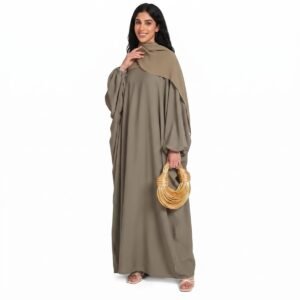
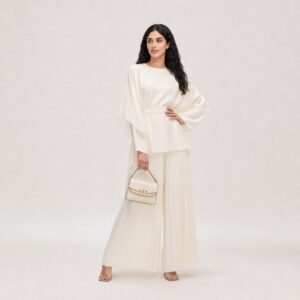
Evening Wear Collection

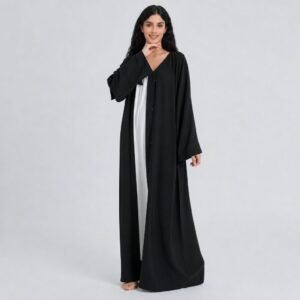
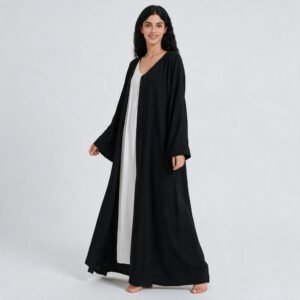
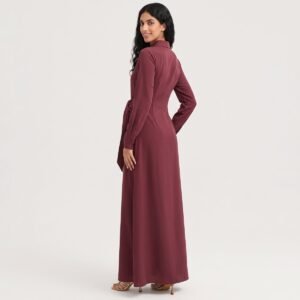
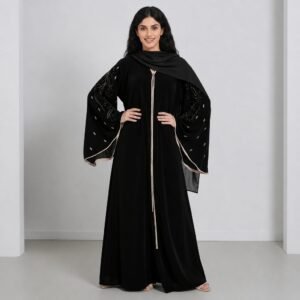
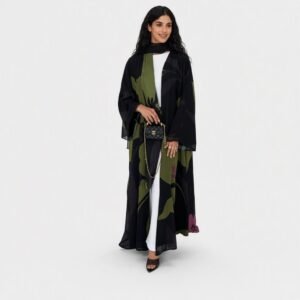
Occasion-wear reference styles: embellished gowns, formal maxi dresses. In-house embellishment, from 50 pieces per style.

How an Evening Wear Order Runs

Enquiry
Send your specification, a reference garment, your tech pack or inspiration images, and tell us your market, your target retail price and the date you need the goods. Fabric options and indicative pricing come back to you, usually within 8–12 hours.
Embellishment Strike-Off
On any hand-embellished or embroidered style we produce a strike-off — the motif, density and placement worked on the actual fabric — and ship it for your approval before the sample is made. It is one extra step and it prevents the most expensive mistake on this product: approving a design you have never seen in the real material.
Sample
7–10 days on plain styles; 14–20 days where hand work is involved. For OEM development from scratch, allow 2–4 weeks to build the pattern block before a sample ships. The sample fee is credited against your production order once confirmed.
Confirmation
Your quantities, sizes, colours and embellishment spec go into a written agreement, along with the price. 30% deposit starts production, 70% before shipment. Nothing then moves without your written approval — no price change, no swapping of technique or material.
Production & QC
35–50 days on plain and machine-embellished work, 45–65 days on hand-embellished. Inline checks follow the work through cutting, assembly and embellishment, a documented 3-point check at 30% completion, then a final AQL 2.5 inspection before the boxes are closed. Each one is photographed.
Shipping
DDP door to door with duty included, or FOB Shanghai / Ningbo if you work with your own forwarder. Export documentation — commercial invoice, packing list, certificate of origin — is issued in the name you nominate.
Approval Before Balance
Final inspection images reach you before the balance falls due, so the sign-off is made on photographs of your own goods rather than on a written description of them.
Reorder
Your pattern block, specification, embellishment placement and approved shade band stay on file. A reorder takes 15–20 days and is matched against the physical approved sample you signed off, not against a description of it.

Quality Control — What We Check on Evening Wear, and When

An evening dress fails in ways an everyday garment does not. The five failure modes that actually generate returns on this product are embellishment security, lining flatness, zip function, dry-clean tolerance, and skin contact at the trim edges. Each one is checked at a specific point in production, and each is far cheaper to catch on the bench than after the goods ship.

Embellishment security. Every bead, pearl and stone must be secured with a lock stitch and a back-thread — not a single pass, and never glue — on any piece where the buyer has paid for hand work, because a stone that drops on a dance floor becomes a one-star review titled “beads fell off”. We run a pull test on a 10% sample of pieces from every lot: a bead is gripped and pulled with a calibrated 2 kg force and must hold, or must pull the thread rather than detach cleanly. If more than one bead in ten fails, the lot is re-sewn, not sorted. On heat-set stones we test adhesion on the finished garment after pressing, because a stone that passes on a swatch can lift when the panel is pressed at the end of the line.

Lining flatness. Checked on the assembled garment on a mannequin, not on the table, and again after the piece has hung for 24 hours. The failure we are looking for is the lining bagging below the hem or pulling the shell into a diagonal wrinkle at the side seam — which is a weight-mismatch problem between shell and lining, and appears as a visible crease across the hip. A lining that measures correct on the table can still ripple once the weight of the skirt hangs from it.

Zip function and closure security. Every zip is cycled full-length at final inspection, checked for catching at the waist seam and at any point where the zip crosses a lining or interlining edge. We use metal or high-quality moulded zips on this range rather than the lightest option, because an evening dress zip is cycled far more than an everyday one — the wearer tries it on repeatedly. Internal hook-and-bar closures are checked for engagement and the bar is bar-tacked, not edge-stitched, so it does not pull out of the waistband.

Dry-clean tolerance. On any new shell or lining fabric we run a dry-clean test on the actual lot before bulk cutting and report the result in writing: shrinkage, colour bleed onto a white cloth, and any change in hand or surface. Where a fabric moves more than 2%, we pre-shrink the roll or reject it. Beaded and embroidered pieces are dry-clean tested with the embellishment already applied, because the solvent can attack a heat-set adhesive or a coated bead that behaves perfectly on the swatch.

Skin contact at the trim edge. Sequin, beaded tulle, lace with a stiffened edge and metallic trim all scratch. Cut sequin and bead edges are kept away from any point that contacts the skin — inside sleeve heads, at the neckline, at the underarm, and along the inside of the waistband — by facing those areas with a soft lining strip or by covering the edge with a bound trim. Every loose thread end on the inside is trimmed and sealed at finishing; a single loose metallic thread inside a sleeve is enough for a customer to describe the dress as “itchy” in a review, and that word costs more than the labour to prevent it.

Beyond these five, final inspection runs to AQL 2.5 as standard with defect thresholds agreed in writing before production. A lot that falls outside the agreed threshold is remade or compensated under the terms on your order. Photographs of the inspection reach you before the balance falls due, so the sign-off is made on evidence rather than on a written assurance. If your market or your buyer requires a third-party inspection, we work with the nominated agency and reserve the window in the production calendar before the run starts — SGS, Bureau Veritas and Intertek have all inspected on our floor.

Who Buys Occasion Wear From Us

Modest fashion brands

50–200
pieces per style

Typically 50–200 pieces per style across 2–4 styles per drop, with at least one statement piece that carries real embellishment. What these brands want is an exclusive design, fabric quality they can feel, and a finish that stands up to a customer’s camera and to a stranger standing too close. Most begin on ODM and move to OEM for their second collection.

Bridal & occasion labels

50–150
pieces per style

50–150 pieces per style on high-value pieces — mother-of-bride, bridal-party sets, hand-beaded gowns. Priority: hand-work quality, bead security, made-to-measure grading, and a delivery date that does not move. These orders are booked 10–12 weeks ahead.

Online retailers & boutiques

100–500
pieces

100–500 pieces, often with private label and gift packaging. Priority: sellable photography-ready product, retail-ready packaging, low minimums for testing new silhouettes before committing to a full drop.

Eid & seasonal collections

Fixed date
one large single run

The order is large, it runs once, and the date will not move. Priority: hitting that date, and getting embellishment booked onto the bench schedule early. Confirm 8–10 weeks before Eid — 12 weeks for anything carrying hand work.

Shipping Evening Wear — DDP, Duties and Payment

Shipping. DDP door to door is standard, with import duty calculated and included in your quotation before you commit — one landed number, nothing to reconcile at customs three weeks after the goods arrive. If you would rather clear your own goods, we also coordinate FOB Shanghai / Ningbo and CIF with your nominated forwarder. Air is 7–12 days door to door; sea is 25–40 days depending on destination. One packing note that matters more on this product than on any other: embellished evening wear ships flat-packed individually in tissue with the hanger loop folded, not hung in a garment bag, unless you specify otherwise — a beaded piece that shifts in transit arrives with crushed beads.

Duties. Muslim evening dresses and modest formal dresses are classified under the HS heading for women's woven or knitted dresses and suits, and the applicable rate varies by destination country and by fibre composition — a silk-blend gown and a polyester gown can carry different rates in the same market. We confirm the classification and the applicable rate on your quotation, in writing, before you commit to a price. Where your market requires a certificate of origin, we issue it as standard.

Payment. 30% deposit starts production; 70% before shipment. The balance falls due once your goods are finished, inspected and photographed, and never earlier. T/T is standard. PayPal and card cover sample fees and strike-off courier costs. Documents are issued in the name you nominate, and we are happy to work through a sourcing agent, buying office or freight consolidator if you use one.

Sampling costs. The sample fee covers the make-up and the courier, and it is credited against your production order once the order is confirmed. Embellishment strike-offs are charged at cost and are also credited on production. We do this because we would rather you spend on a second strike-off than discover the problem in bulk — on a hand-beaded evening dress, one bulk mistake costs more than a year of sample fees.

Proven With Real Muslim Evening Dress Buyers

Two completed wholesale muslim evening dress buyer relationships — one for a social-media-driven light occasion line, and one for hand-embroidered, hand-set crystal evening gowns at a high-end boutique.

Abu Dhabi, UAE

Social Commerce Influencer Brand

Result
Reordered twice
Went viral via short-form video · reordered twice within 3 months
“The design is simple and refined, priced accessibly, and works well for social media-led sales.”
Route
ODM light-embellishment abaya, partial crystal placement to control cost, small-batch fast turnaround for content-driven sales
Doha, Qatar

High-End Occasion Wear Boutique

Result
+47% margin
47% margin increase on the evening wear category
“Bead work stays secure and the drape hangs right — that alone cut our after-sales repairs.”
Route
OEM + ODM, hand embroidery and hand-set crystal, 300–600 pcs per gown batch

Frequently Asked Questions

What is your minimum order quantity for Muslim evening dresses?

50 pieces per style and colour, and sizes mix freely inside that. The minimum is not multiplied by size — 50 pieces means 50 finished garments, which is the question almost every first-time buyer asks. Each colour needs its own dye lot, so each colour carries its own 50-piece minimum. A mixed-style order can total 200 pieces in one shipment without changing the per-style minimum.

Why is the lead time longer than for everyday modest clothing?

The bottleneck is embellishment, not sewing. A plain satin gown runs 35–50 days in bulk; the same gown with hand embroidery or hand beadwork runs 45–65, because the hand work happens on benches at human speed rather than on a machine at output speed. Add 7–10 days at the front for the physical strike-off we make for your approval before the sample is built. Book hand-embellished pieces 8–10 weeks ahead of your season. Bridal, 12 weeks.

Can you match a specific bead, embroidery or lace design?

Yes. Send reference images, a physical swatch or a sample garment. Our embellishment team works the motif, density and placement onto the actual shell fabric and sends you a strike-off for written approval before bulk starts. Without that step, buyers approve a photograph and receive something that behaves differently once it is stitched into the real material — the most expensive misunderstanding on this product.

Are the dresses fully lined and fully opaque?

Yes — full opaque lining is standard on every occasion style. Where the design calls for a sheer sleeve or a lace overlay, that sleeve gets a solid underlayer instead of being left to the outer fabric. Opacity is tested on the assembled garment in daylight rather than on a swatch, and coverage is confirmed in writing before we cut. If your market needs guaranteed coverage, put it on the specification.

How do you make sure the beads and crystals do not fall off?

Every bead and stone on a hand-worked piece gets a lock stitch and a back-thread. No glue, and no single pass. Each lot is pull-tested on a 10% sample at a calibrated 2 kg force, and if more than one bead in ten lets go, the lot is re-sewn rather than sorted. Heat-set stones are adhesion-tested after pressing on the finished garment — a stone that holds on a swatch can lift when the panel goes through the press at the end of the line.

Can the dresses be dry cleaned?

Yes, and we test it rather than assume it. Every new shell or lining fabric goes through a dry-clean test on the actual production lot before bulk cutting, and you get the shrinkage, colour bleed and any change in hand reported in writing. Embellished pieces are tested with the embellishment already on them, because solvent can attack a heat-set adhesive or a coated bead that behaved perfectly as a plain swatch. A fabric that moves more than 2% is pre-shrunk or rejected.

Can the trim scratch the skin?

It should not, and stopping it is a named step in our finishing. Cut sequin, beaded tulle, stiffened lace and metallic trim are faced away from every point that touches skin — inside the sleeve head, at the neckline, at the underarm, along the inside of the waistband — with a soft lining strip or a bound edge. Loose thread ends on the interior are trimmed and sealed. A customer who takes the dress off because it itches means we have failed on this product.

Do you offer made-to-measure sizing for mother-of-bride and bridal?

Yes. On mother-of-bride, bridal and bridesmaid pieces it comes as standard rather than as a paid extra — those buyers are frequently between two ready sizes, and a coat dress that fits badly is obvious in every photograph taken that day. Send the measurements or the finished length you need, and we cut to that number instead of to a size.

Can you produce in jewel tones, metallics and pastels?

Yes. We dye to Pantone and hold stock in metallics, jacquard and brocade for occasion wear. Plan around one thing: pastels, greys and metallics take more lab-dip rounds to match than dark and mid tones — typically two or three rounds instead of one. Put an extra week in the calendar for those colours and the launch date holds.

What is the difference between machine and hand embroidery, in cost and in time?

Machine embroidery is roughly $4–9 per panel in labour and adds 3–5 days. Hand embroidery is roughly $18–45 per panel and adds 10–18 days — on a dense raised zardosi front panel, the hand labour alone can cost more than the entire plain dress. Go by what the buyer does with the garment: hand work pays where she will look closely and is paying for visible human craft; machine work pays where hundreds of units must be identical and the date is fixed. Tell us your price point and your date and we will say which one actually holds.

Do you put my label on the dress and can I order gift packaging?

Yes. Woven neck label, care and composition label, hangtag, satin hanger loop, printed polybag, tissue wrap, garment bag and branded gift box — all carrying your name, with nothing of ours on the garment or the packaging anywhere. Artwork for the labels and packaging is checked and approved before production starts, and retail-ready packaging starts at 50 pieces.

What are your payment terms and do you ship DDP?

30% deposit to start production, 70% before shipment. The balance is payable once your goods are finished, inspected and photographed. Bank transfer is standard, and PayPal or card covers sample fees. Our default quote is DDP door to door with import duty calculated in from the start, so the price you agree is the price you pay — and if you would rather clear the goods yourself, we work FOB and CIF as well.

Do you inspect to AQL standards, and can I request a third-party inspection before shipment?

Yes on both. Our in-house final inspection runs to AQL 2.5, the sampling standard most international buying offices work to: we inspect a defined sample from each batch and accept or reject the whole lot against a maximum allowable defect count. On occasion wear the major-defect threshold is tighter than on everyday garments, because at these price points a dropped bead or a catching zip is not a minor fault.

Want a third-party inspector on site before we release the shipment — SGS, Bureau Veritas, Intertek or an agent you nominate? That is fine. Tell us when you place the order so the inspection window can be reserved in the production schedule. Their fees are paid by you, directly to the agency. From our side you get the factory access, the tech pack and the approved sample to inspect against.

Are your beads, crystals and metallic embroidery compliant with EU REACH and UK regulations?

Embellishments for EU and UK orders are sourced to comply with REACH SVHC restrictions. Metal findings and decorative beads meet the nickel release limits under EN 1811, and no cadmium-based dyes or lead-containing ornaments go into an order destined for a regulated market.

Where you need documented proof — an accredited lab report — say so at inquiry. We arrange testing through SGS or Bureau Veritas on the actual embellishment lot used in your order, and the report is issued in your name and travels with the commercial documents. A report takes 5–7 working days and will not touch the production schedule, provided you ask when you place the order.

Importing into the US? CPSIA Section 101 covers children’s garments under 12. Adult modest evening wear sits outside that scope, but we hold the same restricted-substance standards across the range anyway.

Get a Muslim Evening Dress Wholesale Quote or Sample

Contact Form Demo

Why Request a Quote From Us

  • ✓Low MOQ — from 50 pcs per style/colour
  • ✓OEKO-TEX® Standard 100 & GRS 4.0 certified fabrics available on request
  • ✓Full OEM / ODM & Private Label — your design, labels & packaging
  • ✓DDP worldwide shipping — door to door, duty included
  • ✓We reply with pricing usually within 8–12 hours

What to Include in Your Inquiry

  • Style / product type (abaya, hijab, burkini, activewear, prayer dress, etc.)
  • Order quantity per style/color
  • Preferred fabric or material
  • Branding needs (custom label, hangtag, packaging)
  • Target price range

Give us a picture rather than a paragraph and the reply comes back faster.

Prefer to talk directly?

WhatsApp: +86 13372169755

Email: abby@modestrise.com