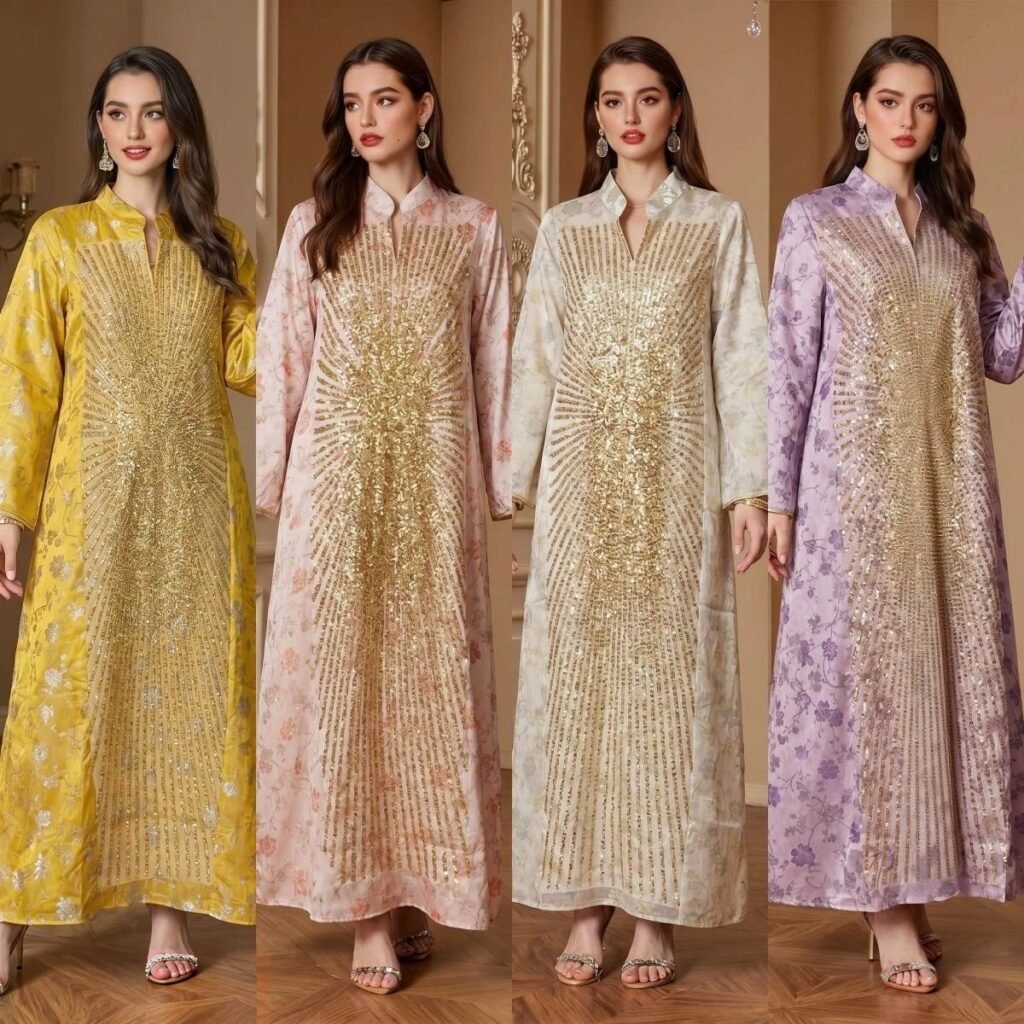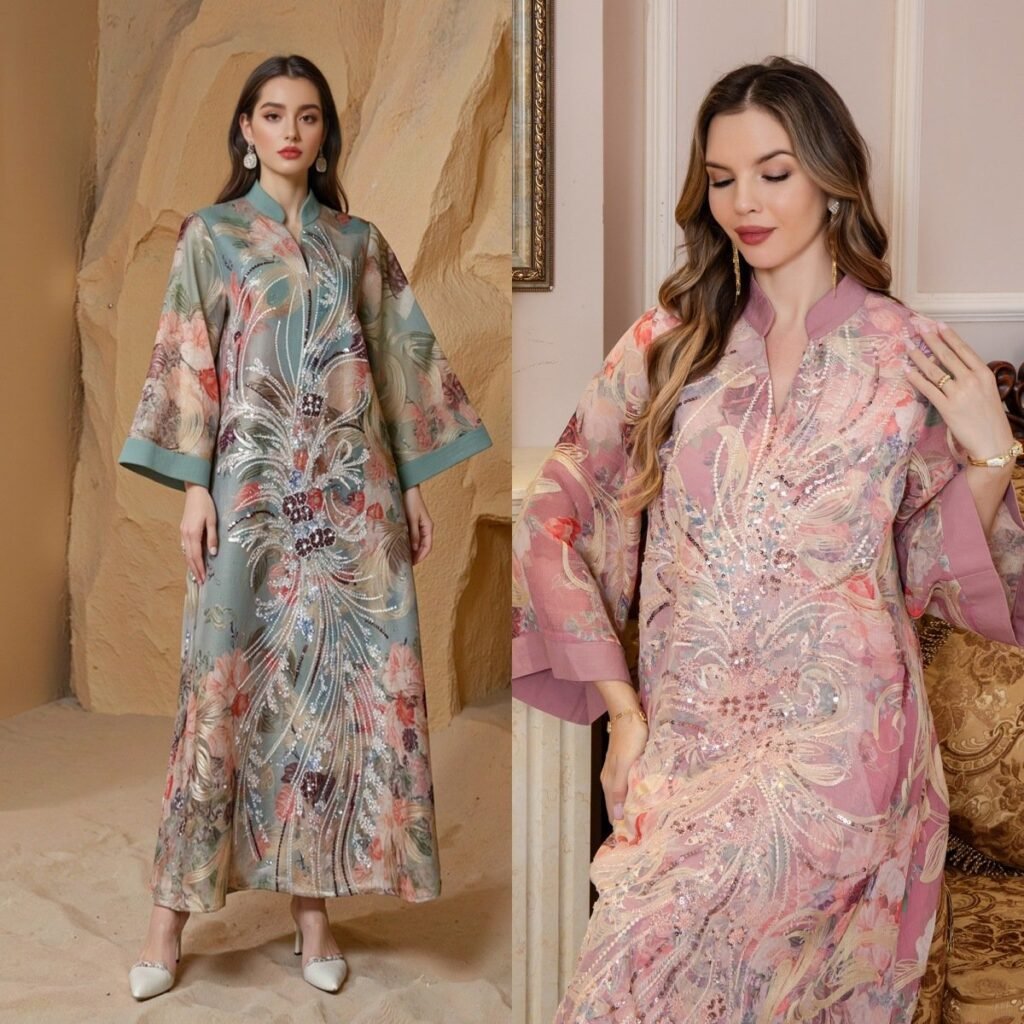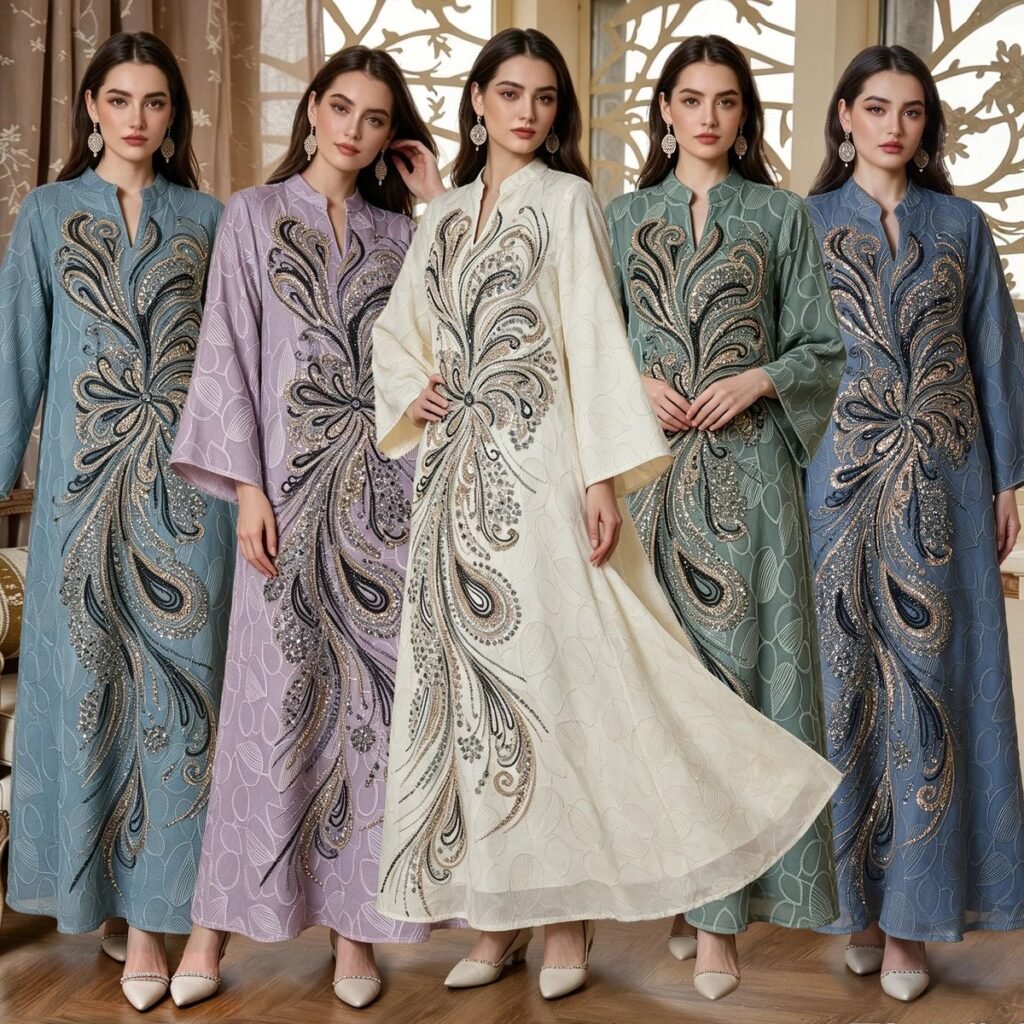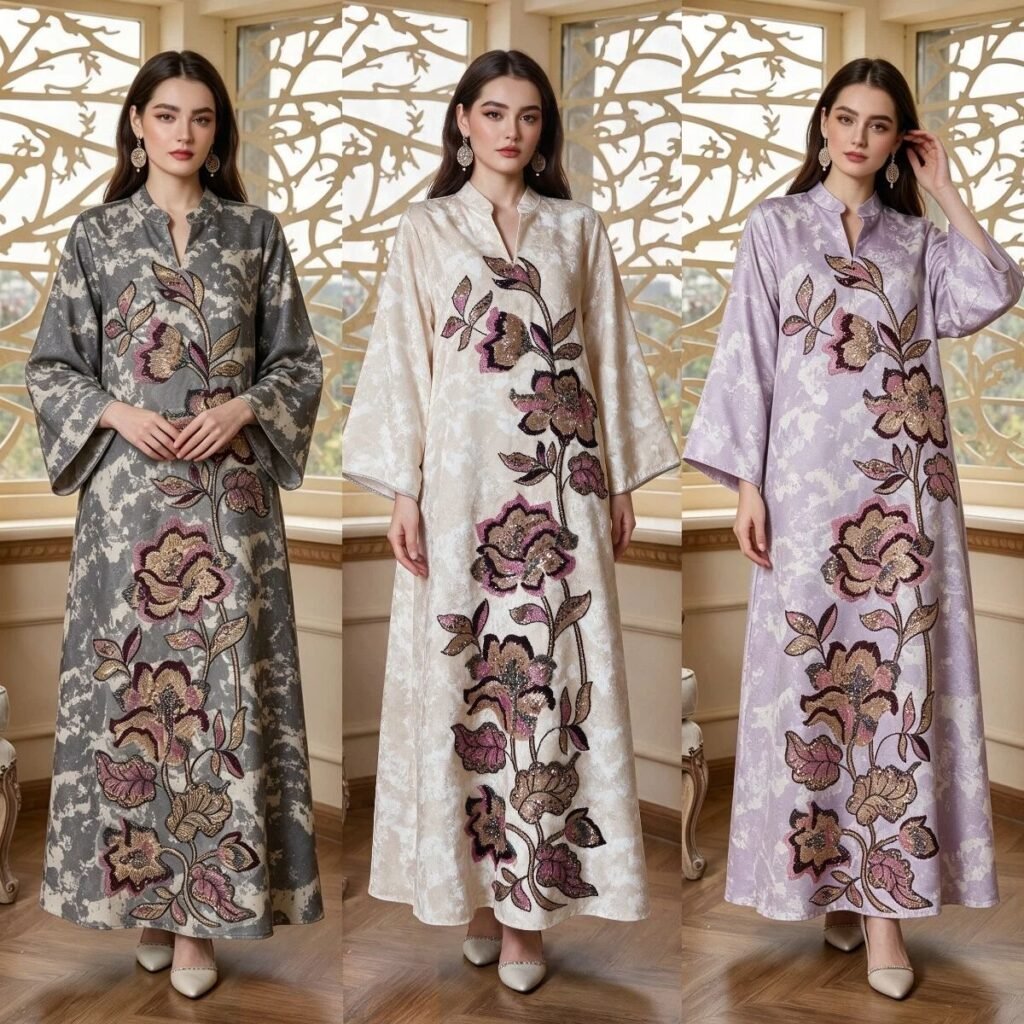







Eid Abaya — Embellished Occasion Abaya
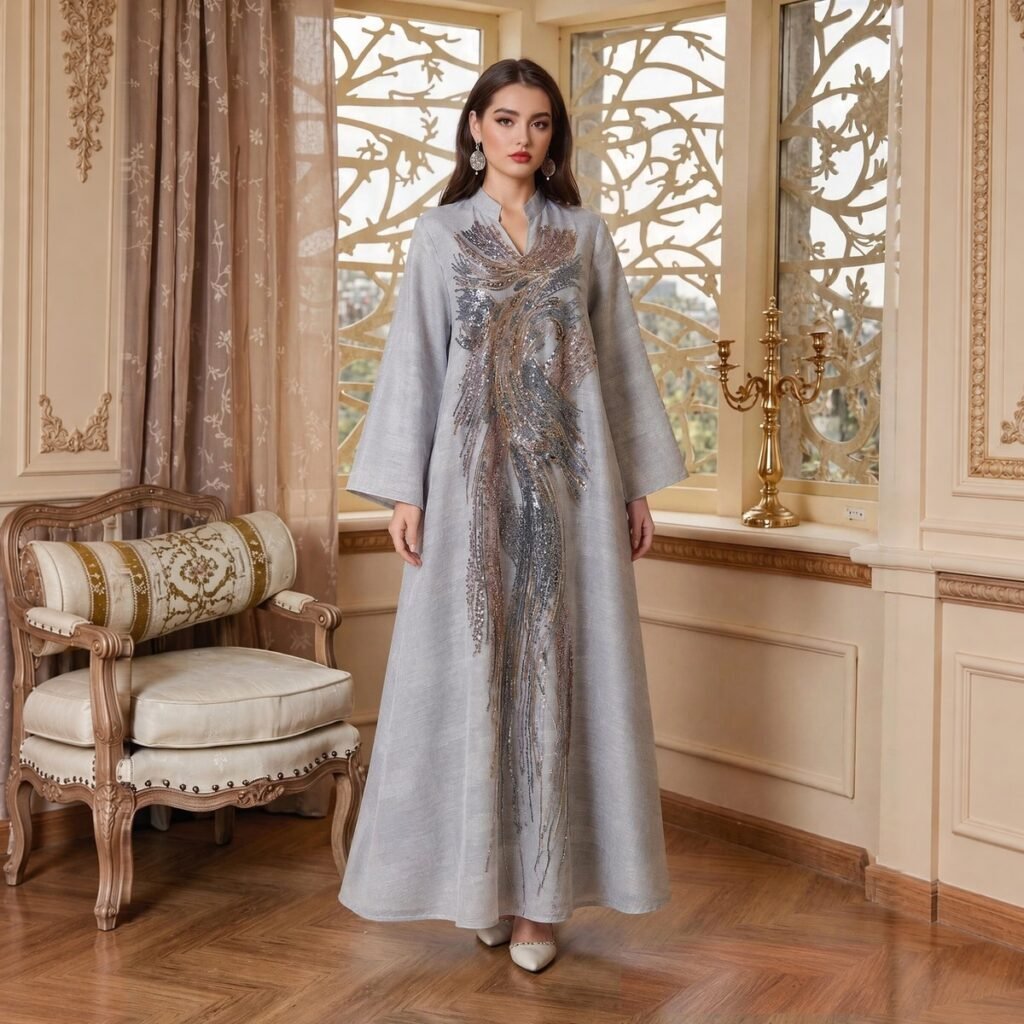
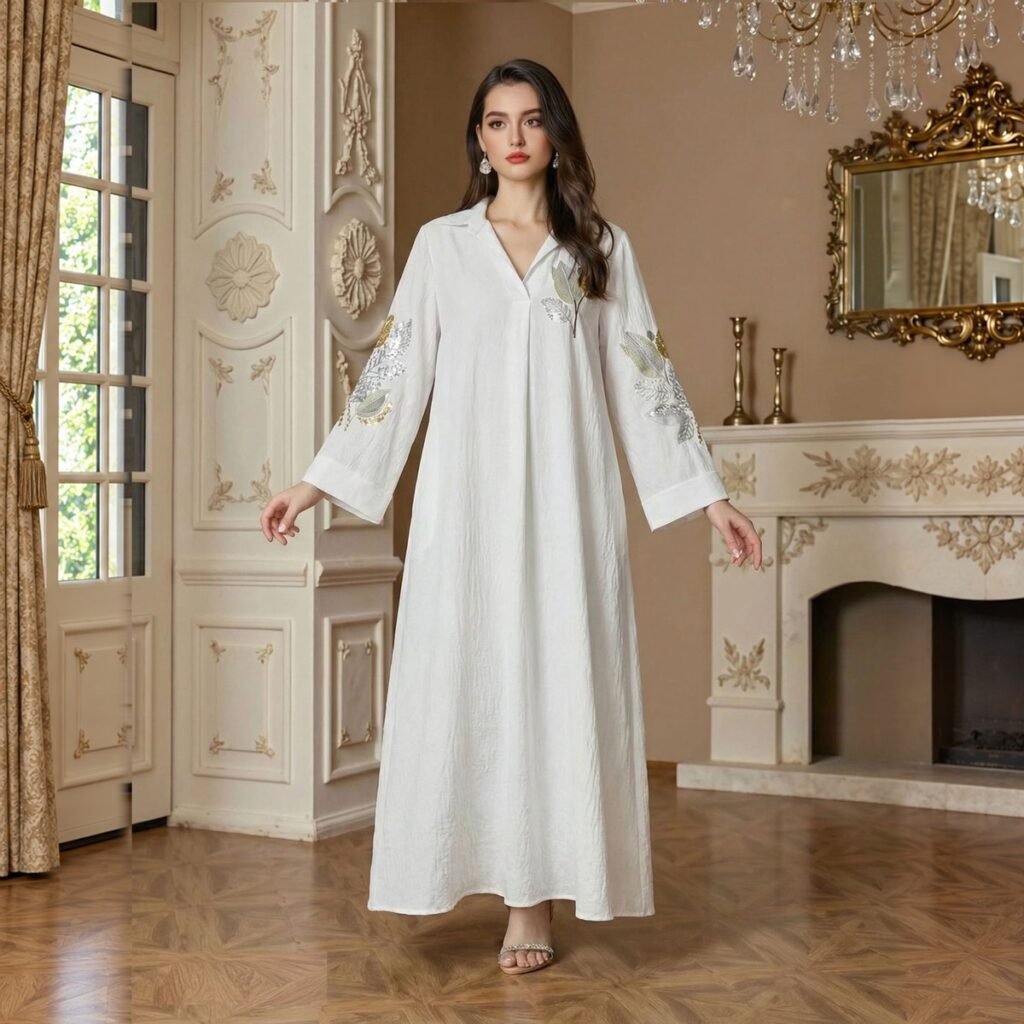
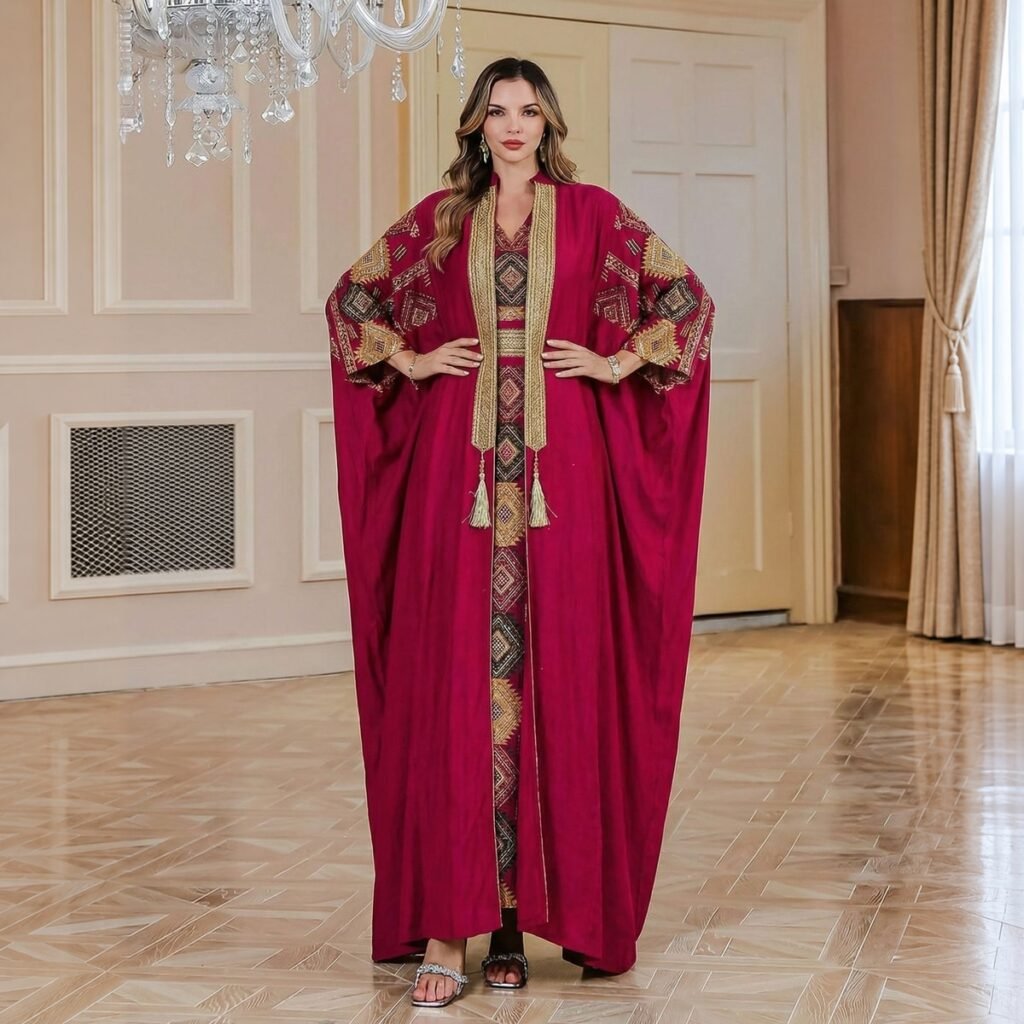
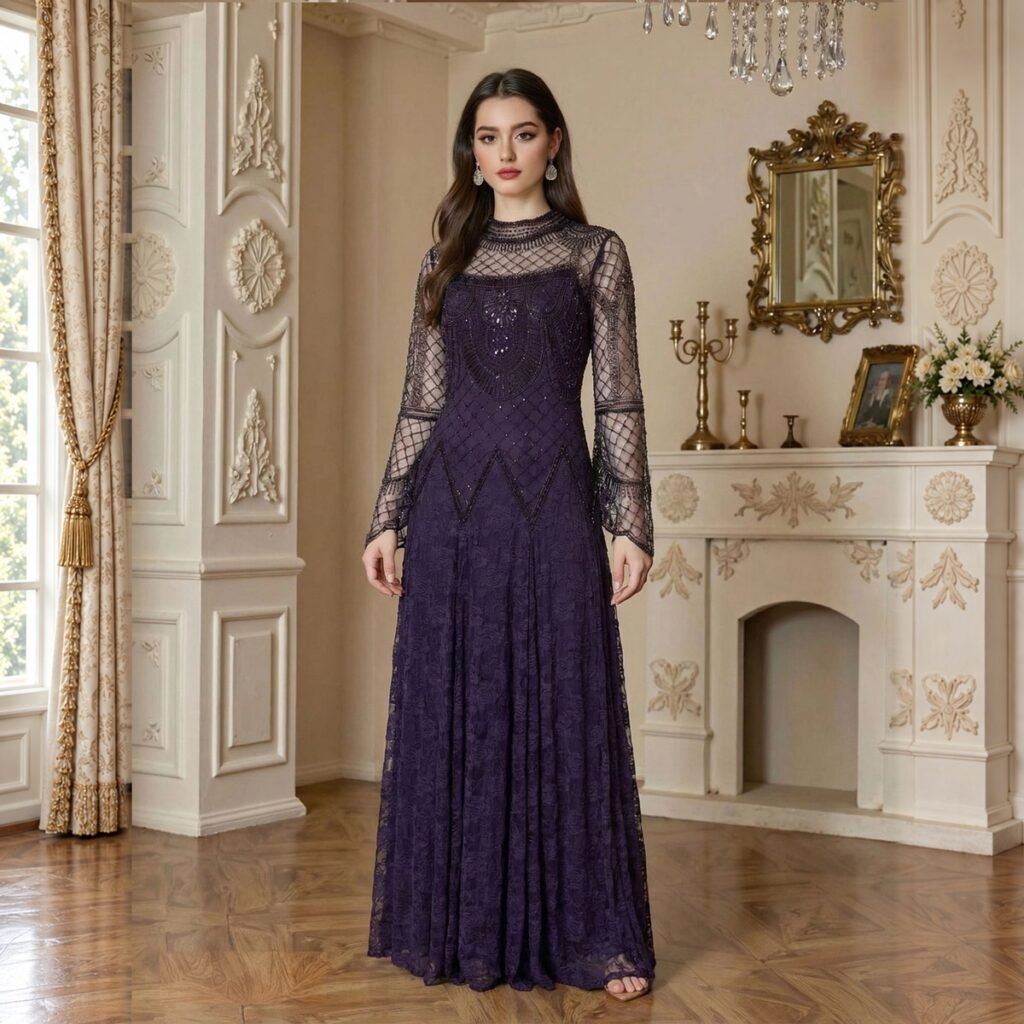
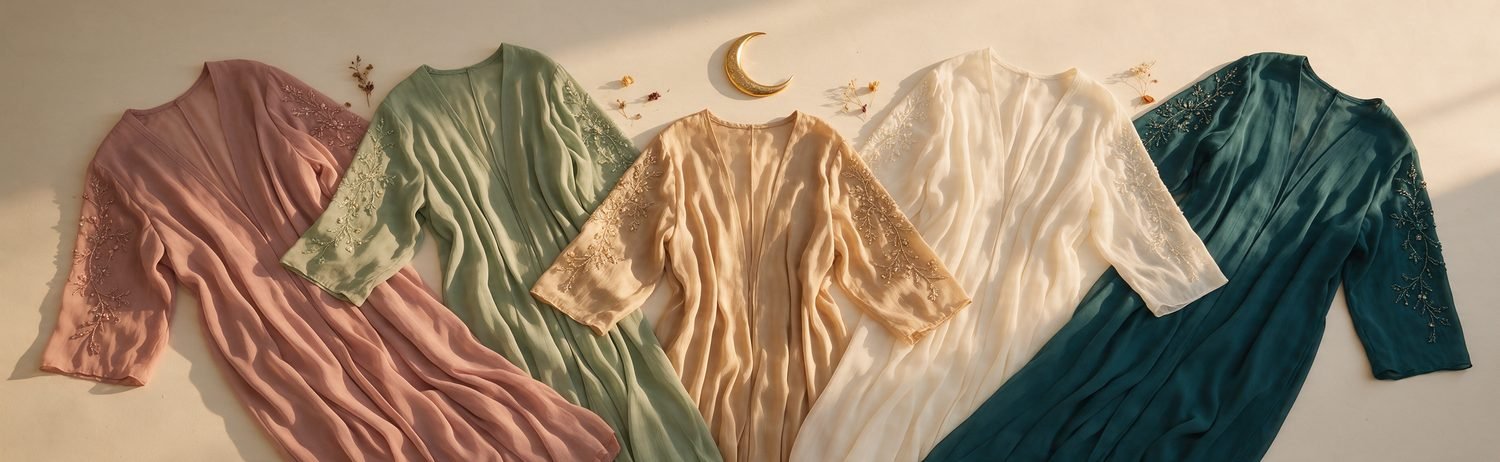
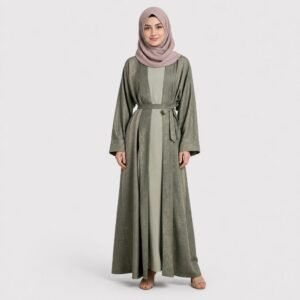
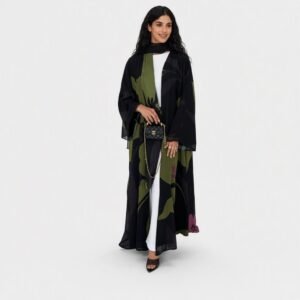
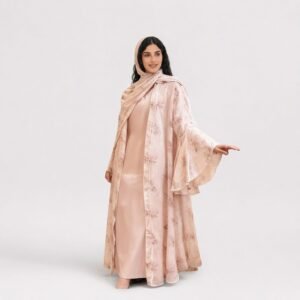
The core of most Eid ranges and the highest-margin piece in it. An Eid abaya is a closed or open abaya built for a photograph: heavier drape, a richer surface, and embellishment concentrated where the camera lands — cuffs, hem, front panel and shoulder line. In the Gulf an embellished Eid abaya retails between $80 and $200 and higher in Western boutiques; the same garment built on an entry fabric for an everyday line retails at a fraction of that. The gap is not the abaya, it is the surface treatment and the fabric weight.
Construction notes: embellishment is applied to a stabilised panel before assembly, which means the panel must be cut oversized and trimmed to final measurement after the embroidery frame comes off. This is the single step most factories skip to save fabric, and it is exactly why cheap Eid abayas pucker and pull along the embroidery after the first wash. Crystal and stone work is applied after assembly and is either hand-set or heat-set depending on stone type — hotfix stones on lightweight crepe will mark the fabric, so the stone and the fabric have to be chosen together, not separately.
Construction notes (finishing): hems on embellished Eid abayas are hand-finished on the reverse so no stitch line crosses the front face. We cut the front panel from a single ply rather than joining two pieces, which removes the shade line that appears when two panels come from different parts of the roll. Lining is full on chiffon and satin, partial on heavier nida. Order the inner dress or co-ord as a separate SKU if you want the abaya to work as a layering piece after Eid, not just on the day.
Typical fabric: Japanese crepe, duchess satin, moss crepe, premium nida, brocade panel with satin body.
Eid Family Matching Set — Coordinated Sets Across the Whole Household
Matching family sets are the fastest-growing Eid SKU in every market we ship to, and they behave completely differently from a single garment. The customer is not buying one abaya — she is buying a photograph of four or six people standing together, and the purchase is almost always a premium one because it cannot be split. The commercial value is high, and so is the risk: one piece in the set that is a slightly wrong shade ruins the entire order, and the customer will photograph the fault and put it on social media.
Construction notes: the whole set is cut from a single print run and a single dye lot. This is non-negotiable — a women's piece and a kids' piece cut from two different lots of the same “navy” will read as two different colours under Eid lighting, and that is the complaint that costs you the reorder. Where a family set spans adults and children, we hold one physical shade band approved by you and cut every size against it. Print scale must also be checked across sizes: a floral that reads well at an adult scale can look oversized and clumsy on a size 4T panel, so we run a scaled print option for the kids' pieces.
Construction notes (grading): the women's block runs XS–3XL, kids' runs size 2–14, and men's/boys' pieces are cut from the same colour and print lot so the men's thobe sits in the set rather than beside it. Man's and boy's pieces use cotton and cotton-blend fabrics — the set is coordinated by colour and print, not by fabric, because a man's thobe in Japanese crepe would be wrong for the market. We grade one set of measurements across all pieces so a customer ordering her daughter's size against her own gets a coherent fit.
Typical fabric: print cotton, cotton-blend, nida, crepe, viscose blend for kids; cotton and cotton-blend for men's and boys' thobes.
Kids' Eid Collection — Sizes 2 to 14
Kids' Eid is a volume category with a short life. A child wears the piece three or four times, grows out of it, and the parent buys again next year — which means the buyer is not judging long-term durability, she is judging occasion impact, comfort and photograph. Price sensitivity is lower than in kids' everyday wear because it is a gift or a family-set purchase, and the parents are buying an occasion, not a school uniform.
Construction notes: party-weight fabrics rather than nursery cotton — a lightweight crepe or a soft satin with a lined bodice holds a nicer shape in photographs than a jersey knit. Internal seams are finished flat so nothing scratches. Elasticated or lightly gathered waistbands rather than fixed waists, because a child's measurement is unreliable and an adjustable waist saves you the return. Any bead or crystal on a kids' piece must be securely hand-sewn and pull-tested, and we recommend machine-embroidery or appliqué over loose beadwork for ages under six.
Construction notes (design): the kids' piece is usually designed as a smaller version of the women's abaya or kaftan in the same collection, so it must be re-patterned rather than scaled down numerically — a straight proportional scale gives a child a garment that is too wide and too short. We re-draft the shoulder and armhole for kids' blocks. Boys' thobes for ages 2–14 run from the same colour lot as the family set, with a plainer collar and no embellishment.
Typical fabric: crepe, satin, organza overlay, printed cotton, cotton-blend; cotton poplin for boys' thobes.
Ramadan & Eid Gift Set — Garment, Box and Card as One Retail Unit
A gift set is a packaging decision as much as a garment decision, and it is one of the easiest margins to add to an Eid range. The garment itself may be a simple abaya or prayer set; what lifts the retail price is that it arrives in a printed box with a card, a sleeve and tissue, ready to be handed over as a gift without the buyer having to wrap anything. Retailers use gift sets for corporate gifting, for Mother's Day-adjacent Ramadan gifting, and for the last two weeks of Ramadan when buyers are looking for something already finished.
Construction notes: the garment is finished to the same standard as the rest of the range — the gift set is a packaging format, not a cheaper garment. Sleeves are folded and tissue-wrapped so the embellishment does not crease against the box wall; boxes are sized to the folded garment rather than the other way round, because a garment rattling inside an oversized box reads as cheap. Custom Eid boxes, printed sleeves and cards are available from 50 pieces per design, which lets you run a small capsule without committing to a full packaging print run.
Construction notes (assembly): boxes are assembled and packed at our end, not shipped flat for you to assemble. Gift sets are packed in an export carton in a ratio you specify, and the carton is marked so your warehouse can pick a set without opening boxes. If you are selling the same garment as a standalone SKU and as a gift set, they must carry separate SKUs and separate barcodes, or your inventory reconciliation will break on the first reorder.
Typical contents: abaya or prayer set, printed gift box, tissue wrap, branded card, optional ribbon or sleeve.
Eid Prayer Set — Two-Piece Salah Set and Prayer Dress
A distinct product from an abaya, and one that sells strongly in the last ten days of Ramadan and in the run-up to both Eids. A prayer set is a two-piece — a long one-piece prayer dress or a tunic-and-trouser set — designed for wearing at home and in the mosque, and it is bought in multiples, often as gifts. Because it is worn indoors against the skin, the buying criteria are comfort, coverage and easy laundering, not occasion drama. The customer who buys a $180 Eid abaya is also the customer who buys two $35 prayer sets for herself and her mother. For most boutiques the prayer set is the anchor of their Ramadan women’s clothes range.
Construction notes: coverage is the whole product, so opacity is tested on the assembled garment in daylight, not judged from a swatch. The one-piece prayer dress is cut generously with a full-length front opening or an overhead entry with a faced neckline; the two-piece set runs a straight tunic with a matching wide-leg trouser with an elasticated waist. Sleeves are long and loose. Fabric must be fully opaque and must not cling — a fabric with static in it will cling to the legs and the customer will not rebuy.
Construction notes (finishing): because the garment is worn at home and washed frequently, we use a reinforced seam allowance and a double-turned hem rather than a simple overlocked edge, and we avoid any embellishment within the wash zone. Care labels are printed with wash instructions in the language of your market. Prayer sets are the one category where a lower price point is a genuine competitive advantage, so we build them on entry-to-mid fabrics with a clean, unfussy finish rather than trying to make them premium.
Typical fabric: nida, polyester crepe, cotton-blend, viscose blend, lightweight linen blend.
Eid Embellished Kaftan — Beaded and Embroidered Kaftan Dress
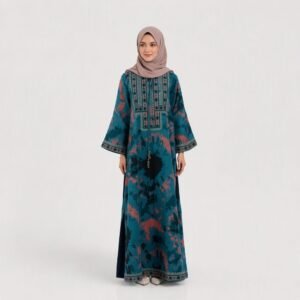
The kaftan is the alternative silhouette to the abaya and it opens a different customer. Where an abaya reads as Gulf, the embellished kaftan reads as pan-Muslim occasion wear and sells strongly into North Africa, Southeast Asia and Western modest boutiques. It is worn to the Eid prayer, to the family gathering and to the evening visit, so it carries a full day of sitting, standing and eating — which is a genuine construction test, not a styling note.
Construction notes: the kaftan is a wide, straight or A-line body with a defined neckline and often a loose sleeve. The neckline is where the money is spent: hand embroidery, beadwork, sequin appliqué or a beaded yoke panel. The yoke is a separate piece — cut, embroidered and then joined to the body — so the pattern must allow for the join without pulling the shoulder line out of shape. A beaded yoke is heavy; it needs a stabiliser behind it and a lined body, or the neckline will stretch within one wearing.
Construction notes (weight management): the single most common failure in a heavy kaftan is the shoulder collapsing under the weight of the yoke on one side. We interline the yoke area and check the neckline on a mannequin after the yoke is attached, before the body is closed. Sequin and bead sequences are applied in a continuous run rather than in patches, so there is no visible join if the customer photographs from an angle. Hand-finished hem on chiffon and satin; machine hem on heavier fabrics with a blind stitch.
Typical fabric: chiffon with lining, satin, duchess satin, georgette, brocade yoke with satin body.
Eid Co-ord Set — Two-Piece Modest Set and Layering Style
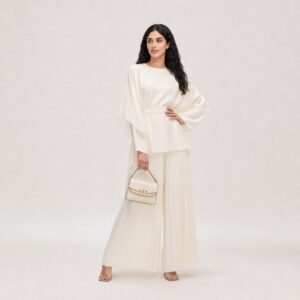
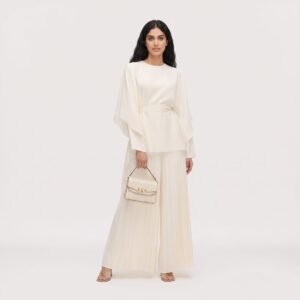
The co-ord set is the piece that keeps selling after Eid. A two-piece — long tunic or top with a matching wide-leg trouser, or a skirt-and-top set — reads as Eid when it is made in an occasion fabric with Eid detailing, and reads as everyday wear when it is made in a mid-weight crepe. That dual life is the commercial point: the buyer who will not spend on a garment she can wear once a year will spend on a set she can wear to the office in April. It is a strong way to extend an Eid range past the date itself.
Construction notes: the top and the trouser must be cut from one fabric lot and one dye lot, or they will read as a mismatched pair in daylight — this is the most common co-ord complaint and it is entirely preventable. Waistbands are elasticated with an internal drawcord and, on the trouser, a lined front panel for opacity. Tops are cut long enough to cover the hip and are tested for coverage in movement, not standing still, because a co-ord that gaps when the wearer sits down is returned.
Construction notes (Eid detailing): to lift a co-ord from everyday to Eid we use tonal embroidery on the cuff and hem, a contrast bound edge, or a self-fabric tie at the waist rather than adding a bead that dates the piece. Where the set includes a veil or scarf, we cut the scarf from the same lot as the tunic so all three pieces match — a scarf that is a shade off the tunic is instantly visible in a photograph. Sets are packed as a set so the pieces do not get separated in your warehouse.
Typical fabric: Korean crepe, moss crepe, satin, linen blend, lightweight suiting blend, viscose blend.